Showing posts with label SCAMPIS micro-irrigation Madagascar India Guatemala Learning path Innovation water. Show all posts

Wednesday, April 18, 2012

Most Significant Change (MSC) - SCAMPIS Guatemala

In the context of the SCAMPIS Project (www.ifad.org/english/water/scampis/)  has been developed the MSC analysis to complement the quantitative M&E data collection.
During the last SCAMPIS M&E mission to Guatemala “stories” about the most significant change have been collected in the municipalities of  Moyuta, Conguaco, Chiquimula (Olopa, Camotan), San Pedro Pinula.

The story collection is one of the 4 steps identified for the SCAMPIS MSC technique. 

The process of collection have been extremely interesting and rich in terms of stories collects and people involved.

MSC first phase: Stories collection
Around 22 stories on have been collected by kids of the age between 13-16 years old. The story narrated by the project beneficiaries were about the most significant change and the challenges faced during the involvement in SCAMPIS. 

The kids have been trained, so as real “reporters” they interviewed the project stakeholders, they recorded videos and took photos.

The process in each community started with a short ice-breaking capacity building of the kids, to learn how to use the video-camera, the photo-camera and to run an interview.
The kids demonstrated great interest, even if very shy  at the beginning, some of them scared, after the first “interview trial” among us, found the exercise interesting, and going to the field, interview after interview they became quite experts: at the end of the day they were totally independent and capable of managing their own interview (without almost looking at the questionnaires). The activities lasted 1 entire day in each of 5 communities, at  the end of the day all the kids where tired, but at the same time enriched by the experience and owners of a nice diploma.

Most important lesson:
-          LEARN HOW TO ASK. The kids learned something extremely important (for the consultant unexpected): ASKING QUESTIONS. "Kids stay among kids", so usually they are not used to go to adults or old people of the village asking direct and specific questions. They understood that even if it could seem there are enormous distances between them and adults, this distances can be overcome easily.
-          KIDS CAPABILITY The kids demonstrate great capability to “be reporters” few more interviews would have been enough to insure their skills as "local reporters”
-          USE OF TECHNOLOGIES Despite the fact that the kid had never taken a photos or a videos, nor conducted interviews, it has been relatively easy for them to learn. A bit more difficult for them was to deal with the emotional aspect.
-          PRACTICAL LEARNING The kids learned a lot about doing vegetable gardens, natural pesticides, cookings, etc, and considering that they also are involved in school garden, it has been extremely useful for them.
-          At the end of the day a short brainstorming on the understanding of the interview, showed that they understood and stored the stories content.
-          The questions used have been adapted and improved day by day, but still could be improved and adapted to different context. Not all the beneficiaries are able to answer in a extensive way to the questions, and not all the kids have been able to help the farmers interviewed with additional questions (e.g. I explained then to always ask, “why”, “could you give me an example?” this helped but is not enough). This aspect has to be strengthened during the kids training. 
-          An event with the stories and videos will be organized by the educadoras to share the experience with other kids and people of the nearby communities. The material can be used to sensitize other families.
Finally, 10 additional stories have been collected (technicians, educadoras, project supervisor, project coordinator and other stakeholders) to complete the overview of the project in order to understand the most significant change also from the point of view of the strategy adopted and the organization promoting it.
The second phase will be implemented during the next SCAMPIS meeting (23rd April) at Funcafé central office by the end of April the result of the analysis will be sent to IFAD.


Additional information on SCAMPIS MSC is available upon request, write to c.ruberto@ifad.org. A short presentation will be soon organized to share the experiences and build on that. The process is part of the SCAMPIS Learning Path second phase.

Friday, October 14, 2011

Learning Path Workshop: “Integrated and Sustainable Strategies for Scaling-up Micro-Irrigation Systems”


Learning Path Workshop,  a snapshot of the event…

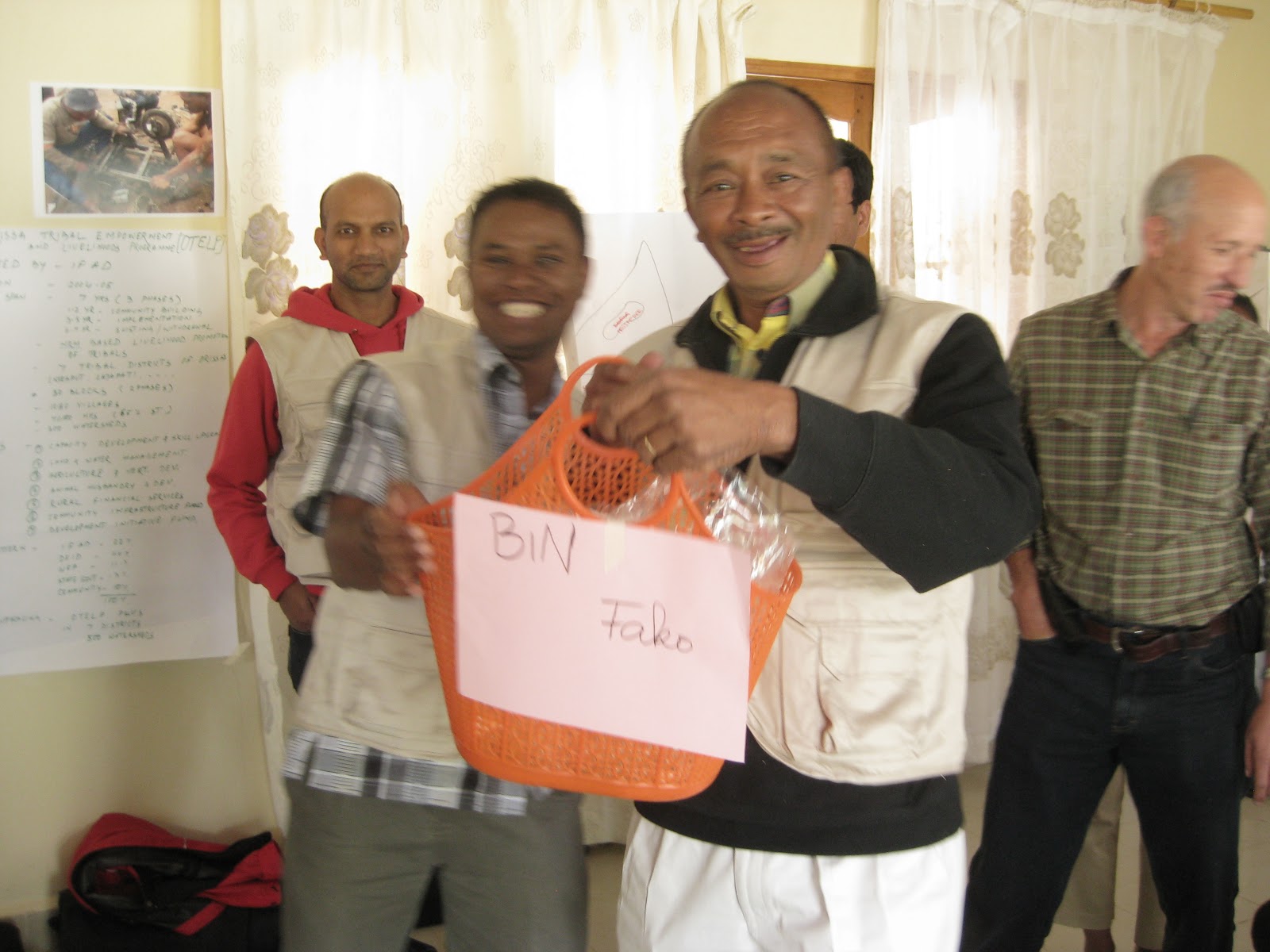
The South-South learning exchange “SCAMPIS Learning Path” took place in Madagascar from 3rd to 7th October 2011 between 3 continents:  Asia (India), Latin America (Guatemala) and Africa (Madagascar). 
The main goal was sharing and learning from each country’s knowledge and experiences to find out integrated and sustainable strategies for scaling-up the micro-irrigation systems. Knowledge sharing and learning was held mainly in the field with farmers. Each country should end up with innovations (to be taken home) and suggestions from their experiences (to be shared) with highly participative and proactive approaches.


Challenges and achievements
Learning: The learning process was fully achieved for all participants. Each one went back home with at least 2 innovations or proposals to be tested in his/her country. Six topics have been discussed during the field visits: technology adoption, nutrition,  natural fertilization and pesticide, promotional activities, access to rural finance, value chain (from manufacturing to the end user).

Sharing: A very high level of participation was reached as well as socialization of all participants. Sharing among the group was successful during formal or informal visits. The actors such as farmers, dealers or manufacturers we visited were able to interact with the LP group to ask questions or suggestions from the 3 countries.

Networking: The LP participants as well as local and national stakeholders expressed their willingness to continue learning and sharing from each other. Anyhow the most effective tools and ways still need to be defined.

Lessons learnt from the countries Each country took lessons and brought back home many innovations that came out from exchanges, field visits and discussions. The main ones were:
*       Use of recycled materials for manufacturing water pumps (experience from Madagascar)
*       Use of audio, video, media as part of scaling-up strategies
*       Nutrition/cooking lessons as an integrated approach toward the MIS (experience from Guatemala)
*       Use of public places such as schools and hospitals as demonstration sites as per promotional strategy (experience from Guatemala)
*       Promotion of adaptable kits according to needs and demands of farmers (size and accessories) (suggestion from India)

3rd October 2011
Activities
1)       1)Participants presentations and identifications of the objectives of the LP workshop
2)       2)Agenda of the workshop and methodology for learning
3)       3)Field visit : Ambohimanga –Mr Mamy, progressive farmer
From the LP Diary  “First day of LP is quite exciting, eye opened for me (and hopefully for all) on the ‘SCAMPIS world” Debasis (India)


4th October 2011
Activities  (field visits)
1)      1) Itaosy: exchange with dealer, technical promoter and farmers : theater performances and presentation of India on 2)Promotions Strategies implemented by IDEI for Scampis project
2)       3)Visita at Gasc’art  studio in Bevalala – pump manufactur 
        4)Visit at the « La Ferme d’Ivato : farmers association with bio-production using MIS

From the LP Diary « A pesar del cansancio y el cambio de hora, conoces a tantas personces involocrudas en el desarollo y la alimentacion de las personas es satisfactorio. Tenemos idiomas y costumbres diferentes peso estamos hoa endo lo mismo » Rolando (Guatemala)


5th October 2011
Activities
1)       Guatemala presentation (Prorural & Scampis Guatemala project)
2)       Imeritsiatosika (Field Visit): progressive dealer who implements micro-rural finance
3)       Centre Tsinjoaina (Field Visit): meeting with a small association of women who use rotative fund for improve livelihood condition (health, food security, agriculture with micro-irrigation, etc); presentation on the role of the Self Help Groups in India and interactions with OTELP programme
4)       Ambohijafy field visit and meeting with, dealer and farmer, presentation on technologies adaptation and strategy of the dealer; presentation of the Guatemalean strategies in the schools: advantages and difficulties in promoting the technologies in the school and implementing school gardens
5)       Patrakala & Innovagri presentations « Production and empowerment strategy of the production and distribution chain »  - MICRO-IRRIGATION KIT MANUFACTURERS

From the LP Diary “Today the field visit with the local NGOs and other stakeholders was more interacting on the Scampis programme. We came to know their role in the Scampis programme Madagascar” NCP (India)


6th October 2011
Activities
1)       Practical exercise: production of MIS kits with Patrakala and Innovagri
2)       Village de la Joie (Field Visit)Introduction of the village ;
3)       Exchange and practice on nutrition, Guatemala facilitation : preparation of carrot dessert and carrots and organge juice
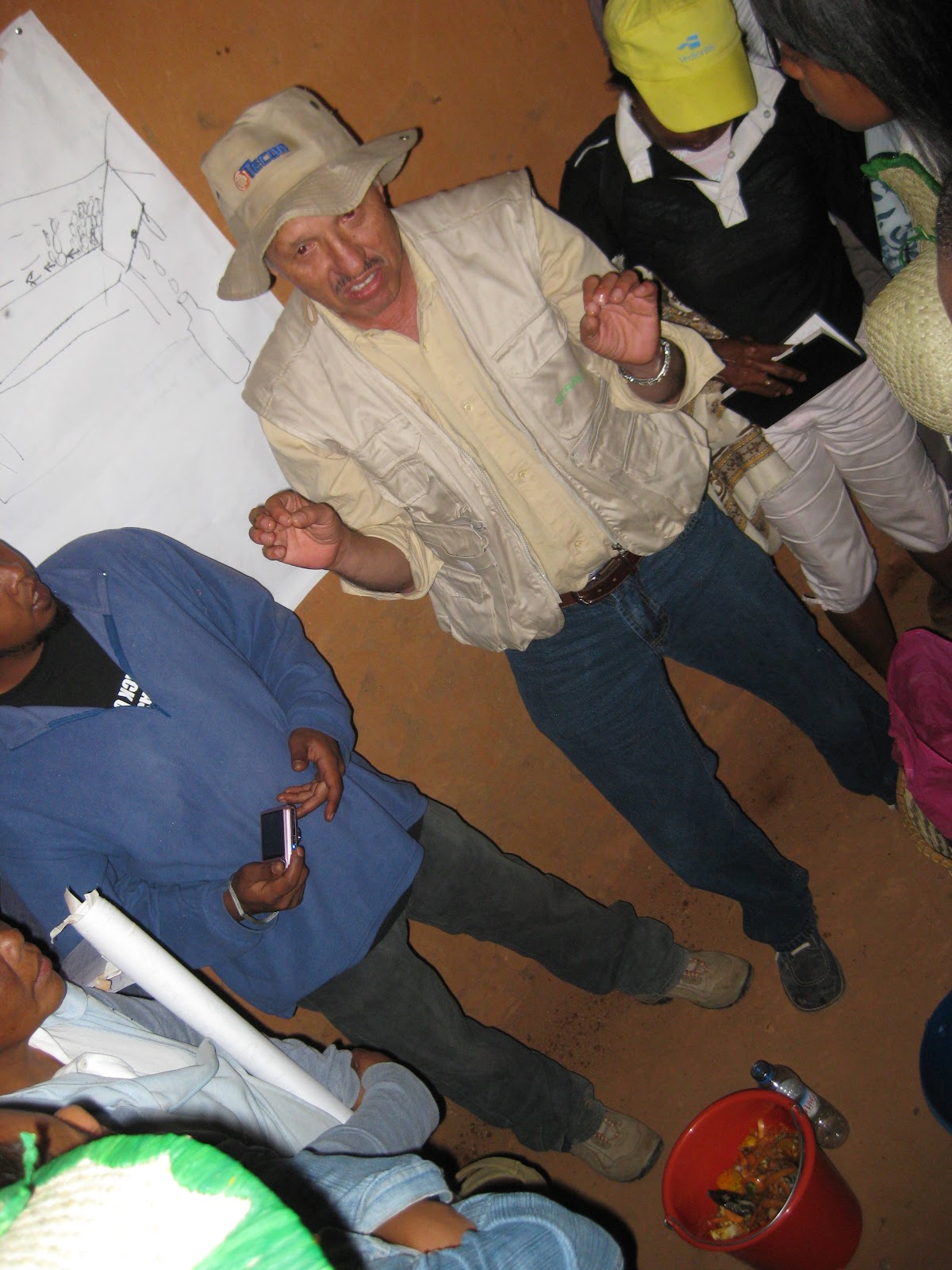
4)       Exchange and practice on natural fertilization : Guatemala facilitation (vermi-compost) and Director of Protection des Végétaux Madagascar (natural pesticide)

From the LP diary « C’est une journée où on a eu le plus d’échanges sur la valorisation des produits issus du SMI (proposition de recettes) avec Guatemala, et les engrais liquides ainsi que les luttes bio contre les maladies et insectes », Christin (Madagascar)


7th October 2011
Activities
Final workshop open to the public :
1)       Focuses on SCAMPIS India, Guatemala and Madagascar : presentations on  « innovations I will suggest, difficulties perceived by the communities and suggestions »
2)       Role of communication (audio, viedeo and other media)
3)       « I.S. » strategies for scaling-up Micro-irrigation Systems ?  - Integrated and Sustainable strategies for scaling-up MIS
4)       Lunch discussion on the best tools to use to continua the interactions


Afternoon : LP group
Final evaluation and discussion
From the LP diary « En la discusiòn de hoy espero poder haber algunos aportes para mejoros la ejcucion del proyecto SCAMPIS, el cual esta llevando muchas benuficios a personas pobres en los 3 Paises y no olvidar que el riego es un medio y no un fin » Rolando (Guatemala)
 
Thank you to all  the group
Cecilia & Anja

Follow us on facebook (http://www.facebook.com/#!/groups/learningpath/) or write to c.ruberto@ifad.org   
More photos: Learning Path Workshop Photos 

Sunday, October 2, 2011

Sunday 2 October 2011 - SCAMPIS Diary


2 October 2011

Dear all,
Here we are, during the last week we prepared all the activities for the workshop: everything is ready (almost!!!). It was a real challenge to get everything ready in such a short time.
We are curious to see how it will go, the preparation  has been  intensive and tough, but thanks to the indispensible support of many friends and colleagues we are finally ready to start!!

We want to thank with all our heart the following person who supported us during the last week for the workshop preparation:


Feno, the fac totum
Harivelo, the brave
Stefan, the philosopher and singer
Christin, small but big
Haga, graphic
Poina, the special driver
Sylvia, our host
Jimmi, the driver
all the field staff
all the farmers and peasants
all the people we met in the field preparations

THANK YOU!
MISAOTRA BETSAKA

International Learning Path Workshop - SCAMPIS


International Learning Path Workshop
3-7 October 2011
Madagascar

Dear colleagues and partners,
From 3 to 7 October, Madagascar will host an international exchange visit around SCAMPIS:  the "Scampis Learning Path".
Participants will come from Guatemala, India and Madagascar, this is an opportunity for the three program countries to exchange their knowledge and experience about  integrated and sustainable strategies for micro-irrigation systems (ISS-MIS).
This exchange will include field visits, exchanges/discussions with local stakeholders about the adoption and promotion of micro-irrigation. Health, nutrition and use of natural pesticides and fertilizers, as well as scaling up and M&E will be the main topics for discussions and daily practice.

The "Learning Path SCAMPIS" will be a place for:
- Building relationships and cooperation between different actors and countries
- Sharing innovations and challenges encountered during implementation
- And finally, improving the efficiency and effectiveness of the project through the exchange of best practices
Leitmotiv:
SHARING FOR INNOVATION !!
Stay tuned !
 
More info :


SCAMPIS Learning Path
Anja Rabezanahary & Cecilia Ruberto 


Popular Posts