Showing posts with label EU Food Facility. Show all posts

Thursday, March 29, 2012

Growing food security in West Africa

Completion workshop of the IFAD EUFF Programme in Abidjan, Côte d’Ivoire

When the European Union launched its Food Facility (EUFF) Programme in 2009, it chose IFAD as the implementing partner for West Africa. Building on existing IFAD-supported projects and working closely with ECOWAS and ICRISAT, our colleagues have successfully implemented the 20 Million Euro programme – in only 18 month! The programme activities helped to strengthen the value chains of the production of certified seeds of rice, cassava, groundnut, yam and maize. What has started as an emergency relief programme to help the countries with the food crisis that affected the sub-region in 2008, turned out to be much more than that: By increasing the availability of high quality seeds and by training smallholder farmers in innovative production techniques, the work of EUFF Programme helped to grow food security in West Africa, not only in the short but also in the long term.


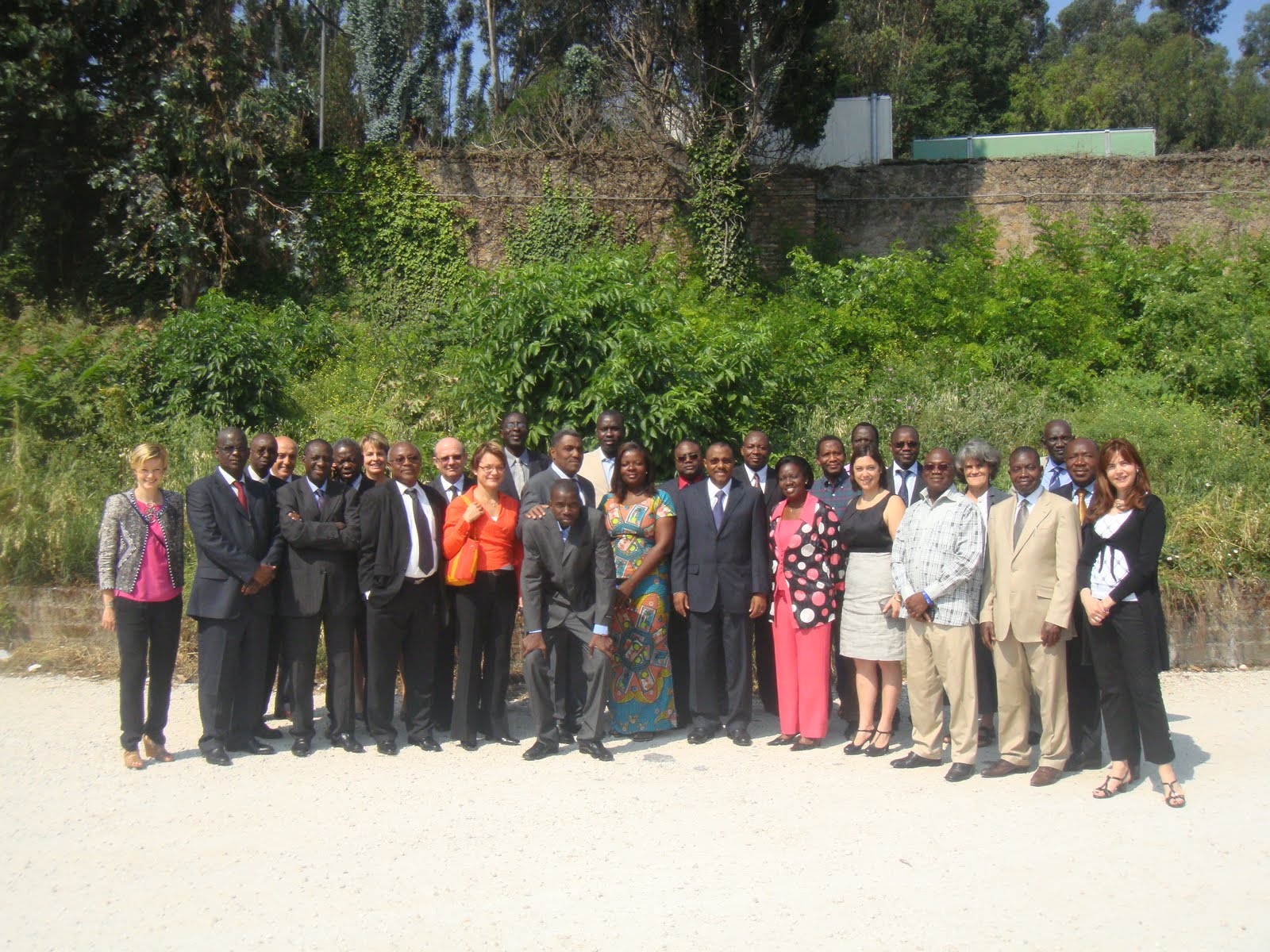
Earlier this week, the implementing partners met in Abidjan, Côte d’Ivoire, to discuss the final report and draw the lessons learned for future projects. While the final report and the capitalisation products will be available around the end of May, I have spoken to Ernest Aubee, Principal Programme Officer and Head of Agriculture at ECOWAS, Dr. Samba Traoré, who coordinated the implementation of the regional component at ICRISAT and
Adriane Del Torto, Coordinator of the EUFF Programme in West Africa at IFAD, to give you a first assessment of the programme. Many thanks to the three for their time!


What are the main achievements of the EU Food Facility Programme in West Africa?

Ernest Aubee, ECOWAS:


Dr. Samba Traoré, ICRISAT:

The ICRISAT component of the programme was focussed on the production of higher and more stable grain yields of sorghum and pearl millet by smallholder farmers. We have increased the production of quality seeds, not only at the individual seed producer level, but also at the level of farmer organizations. As a result, more quality seeds are available which leads to higher yields. One farmer told me that he planted millet on ten hectares and sorghum on three hectares. With the quality seeds he increased his sorghum yields from about 1000 kilogram/hectare to two tons/hectare and is expecting similar results for the millet field. With the profit he made, he could solve his financial problems and send his children to school. And this is just one example of how we have improved the living conditions in the region. In general, the major outputs of the programme are strengthened skills and capacity of seed producers, farmer organizations and researchers through training and farmer field schools; an increased communication and stronger coordination among the different actors in the region; increased varietal options for sorghum and pearl millet for smallholder farmers and a strengthened monitoring and evaluation capacity.


Adriane Del Torto, IFAD:


What are the lessons learned of the EU Food Facility Programme in West Africa?

Ernest Aubee, ECOWAS:


Dr. Samba Traoré, ICRISAT:

There were several success factors that made it possible to implement this comprehensive programme in such a short amount of time. First, the strong engagement of producers and other stakeholders in the process. Second, the problem of bad quality seed was real and widely spread, so we could improve the yields within a short time. Third, capacity building helped to spread the knowledge, also beyond the direct beneficiaries. Fourth, we build on an existing project, which saved us the time of doing baseline research. And last but not least, the strong communication throughout the whole process was a major success factor. Because if you don’t communicate, you can’t scale-up.


Adriane Del Torto, IFAD:


What are the necessary next steps to sustain and build on the achievements made by the EU Food Facility Programme in West Africa, now that the programme activities have been completed?

Ernest Aubee, ECOWAS:


Dr. Samba Traoré, ICRISAT:

The sustainability of our work was very important from the beginning. This is why we used community technologies, supported the spread of knowledge and produced materials, such as training manuals or leaflets with descriptions of new varieties and their specific adaptive and quality traits. But now it is important to put a mechanism in place to enhance the region’s food security in the long term. We should not wait for a crisis to do that.


Adriane Del Torto, IFAD:


After a day filled with discussions, the workshop participants celebrated their achievements with some traditional Ivorian dance. And while the programme activities have been completed, everyone agreed that the issue of food security is still a timely one and that the work to grow food security in West Africa must continue.

Saturday, March 24, 2012

Lessons learned from learning lessons

Third day of the IFAD-EUFF capitalisation workshop in Abidjan, Côte d'Ivoire


The third day of the IFAD-EUFF capitalisation workshop is not only the final day of this workshop. It is also the end of a process that was initiated in September 2011 at the first capitalisation workshop in Bamako, Mali. The term capitalisation refers to a process to profit or benefit from a “capital” that we have, in the case of the IFAD-EUFF programme, the lessons learned and experiences of the colleagues working in the different projects. Over the last six month, the participants have worked on narrowing down a unique experience or factor in their projects that they want to share with others. Now it was time to draw the lessons learned and discuss the next steps.


Isaac Vifa, who has been working with the Root and Tuber Improvement and Marketing Programme in Ghana for the last two years, took some time to tell me about his experiences:


What is capitalisation and can you briefly describe the process?


You have participated in the IFAD-EUFF programme capitalisation process. What are you central learnings of these six month?

How can capitalisation increase the impact of development programmes?

A big thanks to you, Isaac!


Other points that were raised during the feedback discussions:

  • Failures are a learning opportunity: By sharing difficulties, limitations and the way we addressed them, others can learn from the experiences and avoid having to face the same challenges.
  • Exchange matters: Sharing knowledge among different projects and between different country teams creates synergies, helps everyone to improve the work and to sustain what has been achieved.
  • An addition, not an alternative: Capitalisation products proved a valuable addition to formal reports and scientific papers.

Steps to integrate capitalisation in knowledge-management strategy:

  • Capitalisation should be included in the project design.
  • Everyone involved in the projects should receive training on knowledge sharing and capitalisation.
  • Knowledge-sharing is not only for knowledge-sharing experts, everyone can do it.

Thursday, March 22, 2012

Better seeds for higher yields

Second day of the IFAD-EUFF capitalisation workshop in Abidjan, Côte d'Ivoire

I’m sure, all of you are familiar with the following situation: You write an article/report/letter and you think you have addressed every aspect, answered every question and structured the information in a logical way. Then you give it to colleagues and they come back with inputs and comments. And in the end, you have an even stronger document.

This is exactly what happened today, at the second day of the IFAD-EUFF capitalisation workshop in Abidjan, Côte d'Ivoire. The different country groups from Senegal, Ghana, Benin, Mali and Côte d'Ivoire had prepared one or two articles in which they outlined experiences they made while implementing the projects. These documents will be published and will support other organisations working on similar issues, to gain new ideas or to replicate the successful approach. This morning, all participants came together in small groups and discussed the articles prepared by the other projects.ents where you ask yourself how you could have possibly not considered this. And in the end, you have an even stronger document.

The feedback was as diverse as the people in the room: “What kind of training was provided?”; “How many seed producers were selected?”; “You should insert subheads to make the document better readable.” and so on.

The result is a room full of participants who are working in their colleague’s comments in their paper. While this morning was dominated by lively discussions, now you mainly hear clicking of many keyboards. And while the workshop participants are working on their articles, I will share some of their experiences with you:

Senegal

Since it is the UN International Year of Cooperatives, I will start with Senegal, where more than 65 per cent of the population lives in rural areas. Most of them are engaged in agriculture, many produce groundnuts. A change in agricultural policies, the hand-over of groundnut seed production from the state to the private sector, let to a rapid decline in the groundnut production. Attempts to rebuild the seed stock failed. Together with IFAD and the World Bank, the Government of Senegal piloted the establishment of groundnut seed producer cooperatives . The pilot was a big success and with the additional funding by the European Food Facility (EUFF), cooperatives have been established in five more regions. In their article, the colleagues from Senegal share their experiences in establishing cooperatives, good practices for marketing, financial and administrative management and how to ensure the cooperatives’ sustainability.

Mali

Northern Mali is landlocked, has a fragile ecosystem and regularly faces drought. But at the same time, it is rich in natural resources and offers huge flood or non-flood plains – perfect to cultivate rice along the river Niger. Rice is not only the main cereal consumed in the region, but also offers an income source as a cash crop. With the support of IFAD, the Government of Mali established the Programme for Investment and Rural Development in Northern Mali (Programme d’Investissement et Développement Rural des Régions du Nord Mali, PIDRN). Supported with the funding by the EUFF, PIDRN increased the availability of certified seeds. The project developed small irrigated village seed plots which are managed by cooperatives. Traditionally rice seeds are produced in small plots within the rice paddies and are often exposed to drought periods. Producing rice seeds in village seed plots allows for better water management, better production monitoring and the scale-up of the production. The numbers of farmers engaged in seed production are increasing, but so is the demand for certified rice. In their article, the colleagues from Mali share not only a project outline and the lessons learned but also future steps to ensure the project’s sustainability.

Benin

In Benin, seed production is divided among a large number of actors. Without a joint platform, there was no dialogue, no joint approach and a lot of conflict about the different competences. The Government of Benin, together with IFAD and financial support from the EUFF, established a dialogue platform, to bring all actors together and create synergies in their work. The difficult undertaking was worthwhile. As a result, the availability of rice seeds and cassava cutting has increased significantly. Another experience the colleagues from Benin shared, was the use of biotechnology to ensure the quality of the cassava cuttings. A video documentary gives some background about the set up and results of this project.


Côte d'Ivoire

For Ivory Coast, the Project for Support to Small Scale Market Gardeners in the Savanes Regions (PPMS), shared the experience on the establishment of a process to produce certified rice and maize seeds. This process helped to ensure the use of quality seed and led to higher yields. With support of IFAD and the EUFF, the Project developed a four phase-certification process:

  1. pre-inspection which includes the identification, accreditation and the training of seed multipliers as well as the choice of plots;
  2. the field inspection to verify the quality of the pre-base seeds and the inspection of production conditions;
  3. from the harvest of accredited farms samples were taken and analysed at the national seed laboratory,
  4. depending of the results of the analysis, the producers receive a certificate of compliance or non-compliance by the Ministry of Agriculture.

Ghana

The Root and Tuber Improvement and Marketing Programme (RTIMP), initiated by the Government of Ghana and IFAD, developes the crop production through research and extension. With additional funding provided by the EUFF, the project’s efforts to sustainable increase the production of seed yam and cassava stems by small-scale growers could be scaled-up. Traditional methods of multiplying and distributing planting often come with low yields, the multiplication and spread of diseased planting material and a large input to produce seeds/stems. To ensure that farmers have high quality crops and higher yields, RTIMP introduced the minisett technology, a methods to produce yam seeds with less input and better results and established a sustainable system for the supply of roots to Good Practice Centres through the strategic multiplication and distribution of improved cassava planting materials. In their two articles, the colleagues from Ghana, describe how they spread the improved methods of producing planting materials, outline the different production methods and share their lessons learned.

All articles will soon be available on FIDAfrique.

Wednesday, March 21, 2012

Pioneers for food security

Sharing knowledge for better development programmes at the IFAD-EUFF capitalisation workshop in Abidjan, Côte d'Ivoire

How can we effectively introduce new seed production techniques? Which roles do farmer organizations play in helping smallholders to grow more food? How can agricultural research support seed production? These are some of the issues that the participants of the capitalisation workshop on the IFAD EU Food Facility project in West Africa discussed at today’s opening of the meeting – and you will find the answers below.

The EU Food Facility (EUFF) was created as an answer to soaring food prices in developing countries in 2007/2008. With the Facility, the European Union provided one billion euros for projects that:
  • improve the access to agricultural inputs and services,
  • maintain or improve the agricultural productive capacity and
  • address the basic food needs in developing countries
and chose IFAD as one of the implementing partners in
West Africa.

Since the programme has been launched one and a half years ago, much has been achieved. Building on existing IFAD projects, 20 million euros were used to support small farmers achieve higher yields, grow more food and earn more money. The projects in Mali, Benin, Ivory Coast, Senegal and Ghana were implemented in collaboration with the Economic Community of West African States (ECOWAS) and the International Crops Research Institute for Semi-Arid Tropics (ICRISAT) and reached more than 200 000 rural families.

Now, that the programme’s activities have closed at th
e end of 2011, project partners are coming together for a capitalisation and a closing workshop. During the next days (23-26 March), they will share experiences, draw lessons and discuss the way forward.

“The first meeting of all implementing partners showed, how beneficial it is, to exchange knowledge and experiences. It has been an important part of our collaboration since,” said Adriane del Torto, IFAD’s EUFF coordinator for West Africa. All participants have brought one or two examples of capitalization products – success stories, videos, posters or other materials – which will be reviewed by their peers to improve and enrich the products, before they are officially released. “The sharing of knowledge in this way has helped everyone involved in the projects. We all have learned how to properly identify and explain what works in our programs. This could potentially help to raise funds and to scale up our projects with relevant and efficient activities. From the experiences that will be shared here today, some have successfully been replicated in other settings. In the long-run this will lead to better and more sustainable results in development programmes. And this is why we have organized this capitalization workshop,“ explained Adriane in her opening statement (scroll down for the video).

Following the o
pening ceremony, every project presented their cases, followed by a short Q&A, and as promised, here are the answers to the questions raised above: How did the projects manage to spread new, more efficient seed growing techniques within such a short time, was one of the questions that came up. The answer came from the Ghanaian participants, who used a proven knowledge-dissmenination technique for their Root and Tuber Improvement and Marketing Programme (RTIMP): word of mouth. Many of the farmers, participating in the programme, produced their yam seeds on sites that were close to roads or other places with many people passing by every day . Soon, they realized that these farmers weren’t following the traditional seed production technique. They became curious. And learned from the farmers about the benefits of this new seed production technology – and how it works. In this way, the project reached a much larger, and growing group, who now uses the new technique.

The role of farmer organizations, was another issue, that came up frequently. All participants agreed, how important the organizations, such as cooperatives, are in enabling smallholders to increase their production. In some projects, for example the Management of Certified Groundnut Seeds Production in
Senegal, cooperatives and their establishment were a constituent part of the project design.

And last but not least, how can agricultural research support seed production? The answer to this was given by Prof Corneille Ahanhanzo from
Benin, who highlighted the need for strong links between agricultural research and seed producers: “Researchers help to find improved techniques and better seeds. We are pioneers for food security.”

Friday, January 27, 2012

Action plans and indicators - the road leading towards the end of the EU Food Facility in West Africa

The M&E workshop in preparation of the Final Report for the IFAD/EU Food Facility Programme in West Africa closed today.

Over the two days of the workshop, discussions and energy levels were at their best. It was a real pleasure to facilitate a workshop of this type with such a motivated group.

The day began by the participants giving feedback on the data collection tools developed the previous day. Each team was asked to review the questionnaire and personalise it to fit the needs of the country and context. The precisions brought to the document were mainly concerning some thinking about the partners and stakeholders involved in the implementation of the Food Facility. We also reviewed some semantics one again, as the questionnaire needs to be as clear as possible and a stand- alone document for someone who has not participated in the Ouagadougou workshop where the document was conceived.

The floor was then given to ICRISAT who presented their qualitative data collection questions to the rest of the group. The ICRISAT questions necessarily needed to differ from those of the country components as the institutional arrangements for the ICRISAT grant are somewhat different.

In any case, for both the country components and ICRISAT, the questions are centered around the following themes:

- Relevance of the programme and its similarities to other food security programmes

- Farmer assessment of the trainings/knowledge and support received

- Sustainability and probability of scaling up interventions/services once the project is closed

After agreeing on the questions, the participants with the guidance of the M&E Consultant, Task Manager and Head Agronomist for the EU FF, drafted an action plan including an implementation schedule going up until the discussion and endorsement of the final report to be submitted to the EU which will take place in Abidjan at the end of March 2012.

The first step in the action plan is to recruit a local consultant by component to alleviate project teams in the collection of the qualitative data set that was agreed upon for the EU FF.

At the end of the workshop, the particpats expressed their enthusiasm regarding the methodology and approach used to tackle the preparation of the final report to the EU Food Facility. All participants recognised the lack of qualitative data in many of the reports produced and appreciate the innovative approach towards producing a final report which truly incorporates impact.

As many pointed out though, it would have been very useful to have this workshop well before January 2012. The report writing team and participants are in any case motivated and ready to achieve objectives set forth during the workshop and translated into the challenging action plan.


Thursday, January 26, 2012

Indicators, indicators! They really get people talking!

Participatory M&E workshop towards the preparation of the Final Report on the EU Food Facility in West Africa

by Adriane Del Torto

Today, we opened the two day workhop on M&E for the EU Food Facility. Present at the worksessions were the M&E specialits and Production specialits from Benin, Mali, Senegal, Ghana and ICRISAT. The meetings took place in Ouagadougou, Burkina Faso at 'Eau Vive" a local NGO on 26 and 27 January 2012.


The objective of the meeting is to take stock of the efforts already made in M&E at the project level and to come up with an action plan to enable to collect qualitative data for the final report to the EU. The idea of a participatory M&E workshop came from some brainstorming between myself and some CPMs and the M&E consultant who is part of the team producing the final report as a solution to the lack of time for a mission visiting all components of the Food Facility in less than one month. 


The first day of the workshop was mainly to discuss results achieved and activities which did not take place and why. Then the group went through all of the EU indicators and discussed the relevance of many of those requested by the programme. In many cases, it was pointed out that baseline data was missing and that it would be difficult to report on all of the indicators in both the Logframe and the EU table. Each indicator was discussed and put into context to ensure proper understanding of the mechianisms.

Thi step was not planned on the original agenda, however, when considering the complexity of the programme, made of 7 distinct grant agreements, it became quite relevant to discuss requirements in order to have a somewhat harmonious report.

One we had agreed on the quantitative indicators, the rest of the day was dedicated to the qualitative ones. Adding a qualitative dimension to the final report of the EU FF was suggested to the EU during my last mission in Brussels in December 2011. My proposal was very much appreciated by the Programme Manager at the EU, who is very much looking forward to reading our results.
The lead M&E consultant and the group identified a series of themes and specific questions to ask programme stakeholders in order to collect the qualitative type data sought. These were accompanied by a list of information sources and data verification documents.
This first day, was a bit long, however, the output was quite positive. The debates between participants were lively and engaging and the colleagues present were strongly motivated by others' comments and questions. Let's  hope the ambiance at its best tomorrow as well.

Tuesday, January 24, 2012

Dernières lignes droites avant la clôture du PFA : Réunion Suivi-Evaluation

Le programme de la Facilité Alimentaire (PFA) de l’Union Européenne en Afrique de l’Ouest entre dans sa phase finale. Le FIDA, comme stipulé dans les accords avec l’Union Européenne, doit soumettre un rapport de fin d’activités au plus tard le 31 mars 2012.
L’objectif général de ce rapport est de présenter les principaux résultats obtenus par le Programme, les difficultés rencontrées dans la conduite des activités, les leçons et les enseignements à tirer de cette expérience, de renforcement des capacités des différents pays en matière de production et de diffusion de semences et de boutures certifiées.

Dans l’optique de la rédaction de ce rapport, une réunion sur le suivi-évaluation aura lieu à Ouagadougou, Burkina-Faso, du 25 au 27 janvier 2012.


La réunion, composée de responsables suivi-évaluation et de chefs de composantes du PFA, sera menée par Adriane Del Torto, Chargée de Programme Associée, par M. Daniel Thieba, consultant en Suivi-Evaluation et par M. Fatogoma Diarra, consultant expert agronome.

Les objectifs de l’atelier sont les suivants :
- Faire le point sur l’état d’avancement dans la collecte des informations sur la mesure des indicateurs
- Faire le point sur le travail restant à être réalisé (données statistiques et collecte des données qualitatives auprès des paysans)
- Rappeler et identifier les indicateurs complémentaires à ceux déjà mentionnés dans les cadres logiques, pour mesurer l’impact du programme
- Préciser la répartition des rôles entre les acteurs partis prenantes de la conduite de l’évaluation
- Préparer les visites sur le terrain pour le mois de février 2012.

Suite à ces deux jours de réunion, un plan d’action sera adopté.

Thursday, May 26, 2011

Seeding ideas: EU Food Facility Steering Committee Meeting


On the morning of 26 May, the discussions of the First Steering Committee Meeting for the EU Food Facility Regional Programme for West Africa implemented by IFAD were opened by Mr Mohamed Béavogui Director of the West and Central Africa Division of the Programme Management Department of IFAD and Ms Katariina Bastos, Programme Manager for the Food Facility at the European Commission in Brussels.
The EU Food Facility (EU/FF) is a programme launched by the EU for 1 billion euro in response to the rise in food prices in 2008. IFAD, one of the implementing agencies of the EU/FF received a contribution of Euro 20 million which it is implementing through its ongoing projects in Senegal, Mali, Benin, Côte d’Ivoire and Ghana. A part of the Grant has also been attributed to ICRISAT and ECOWAS.
The topics of discussion by the participants (about 40 in total) from IFAD, Senegal, Mali, Ghana, Benin, ICRISAT, the EU and ROPPA were among others the access to improved seeds, sensitization of actors to the use of improved seeds, inclusion of women and youth in activities and monitoring and evaluation..
During the course of the day, the debates have been dynamic and the participants are quite enthusiastic about sharing their knowledge. In fact, this Steering Committee Meetings is taking place at a critical moment in the implementation of the EU/FF as the rains have began recently and plating activities are in due course. The discussions, which sprung from each delegation’s presentation on their experiences of the EU/FF will allow the participants to identify solutions to common problems and possibly create new synergies in view of improving the implementation strategy for each of the of the EU/FF components in West Africa which is coming to an end this year.

Semer les expériences: Comité de Pilotage de la Facilité Alimentaire de l'UE


Ce matin jeudi 26 mai 20011 s’est ouvert, à Rome, dans l’enthousiasme, la première réunion du comité de pilotage de la Facilité Alimentaire de l’Union Européenne-FIDA-CEDEAO pour l’Afrique de l’Ouest. Ce programme, lancé par l’UE en 2008, pour faire face à l’envolée des prix des denrées et pour renforcer la sécurité alimentaire, a démarré effectivement en 2010. Le FIDA est chargé de mettre œuvre les activités de ce programme dans le cadre de ses projets en cours au Bénin, en Côte d’Ivoire, au Ghana, au Mali et au Sénégal. Une partie des fonds a aussi été alouée à l'ICRISAT et à la CEDEAO.
La quarantaine de participants ont été accueillis par M. Mohamed Béavogui, Directeur de la Division de l’Afrique de l’Ouest et du Centre du département de la Gestion des Programmes du FIDA et Mme Katariina Batsos, Déléguée de l’UE à Bruxelles, Chargée de Programme pour la Facilité Alimentaire.
Les sujets abordés lors du comité de pilotage, notamment l’accès aux semences améliorées, la sensibilisation des acteurs, l’inclusion des femmes et des jeunes dans les activités du programme, le suivi évaluation, seront discutés sous l’angle des innovations et des gains rapides, et des difficultés à surmonter.
Le comité de pilotage se fait en un moment clé. En effet, le programme est actuellement dans sa vitesse de croisière et phase cruciale de la mise en œuvre puisque la saison des pluies et le moment de semer les champs vient de commencer.
Les participants des pays bénéficiaires de la Facilité Alimentaire ainsi que des représentants de l’UE, du FIDA, de ICRISAT et du ROPPA sont très heureux de pouvoir saisir cette opportunité de partage de leurs expériences. Chacun a présenté les avancées et les défis rencontrés au cours de ces derniers mois et a pu échanger ses expériences et identifier des synergies sur la base d’activités exécutées dans la sous-région pour améliorer sa stratégie de mise en œuvre du programme, qui viendra à sa fin cette année.

Popular Posts