Showing posts with label icrisat. Show all posts

Wednesday, March 21, 2012

Pioneers for food security

Sharing knowledge for better development programmes at the IFAD-EUFF capitalisation workshop in Abidjan, Côte d'Ivoire

How can we effectively introduce new seed production techniques? Which roles do farmer organizations play in helping smallholders to grow more food? How can agricultural research support seed production? These are some of the issues that the participants of the capitalisation workshop on the IFAD EU Food Facility project in West Africa discussed at today’s opening of the meeting – and you will find the answers below.

The EU Food Facility (EUFF) was created as an answer to soaring food prices in developing countries in 2007/2008. With the Facility, the European Union provided one billion euros for projects that:
  • improve the access to agricultural inputs and services,
  • maintain or improve the agricultural productive capacity and
  • address the basic food needs in developing countries
and chose IFAD as one of the implementing partners in
West Africa.

Since the programme has been launched one and a half years ago, much has been achieved. Building on existing IFAD projects, 20 million euros were used to support small farmers achieve higher yields, grow more food and earn more money. The projects in Mali, Benin, Ivory Coast, Senegal and Ghana were implemented in collaboration with the Economic Community of West African States (ECOWAS) and the International Crops Research Institute for Semi-Arid Tropics (ICRISAT) and reached more than 200 000 rural families.

Now, that the programme’s activities have closed at th
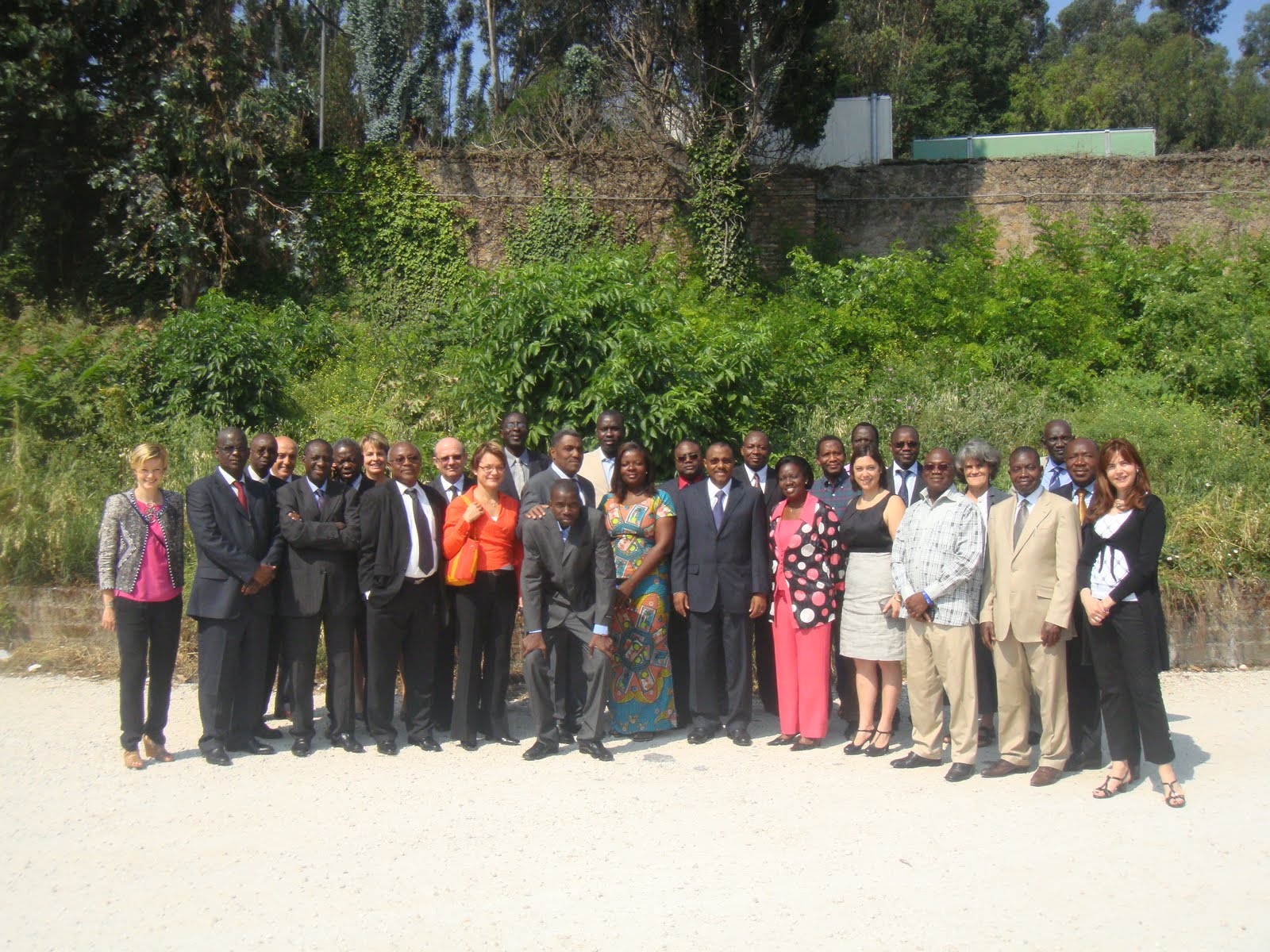
e end of 2011, project partners are coming together for a capitalisation and a closing workshop. During the next days (23-26 March), they will share experiences, draw lessons and discuss the way forward.

“The first meeting of all implementing partners showed, how beneficial it is, to exchange knowledge and experiences. It has been an important part of our collaboration since,” said Adriane del Torto, IFAD’s EUFF coordinator for West Africa. All participants have brought one or two examples of capitalization products – success stories, videos, posters or other materials – which will be reviewed by their peers to improve and enrich the products, before they are officially released. “The sharing of knowledge in this way has helped everyone involved in the projects. We all have learned how to properly identify and explain what works in our programs. This could potentially help to raise funds and to scale up our projects with relevant and efficient activities. From the experiences that will be shared here today, some have successfully been replicated in other settings. In the long-run this will lead to better and more sustainable results in development programmes. And this is why we have organized this capitalization workshop,“ explained Adriane in her opening statement (scroll down for the video).

Following the o
pening ceremony, every project presented their cases, followed by a short Q&A, and as promised, here are the answers to the questions raised above: How did the projects manage to spread new, more efficient seed growing techniques within such a short time, was one of the questions that came up. The answer came from the Ghanaian participants, who used a proven knowledge-dissmenination technique for their Root and Tuber Improvement and Marketing Programme (RTIMP): word of mouth. Many of the farmers, participating in the programme, produced their yam seeds on sites that were close to roads or other places with many people passing by every day . Soon, they realized that these farmers weren’t following the traditional seed production technique. They became curious. And learned from the farmers about the benefits of this new seed production technology – and how it works. In this way, the project reached a much larger, and growing group, who now uses the new technique.

The role of farmer organizations, was another issue, that came up frequently. All participants agreed, how important the organizations, such as cooperatives, are in enabling smallholders to increase their production. In some projects, for example the Management of Certified Groundnut Seeds Production in
Senegal, cooperatives and their establishment were a constituent part of the project design.

And last but not least, how can agricultural research support seed production? The answer to this was given by Prof Corneille Ahanhanzo from
Benin, who highlighted the need for strong links between agricultural research and seed producers: “Researchers help to find improved techniques and better seeds. We are pioneers for food security.”

Friday, January 27, 2012

Action plans and indicators - the road leading towards the end of the EU Food Facility in West Africa

The M&E workshop in preparation of the Final Report for the IFAD/EU Food Facility Programme in West Africa closed today.

Over the two days of the workshop, discussions and energy levels were at their best. It was a real pleasure to facilitate a workshop of this type with such a motivated group.

The day began by the participants giving feedback on the data collection tools developed the previous day. Each team was asked to review the questionnaire and personalise it to fit the needs of the country and context. The precisions brought to the document were mainly concerning some thinking about the partners and stakeholders involved in the implementation of the Food Facility. We also reviewed some semantics one again, as the questionnaire needs to be as clear as possible and a stand- alone document for someone who has not participated in the Ouagadougou workshop where the document was conceived.

The floor was then given to ICRISAT who presented their qualitative data collection questions to the rest of the group. The ICRISAT questions necessarily needed to differ from those of the country components as the institutional arrangements for the ICRISAT grant are somewhat different.

In any case, for both the country components and ICRISAT, the questions are centered around the following themes:

- Relevance of the programme and its similarities to other food security programmes

- Farmer assessment of the trainings/knowledge and support received

- Sustainability and probability of scaling up interventions/services once the project is closed

After agreeing on the questions, the participants with the guidance of the M&E Consultant, Task Manager and Head Agronomist for the EU FF, drafted an action plan including an implementation schedule going up until the discussion and endorsement of the final report to be submitted to the EU which will take place in Abidjan at the end of March 2012.

The first step in the action plan is to recruit a local consultant by component to alleviate project teams in the collection of the qualitative data set that was agreed upon for the EU FF.

At the end of the workshop, the particpats expressed their enthusiasm regarding the methodology and approach used to tackle the preparation of the final report to the EU Food Facility. All participants recognised the lack of qualitative data in many of the reports produced and appreciate the innovative approach towards producing a final report which truly incorporates impact.

As many pointed out though, it would have been very useful to have this workshop well before January 2012. The report writing team and participants are in any case motivated and ready to achieve objectives set forth during the workshop and translated into the challenging action plan.


Thursday, January 26, 2012

Indicators, indicators! They really get people talking!

Participatory M&E workshop towards the preparation of the Final Report on the EU Food Facility in West Africa

by Adriane Del Torto

Today, we opened the two day workhop on M&E for the EU Food Facility. Present at the worksessions were the M&E specialits and Production specialits from Benin, Mali, Senegal, Ghana and ICRISAT. The meetings took place in Ouagadougou, Burkina Faso at 'Eau Vive" a local NGO on 26 and 27 January 2012.


The objective of the meeting is to take stock of the efforts already made in M&E at the project level and to come up with an action plan to enable to collect qualitative data for the final report to the EU. The idea of a participatory M&E workshop came from some brainstorming between myself and some CPMs and the M&E consultant who is part of the team producing the final report as a solution to the lack of time for a mission visiting all components of the Food Facility in less than one month. 


The first day of the workshop was mainly to discuss results achieved and activities which did not take place and why. Then the group went through all of the EU indicators and discussed the relevance of many of those requested by the programme. In many cases, it was pointed out that baseline data was missing and that it would be difficult to report on all of the indicators in both the Logframe and the EU table. Each indicator was discussed and put into context to ensure proper understanding of the mechianisms.

Thi step was not planned on the original agenda, however, when considering the complexity of the programme, made of 7 distinct grant agreements, it became quite relevant to discuss requirements in order to have a somewhat harmonious report.

One we had agreed on the quantitative indicators, the rest of the day was dedicated to the qualitative ones. Adding a qualitative dimension to the final report of the EU FF was suggested to the EU during my last mission in Brussels in December 2011. My proposal was very much appreciated by the Programme Manager at the EU, who is very much looking forward to reading our results.
The lead M&E consultant and the group identified a series of themes and specific questions to ask programme stakeholders in order to collect the qualitative type data sought. These were accompanied by a list of information sources and data verification documents.
This first day, was a bit long, however, the output was quite positive. The debates between participants were lively and engaging and the colleagues present were strongly motivated by others' comments and questions. Let's  hope the ambiance at its best tomorrow as well.

Thursday, May 26, 2011

Seeding ideas: EU Food Facility Steering Committee Meeting


On the morning of 26 May, the discussions of the First Steering Committee Meeting for the EU Food Facility Regional Programme for West Africa implemented by IFAD were opened by Mr Mohamed Béavogui Director of the West and Central Africa Division of the Programme Management Department of IFAD and Ms Katariina Bastos, Programme Manager for the Food Facility at the European Commission in Brussels.
The EU Food Facility (EU/FF) is a programme launched by the EU for 1 billion euro in response to the rise in food prices in 2008. IFAD, one of the implementing agencies of the EU/FF received a contribution of Euro 20 million which it is implementing through its ongoing projects in Senegal, Mali, Benin, Côte d’Ivoire and Ghana. A part of the Grant has also been attributed to ICRISAT and ECOWAS.
The topics of discussion by the participants (about 40 in total) from IFAD, Senegal, Mali, Ghana, Benin, ICRISAT, the EU and ROPPA were among others the access to improved seeds, sensitization of actors to the use of improved seeds, inclusion of women and youth in activities and monitoring and evaluation..
During the course of the day, the debates have been dynamic and the participants are quite enthusiastic about sharing their knowledge. In fact, this Steering Committee Meetings is taking place at a critical moment in the implementation of the EU/FF as the rains have began recently and plating activities are in due course. The discussions, which sprung from each delegation’s presentation on their experiences of the EU/FF will allow the participants to identify solutions to common problems and possibly create new synergies in view of improving the implementation strategy for each of the of the EU/FF components in West Africa which is coming to an end this year.

Semer les expériences: Comité de Pilotage de la Facilité Alimentaire de l'UE


Ce matin jeudi 26 mai 20011 s’est ouvert, à Rome, dans l’enthousiasme, la première réunion du comité de pilotage de la Facilité Alimentaire de l’Union Européenne-FIDA-CEDEAO pour l’Afrique de l’Ouest. Ce programme, lancé par l’UE en 2008, pour faire face à l’envolée des prix des denrées et pour renforcer la sécurité alimentaire, a démarré effectivement en 2010. Le FIDA est chargé de mettre œuvre les activités de ce programme dans le cadre de ses projets en cours au Bénin, en Côte d’Ivoire, au Ghana, au Mali et au Sénégal. Une partie des fonds a aussi été alouée à l'ICRISAT et à la CEDEAO.
La quarantaine de participants ont été accueillis par M. Mohamed Béavogui, Directeur de la Division de l’Afrique de l’Ouest et du Centre du département de la Gestion des Programmes du FIDA et Mme Katariina Batsos, Déléguée de l’UE à Bruxelles, Chargée de Programme pour la Facilité Alimentaire.
Les sujets abordés lors du comité de pilotage, notamment l’accès aux semences améliorées, la sensibilisation des acteurs, l’inclusion des femmes et des jeunes dans les activités du programme, le suivi évaluation, seront discutés sous l’angle des innovations et des gains rapides, et des difficultés à surmonter.
Le comité de pilotage se fait en un moment clé. En effet, le programme est actuellement dans sa vitesse de croisière et phase cruciale de la mise en œuvre puisque la saison des pluies et le moment de semer les champs vient de commencer.
Les participants des pays bénéficiaires de la Facilité Alimentaire ainsi que des représentants de l’UE, du FIDA, de ICRISAT et du ROPPA sont très heureux de pouvoir saisir cette opportunité de partage de leurs expériences. Chacun a présenté les avancées et les défis rencontrés au cours de ces derniers mois et a pu échanger ses expériences et identifier des synergies sur la base d’activités exécutées dans la sous-région pour améliorer sa stratégie de mise en œuvre du programme, qui viendra à sa fin cette année.

Tuesday, December 1, 2009

ICRISAT – A Homecoming

We all knew it was going to be a big moment in the India mission. The President’s visit to ICRISAT at Pantacheru, near the southern Indian city of Hyderabad, was more than just a homecoming to a site where he had spent a decade of his professional career.

ICRISAT’s Director-General, William Dar, told him it was an honour and a pleasure to have a key player in agriculture and development – and a staunch supporter of ICRISAT and the whole CGIAR system – as chief guest at their Annual Day on December 1.

For the President, it was a precious opportunity for catching up with colleagues from his time as a scientist. As he toured the institute, various white-coated colleagues emerged from their labs to recall the working time together. When he arrived at the entomology lab, where he had worked, it was an emotional moment.

It was also the chance for a belated farewell party. When the President was called to take over his post as Director-General of the Africa Rice Centre (then WARDA), there was little time for all the farewells to be fitted in prior to his departure.

The President was keen to visit the large test plantations that surround the research site. And he identified a few plots that he had actually worked on himself, more than a decade ago. The expansion in test plots that has taken place in the meantime was significant.

The institute has dedicated to President, the Kanayo F Nwanze Crop Protection Laboratory and his visit was used to inaugurate the lab centre. Another facility was named after former chair of ICRISAT’s governing body, Dr Ragnhild Sohlberg from Norway.

The ICRISAT senior management met with the President where, among other issues, a grant proposal for research on understanding economic opportunities in semi-arid agriculture in South Asia and Sub-Saharan Africa was discussed.

The President pointed out that there had been excellent collaboration between ICRISAT and IFAD well before he took office and that this was the result of the high quality work that ICRISAT produces. He also told the Director-General that it was good to see them reaching out to the private sector for partnerships.

The President delivered the keynote address to the Annual Meeting on the role of agricultural research in the face of global challenges, including food security and climate change.

On the first day at Pantacheru an animated press conference was held attended by some 25 journalists.

“Agriculture, even smallholder agriculture in remote areas, must be treated as a business, that provides a livelihood and an income" , the President told the reporters, who were well-versed in agricultural and rural poverty issues.

“This business attitude is already happening in many parts of India” he said, noting that supporting smallholders with the right government policies was vital, policies that would link them to vibrant local competitive markets.

While in Hyderabad, the President also met the Chief Minister of Andra Pradesh, K. Rosaiah, who requested him on the possibility of IFAD supporting a major food security project covering seed development, mechanisation, farmer training and water conservation techniques. Media coverage in Hyderabad was extensive, as it was throughout the India visit.

By Farhana Haque-Rahman

Popular Posts