By Harold Liversage and Steven Jonckheere
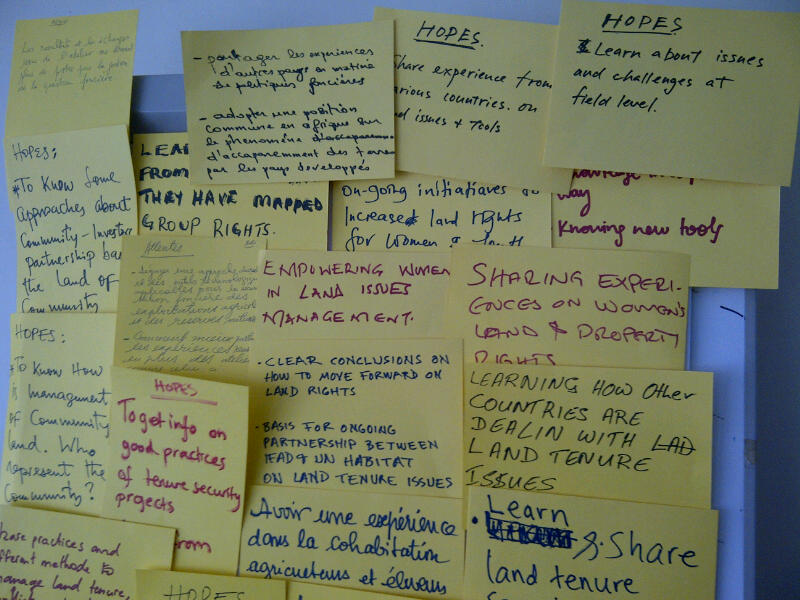
Last week in Nairobi, Kenya, IFAD and the Global Land Tool Network (GLTN) hosted a regional workshop on securing land and natural resource tenure to reduce poverty and enhance agricultural development. The workshop was very well attended and came up with a clear way forward. IFAD and GLTN will continue working together to develop practical tools for strengthening land and natural resource rights in IFAD-supported projects and programmes, while at the same time contributing to broader national, regional and international processes and policy dialogue.
GLTN is a global network that develops tools and approaches for securing land and natural resource rights. It brings together a range of practitioners, including surveyors, lawyers and representatives of civil society organisations, universities and governments. The GLTN Secretariat is housed in UN Habitat and is a member of the International Land Coalition (ILC).
As the Nairobi workshop demonstrated, GLTN is helping IFAD to strengthen lesson learning from the wealth of experience of IFAD-supported projects and programmes. In addition, it is supporting the further development of appropriate tools and approaches to strengthen land and natural resource rights for the benefit of these projects and others.
Land policy implementers
About 80 people attended the workshop, which took place from 29 to 31 May. Approximately 55 participants came from IFAD-supported projects and programmes, mainly in East and Southern Africa but also from West and Central Africa (specifically, from Ghana, the Gambia, Guinea and Burkina Faso). The rest came from civil society groups, farmers’ organisations, private sector enterprises, government departments and inter-governmental organisations more directly involved in land policy implementation.
Some of the notable regional and international organisations in attendance were the Joint Secretariat of the African Land Policy Framework and Guidelines initiative (known as the Land Policy Initiative, or LPI), the East African Farmers Federation (EAFF), the ILC Africa Platform, the Regional Centre for Mapping Resources for Development (RCMRD) and the International Federation of Surveyors (FIGS).
Five sub-themes were chosen for the workshop:
Follow-up actions
There was a general agreement among participants that the overall theme and topics were highly relevant for their work, and we think people were highly engaged in the discussions. UN Habitat and other GLTN partners were particularly impressed by the work being done by IFAD-supported projects and programmes.
Although the sub-themes were considered relevant, some participants proposed that the interface between micro-finance and land tenure should also be examined and that some of the sub-themes could be revised or better defined. For example, they said, the issue of group rights is not just about rangeland and forests, and the discussion of women’s land rights should be broadened to look at targeting poor and vulnerable groups, which include women and youth.
The workshop closed with a set of short- and long-term follow-up actions. Some will be undertaken by participants on their own initiative, and others will be followed up by IFAD and GLTN. A report on the workshop proceedings will be available by the end of June and will be posted on our land page in the Rural Poverty Portal, and elsewhere.
Many thanks to everyone involved in making the Nairobi workshop a success.
Harold Liversage is the regional land advisor and Steven Jonckheere is the land and natural resources associate for IFAD in East and Southern Africa.
Last week in Nairobi, Kenya, IFAD and the Global Land Tool Network (GLTN) hosted a regional workshop on securing land and natural resource tenure to reduce poverty and enhance agricultural development. The workshop was very well attended and came up with a clear way forward. IFAD and GLTN will continue working together to develop practical tools for strengthening land and natural resource rights in IFAD-supported projects and programmes, while at the same time contributing to broader national, regional and international processes and policy dialogue.
 |
| People from 20 African nations gather for a group photo at the land tenure security workshop in Nairobi. |
As the Nairobi workshop demonstrated, GLTN is helping IFAD to strengthen lesson learning from the wealth of experience of IFAD-supported projects and programmes. In addition, it is supporting the further development of appropriate tools and approaches to strengthen land and natural resource rights for the benefit of these projects and others.
Land policy implementers
About 80 people attended the workshop, which took place from 29 to 31 May. Approximately 55 participants came from IFAD-supported projects and programmes, mainly in East and Southern Africa but also from West and Central Africa (specifically, from Ghana, the Gambia, Guinea and Burkina Faso). The rest came from civil society groups, farmers’ organisations, private sector enterprises, government departments and inter-governmental organisations more directly involved in land policy implementation.
Some of the notable regional and international organisations in attendance were the Joint Secretariat of the African Land Policy Framework and Guidelines initiative (known as the Land Policy Initiative, or LPI), the East African Farmers Federation (EAFF), the ILC Africa Platform, the Regional Centre for Mapping Resources for Development (RCMRD) and the International Federation of Surveyors (FIGS).
Five sub-themes were chosen for the workshop:
- Mapping land and natural resources use and tenure
- Group rights
- Women’s land rights
- Land and water tenure
- Inclusive business models and land and natural resource tenure.
Follow-up actions
There was a general agreement among participants that the overall theme and topics were highly relevant for their work, and we think people were highly engaged in the discussions. UN Habitat and other GLTN partners were particularly impressed by the work being done by IFAD-supported projects and programmes.
Although the sub-themes were considered relevant, some participants proposed that the interface between micro-finance and land tenure should also be examined and that some of the sub-themes could be revised or better defined. For example, they said, the issue of group rights is not just about rangeland and forests, and the discussion of women’s land rights should be broadened to look at targeting poor and vulnerable groups, which include women and youth.
The workshop closed with a set of short- and long-term follow-up actions. Some will be undertaken by participants on their own initiative, and others will be followed up by IFAD and GLTN. A report on the workshop proceedings will be available by the end of June and will be posted on our land page in the Rural Poverty Portal, and elsewhere.
Many thanks to everyone involved in making the Nairobi workshop a success.
Harold Liversage is the regional land advisor and Steven Jonckheere is the land and natural resources associate for IFAD in East and Southern Africa.