Showing posts with label conservation agriculture. Show all posts

Friday, July 15, 2011

Day 6 – Conservation Agriculture: Bearing the Torch from Brazil To Africa

Greetings from Foz do Iguaçu – the town of Iguassu Falls – where we are wrapping up our intense workshop. We began the day with presentations and discussions – including an eye-opener from the Alliance for a Green Revolution in Africa (AGRA): the cost of environmental degradation in Africa ranges from 4% to 12% of GDP! Enormous.


Then we visited the Itaipu Dam, the operators of which provide payments to municipalities along the reservoir lake to provide the environmental service of implementing no-till agriculture to reduce siltation at the dam. The dam provides 25% of Brazil’s energy.

So how to adapt and adopt the Brazilian experience to the African reality? AGRA’s Rebbie Harawa called on all workshop participants to be "torchbearers" in their respective countries, to promote and support conservation agriculture practices and reverse the trend of degradation. The teams spent the afternoon and evening working with IAPAR, FEBRAPDP, FEPAGRO and CIRAD coaches preparing ideas to present to the group tomorrow - the last day of the workshop - on how what they have learned and observed can be applied in sub-saharan Africa. We will post all presentations early next week in a wrap up blog.

So that's it from Brazil - but we will be back with another post from IFAD HQ in Rome on Monday.

This blog prepared by Jeff Brez and Waltteri Katajamaki.

Day 5 – Is Conservation Agriculture Better for Women?

Sorry about being late with Day 5 post - we were just too tired after arriving late last night. Today we will share with you reflections on the Day 5 activities, and below that (scroll down!) analyse the question:


Does conservation agriculture increase or reduce labour for women?

After waking up on Day 5 in Santa Helena, we started with a very enlightening visit to a research centre CAP (Centro Avancada de Pesquisa) in Missal, which aims at searching for solutions for family farmers of the south-western Paraná region. Traditionally, smallholder farmers have used high levels of pesticides in maize, bean and soy production, and in 2003 the CAP was formed to search for ways to diversify production and make it environmentally sustainable as well as economically profitable for farmers. The CAP concentrates on capacity building of farmers, and on validating results through demonstration of innovative cropping systems, including mixed crop-livestock systems, and agro-processing. This local adaptive research is especially relevant for the area such as south-west Paraná, where temperatures vary between 0 and 45 degrees Celsius. The CAP research centre includes a 7-hectare area for demonstrations of sustainable and diversified farming, including intercropping, use of cover crops, production of seeds and seedlings, and processing of for example various fruits.

Another interesting aspect of the CAP is the way it works with public and private entities, including the second largest dam in the world, the Itaipú Dam. The electricity company provides financial assistance to the CAP as a form of payment for environmental services, because keeping erosion under control reduces operating costs of the dam. The smallholders farmers, the municipality of Missal, and the wider environment all benefit.

As examples of diversified production systems that CAP promotes, we also visited two family farms in the Missal area. The first farm, managed by Luis and Terezinha Trevisan, is dedicated to dairy production. With the help of the PRONAF loans that we also mentioned in Day 4's entry (2% interest per year over 8 years with 2-year grace period) and EMATER technical assistance they have been able to diversify their production to pasteurized milk and cheese on their farm. Daily they produce and process about 200 litres of milk from their 20 heads of cattle.

Finally we had an opportunity to visit a smallholder association market. The Bauernhouse market, located in town, sells the products of over 80 family farmers from the municipality of Missal, and also sells to governmental programmes such as school feeding. This market is a great example on how organized smallholders can sell their outputs effectively in the local market. Farmers receive 79% of sales with 21% going to the association. They hope to upgrade to cooperative status so they can issue forward contracts and other services.

Conservation Agriculture and Women


Does CA increase women’s workload – for example by shifting labor from planting to weeding? And what about that troublesome transition period of 1 - 15 years? Today a group of participants discussed the issue. Marietha Owenya of SARI (Tanzania), Rebbie Harawa of AGRA (Kenya) and Phillis Mwansa, Ministry of Agriculture, (Zambia) share their insights and experiences here.

Not surprisingly it is difficult to make a blanket assessment, because agro-ecological, social, cultural and cropping systems (and enabling environments) vary so markedly from zone to zone, including within countries. Success depends largely on the ability to accumulate enough biomass for groundcover. Research indicates that weed control is a major labour constraint without the use of herbicides under most conditions (see slide 4 of Marc Corbeels’ ppt from Day 1 – and the paper referenced below). That said, participants feel that CA is a winner for women – including women headed households: here’s why.

Conventional versus Conservation Agriculture: Division of Labor

Field preparation – less labour for both women and men with CA: In conventional systems with no machinery or animal traction available, women prepare fields/their farms using hand hoes. Men will prepare the land if machinery or animal traction is available regardless of the crop. CA reduces the time necessary to perform this task in either case because ploughing is discarded in favour of: 1) digging basins (this is labour intensive initially but the labour can be spread over months, and give women more flexibility in time use, and lessens over the years). Men also may participate in digging basins, 2) ripping into the ground cover, which is quicker than ploughing a whole plot/field and requires less energy from animals. Also, the conservation agriculture tools are lighter and more easy to use.


demonstration video: knife roller

Planting/Seeding/Sowing – less labour for women with CA: In conventional systems both women and men are involved, with women planting beans and other crops by themselves and women and men planting maize and cash crops together. The man will plant generally when animal traction or machinery is available, opening the furrow, with the woman following immediately behind (often with a baby on her back) to plant the seed. Women plant legumes, including beans, by themselves. If a “planting stick” / “dibbler” is in use, the man will make the holes and the woman, again, will follow behind to seed. In any case, the woman is always involved and almost always linked directly to the man. With conservation agriculture, women will use the jab planter or hand/hoe seed by themselves – and the jab planter does 4 things at once: opens the hole, plants the seed, fertilizes, covers the seed. The jab planter saves women time and renders them more autonomous in managing their time. Where animal traction (or machinery) is available their labour is freed as men use the CA seed planters, which both seed and fertilizer.


demonstration video: manual jab seeder


demonstration video: animal traction seeder

Weeding – less labour for women with CA with caveats: Weeding will tend to fall to women in either conventional or conservation agriculture systems, except, at times, in the case of crops that men consider particularly important such as maize or cash crops. Ploughing has the advantage of clearing the field of weeds for up to a few weeks while the newly planted crop grows, with weeding coming later to differing degrees depending on crop type and climatic conditions. Under conservation agriculture if herbicide is used (glyphosate has been promoted as part and parcel of transitioning to CA systems in Africa) labour is greatly reduced for women initially. As the main crop grows, weeding can become more complex depending on the cover crop in use and the herbicide and tools/instruments available, and can be very time consuming, substantially increasing labour for women. If the household owns a backpack herbicide sprayer or a sprayer implement (see demonstration video Day 2) then the man will tend to do the pre-emergence “weeding,” significantly reducing labour for the woman. Post-emergence weeding is more expensive (additional herbicide, implements and necessary know-how costs) and tends to fall to women in the absence of extra herbicide or tools. Women will either hoe-scratch the weeds for minimal soil disturbance or manually uproot. The better the soil cover the shorter the transition period to significantly reduced weeding.


demonstration video: manual sprayer

Harvesting – no difference in labour for women: In systems where the family harvests its own outputs, there is no difference in division of labour. Certain changes will, however occur under CA, including increased yields which increase labour / time spent on harvesting, However it is more efficient harvesting because the same field is producing more. The participants have observed that families tend to plant the same crops under CA, although proportions of crops may change due to the crop rotation requirement.

Increased Productivity - benefits to women: Marietha (participant from SARI, Tanzania) tells the story of Maria Erro, a widow with six children in Karatu, Arusha, Tanzania who, four years after adopting conservation agriculture on her 1.5 hectares of land was able to upgrade her home from thatched to corrugated iron.
In general: Increased productivity of main crop and introduction of legume cover crop (lablab, pigeon peas) outputs bring food security and extra protein for the family. The woman can invest her time saved in her children and preparing better meals – “food brings harmony to the couple / household.” Diversified production on the field spreads risk of the family and may result in extra outputs or cash with which the woman can procure food to improve the nutrition of the children. Extra income that comes from surplus can be invested (usually by the man) in inputs for the farm, health care and/or education of children, and improvement of the family dwelling.

Nota bene!! Decreases in yield
during transition periods of up to 10 - 15 years are observed (refer paper by Rusinamhodzi, Corbeels, van Wijk, Rufino, Nyamangara & Giller: A meta-analysis of long-term effects of conservation agriculture on maize grain yield under rain-fed conditions). Households need support from extension services if they experience reduced productivity during the transition periods.

Access all workshop blog posts (ppts, demonstration videos)here

Thanks also to Waltteri Katajamaki for his contribution to this blog post.

Tuesday, July 12, 2011

Day 3 – Conservation Agriculture Success? Institutional Partnerships with research and farmers at the center

Today we visited a thriving smallholder farm as well as IAPAR’s research station in Pato Branco. In the 1970s and 1980s Parana State was losing 100 tonnes of soil per hectare per year - that’s a loss rate of 1 centimetre/ha per year, while it takes nature 400 years to make 1 centimetre per year of soil! (source: IAPAR, Parana State Agricultural Research Institute) Something needed to be done.

So in the early 1970s, soon after Herbert Bratz made his pioneering trip to the USA, IAPAR began research into conservation agriculture methods. What has become crystal clear to the workshop participants, is that integrated institutional partnerships – with farmers themselves and their associations and cooperatives at the center– are necessary for changing mindsets and affecting change. The hard work paid off beginning in the early 1990s when the number of hectares under CA began to skyrocket.


One of the keys to the success of CA in Parana state was a focus on its crop-livestock systems. Not only permanent soil cover, but also more livestock forage was necessary, and IAPAR’s research helped determine which winter crops could best serve as both cover crops and forage for dairy cattle. Before 1992 there was almost no no-till in Parana State, while now, 20 years later, it is almost all no-till. Of course, IAPAR has not achieved this alone – it has worked with the national extension service, EMATER, with EMBRAPA, with municipalities, with SEAB, with FEBRAPDP, often sharing and embedding staff.


On the bus ride back to town, participants from AGRA (Alliance for a Green Revolution in Africa) and Lesotho stressed that demonstrations need to be guided by researchers and extension staff, but also carried out in farmers’ fields, so farmers can see firsthand the comparative advantages, benefits and costs of adopting conservation agriculture. An EMBRAPA participant enthusiastically agreed, saying this was the modus operandi in Parana State and elsewhere in Brazil.

Pictured at left, (Marietha Owenya, SARI, Tanzania) Marc Corbeels (CIRAD) and Waltteri Katajamaki (IFAD).

Day 2 – Reflections from Mauritania, Mozambique and Tanzania + more demos!

In the 1970s and 1980s, Parana State was seeing extreme erosion. When farmers lost their soil, they lost their farms, and began moving to urban areas in large numbers. Conservation Agriculture was a key part of the solution, strongly supported by all levels of government, including Parana State, to stop the desperate migration and increase the productivity of the farms, giving farmers a chance to make a livelihood on their land.

Conservation Agriculture: No plough! Use cover crops (continuous soil cover)! Crop rotation! (No burn! )

Because we didn’t have time to download everything yesterday, we are adding the below demonstration videos and interview videos now in a second posting for Day 2 – and also EMATER’s powerpoint.

No till agriculture in parana state brazil-july 2011 by emater

The interview videos below convey the initial impressions of participants after 2 days of workshop and our visit to the Roik family farm. We ask these questions: 1) What is the current situation of conservation in your country today? 2) What do you feel about what you have seen and learned so far here in Brazil? 3) What do you see as the main challenges for scaling up conservation agriculture in your country?

Interview video - Marietha Owenya, Principal Agriculture Field Officer, Selian Agriculture Research Institute (SARI), TANZANIA – English

Interview video - Magalhaes Miguel, Plant Physiologist, Agricultural Research Institute of Mozambique, MOZAMBIQUE - Portugues

Interview video - Mamadou Guye, Secretaire General de l’Association des Usagers du Walo, MAURITANIE - Francais

A note on the knife roller demonstration video we posted in our previous blog: normally the cover crop would be higher. The knife roller “lays down” or “smashes” the cover crop without cutting it, to obtain a slower decomposition and thus retain soil cover for as long as possible, and also to avoid clogging the blade of the Animal Traction Seeder (also featured in our last blog). You can also see a photo of a knife roller in action in a taller cover crop IAPAR’s powerpoint in our Day 3 blog (coming soon!).

As a bonus, we are posting two more demonstration videos – very short – just in case you’ve never seen a “Fitarelli” Manual Jab Seeder or a manual sprayer in action.

Demonstration video: Manual Jab Seeder

Demonstration video: Manual Sprayer

And as an even bigger bonus, we spoke with Ataides Fitarelli (in photo) who joined our workshop. His grandfather Reinaldo invented the first manual jab seeder before traction animals were available. He said, “The jab seeder was much easier to use on the slopes and made the work easier for the smallholder farmers – it helped them to feed themselves. Today, we continue to produce for the smallholder market, the large industries don’t invest in them. We produce about 10,000 jab planters per year and we export our various products – www.fitarelli.com.br – to more than 50 countries.”

Monday, July 11, 2011

Day 2: Conservation Agriculture South-South “Virtual” Field Workshop in Brazil: First Demonstrations

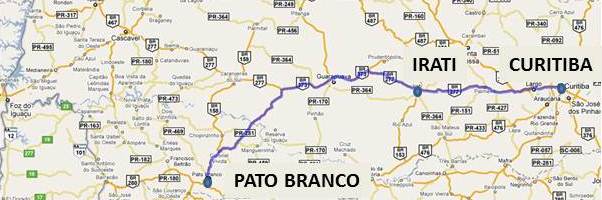
Today we travelled from Curitiba to Irati to learn how Conservation Agriculture has been scaled up by government and communities. EMATER made an excellent presentation in the morning (will post it later, having technical problems now), then in the afternoon the Roik family welcomed us to their 24-hectare conservation agriculture farm, where we saw demonstrations of manual and animal powered tools (see videos below).

Agro-ecological info:
Irati is about 900 meters above sea level and is a sub-tropical forested area. It receives approximately 1700 mm of rainfall per year (1000 in summer, 700 in winter). The sedimentary soils are very acidic with high stone content, low declivity and an abundance of steep slopes . Main crops are maize, common beans, tobacco and wheat.

About half an hour’s drive from Irati town centre, in a dramatic green and hilly landscape we arrived at Vittorio Roik’s family farm. The farm is the average size for a family farm in the region, and is completely under CA cultivation. Roik’s son and daughter-in-law work on the steep hills cultivating various crops, while Roik and his wife concentrate on milk production. Today the farm is a model CA farm, used as an example by IAPAR, but ten years ago everything was different.

In 2001 Vittorio was invited to participate in an event organized by EMATER and IAPAR in Ponta Grossa to learn and see what CA can do to yields. He came out of the event impressed, and initially planted half hectare of maize using CA methods. Seeing significant yield increases, the family decided to adopt CA on the entire 24 hectares. This was not an easy decision, as the initial investment on the necessary equipment such as the no-till seeder and knife roller were expensive. But the family together agreed to sell their only cow in order to be able to shift completely to CA.

This brave decision proved to be the right one for the Roik family. They have been able to diversify from original maize and beans to include onions, tomatoes and tobacco, and now they have over twenty heads of cattle that provide over 200 litres of milk every day. While the yields before the shift to CA on the farm averaged 2000 kg/ha, now the farm produces up to 10,000 kg/ha, an impressive improvement in the production levels.

Demonstration Video: Knife Roller

Demonstration Video: Animal Traction Seeder

In addition to the demonstration videos, later today we will introduce three workshop participants from Tanzania (Marietha Owenya - English), Mozambique (Magalhaes Miguel - Portugues) and Mauritania (Mamadou Guye - Francais) who will share their impressions each day.

read Day 1 blog

read Workshop Introduction blog

Sunday, July 10, 2011

Day 1: Conservation Agriculture "Virtual"Field Workshop in Brazil

Read Introductory Blog for Workshop

On the morning of the opening day of the workshop the group of around 25 workshop participants gathered in the conference room of a Curitiba hotel. Many had travelled for over 24 hours to reach Curitiba, but soon after breakfast we were up and running with the day’s programme. Much of it concentrated on the background on conservation agriculture (CA), and challenges that African countries are facing in its adoption.

Herbert Bartz (at left), a pioneer conservation agriculture adopter in Brazil in the early 1970's (and now President of the Brazilian CA Federation), told the group how he borrowed money to visit an American farmer in Kentucky to learn about CA, and imported the first no-till planter into Brazil.

In his presentation, Dr. Abednego Kiwia, a soil health programme coordinator of AGRA, stated that a major challenge for smallholder agriculture in Africa today is poor soil fertility and consequent low productivity levels. This, he said, due to numerous reasons, including diverse agro-ecologies and farming systems, limited national R&D capacity, over-reliance on rain-fed agriculture, and inadequate enabling of agricultural policies and investments. The presentations of seven AGRA-projects participating in the workshop further identified problems for African agriculture, including high levels of food insecurity, low farm income, unsustainable use of inorganic fertilizer, and limited or no market access for both inputs and outputs. Nevertheless, several African participants highlighted positive outcomes from initial CA experiences, including increased yields and improved food security and household income.

Researcher Dr. Marc Corbeels from CIRAD provided an analysis of yield trends in controlled rainfed CA experiments (see his ppt below), highlighting that while long term yield increases are observed, in the short term yields decrease on average, indicating a major hurdle for adoption of CA by poor smallholders. In addition, he said, CA brings trade-offs, including competing uses for crop residues that can lead to excessive removal of ground cover, difficulties in keeping grazing cattle off of the field after harvest, and shifting in labor patterns (less labour is needed for tilling, but more labour input is required for weeding). Also, he noted that due to poor functioning of markets farmers have limited access to necessary inputs, including herbicides and no-till equipment. Finally, he stressed that CA is knowledge-intensive and must necessarily be tailored to a large diversity of farmers and agro-ecological conditions.


Stephen Lyimo from Tanzania emphasised that the adoption of CA required a change in mindsets for smallholders: they need to be shown both the yield and income analysis before changing their strategies. Finally, as Patrick D’Addario from the organizing LaGuardia Foundation noted, while the participants will see plenty of options during the workshop, there is not a recipe to follow, "nothing to copy:" each project must find local solutions for uptake and upscaling of CA.

Stay with us for Day 2. From tomorrow, we will have our first demonstration: weed control through the use of cover crop and the use of the knife roller!!

Don't miss the demonstration video and reactions from our representative voices from Tanzania, Mozambique and Mauritania.

Popular Posts