Showing posts with label enrm. Show all posts

Friday, May 4, 2012

Just released for Rio+20: Video documentary on food challenges in Bangladesh, Chad and Ethiopia

Written by James Heer

In the context of the upcoming United Nations Conference on Sustainable Development (Rio+20) in June 2012, the Rome-based UN agencies released a new Hungry Planet episode, featuring solutions that work to increase food production and feed the expected 9.3 billion people by 2050.

The special Rio+20 episode of Hungry Planet takes us from Bangladesh, where rising sea levels and increasingly severe storms threaten millions of farmers living along the country's southern coast, to Chad, where unpredictable weather patterns fuel hunger and malnutrition, and finally Ethiopia, where distribution of high yield root and tuber varieties help farmers increase production in times of drought.


Hungry Planet is a web-based television series about global food issues and agricultural development. Each episode takes viewers to remote locations around the world and tells the stories of real people - farmers struggling to increase food yields while adapting to climate change, families on the run fleeing conflict and famine, scientists and aid workers on the frontlines searching for solutions that will ensure there’s enough food to feed a hungry planet now and in the future. Stories are produced by the United Nation’s three food agencies – the World Food Programme (WFP), the Food and Agriculture Organization (FAO), and the International Fund for Agricultural Development (IFAD).

The next episode will be released in early June 2012. Stay tuned.

Find out more about how IFAD is involved in Rio+20.

For more Hungry Planet episodes, check IFAD’s Video Archive.

Wednesday, April 4, 2012

Pastoralisme durable au #Maroc

par Ilaria Firmian


La semaine dernière, j’ai accompagné sur le terrain une visite du Trésor américain au Nord Est du Maroc, qui dans le cadre d’une mission plus vaste voulait aussi voir un exemple opérationnel d’un projet du Fonds de l’Environnement Mondial. Je ne connaissais le Projet de Lutte Participative contre la Désertification et la Réduction de la Pauvreté dans les Hauts Plateaux de l’Oriental que par quelques lectures. J’ai découvert une réalité incroyablement riche en termes d’expériences positives et innovantes.


La visite de terrain a commencé par un déjeuner généreusement offert par nos hôtes à Ain Beni Mathar. Parmi les nombreux mets qui nous furent généreusement offerts, un mouton rôti entier nous a été servi !


Ce mouton symbolise à lui seul l’ histoire des Hauts Plateaux de l’Oriental!


Cette race ovine locale, le Beni Guil, est certifiée IGP («indication géographique protégée»). Le goût particulier de sa viande provient des qualités génétiques de la race mais aussi de l’herbe qui le nourrit, l’Artemisia herba-alba. Cela rends cette race très prisée dans le pays et lui donne une haute valeur marchande. Malheureusement, l’écosystème qui abrite le Beni Guil est de plus en plus en danger.


Les écosystèmes arides et semi arides des Hauts Plateaux de l’Oriental au Maroc subissent une dégradation profonde due au changement climatique (cette année est la troisième année consécutive de sècheresse et 50% de la production céréalière est déjà perdue) et aux mauvaises pratiques de gestion des terres et du cheptel.


Le projet intervient prioritairement dans la gestion durable des terres (GDT) et la gestion intégrée des ressources en eau soit à un niveau politique, en intégrant ces thématiques dans les principaux programmes et initiatives de développement local, soit directement sur le terrain par la construction de micro barrages pour approvisionner les animaux en eau, par la mise en repos des pâturages et par la fixation de dunes.


Ce projet FEM a été conçu en étroite collaboration avec la phase 1 du Projet de Développement des Parcours et de l’élevage dans l’Oriental, soutenu par le FIDA. Ce projet a constitué une base solide pour une intervention consistante sur financement du FEM, et a fourni un cadre institutionnel solide. De plus, il a permis la promotion d’actions innovantes, en particulier la création de coopératives (associations de gestion des pâturages) impliquées dans la totalité des activités du projet, facilitant un haut degré de participation et d’appropriation par les communautés rurales. Une simple visite sur le projet montre le rôle central joué par les éleveurs dans la vie du projet.


Des approches particulièrement innovantes en termes de GDT sont aussi testées, comme par exemple l’utilisation de la charrue Vallerani (un brevet italien) qui permet de créer dans le sol un système de micro-bassins et de sacs enterrés pour recueillir l'eau de pluie et des éléments fertilisants. Ceci favorise la restauration des pâturages dégradés grâce à une meilleure germination et croissance des plantes endogènes mais aussi par la transplantation d'espèces nouvelles préparées en pépinières.


Une autre innovation est l’utilisation dans le processus d’afforestation du produit Zander, un produit biologique provenant de sédiments lacustres, qui contient un éventail de nutriments et hormones de croissance des plantes naturelles stimulant l ’enracinement des plantes et réduisant significativement les besoins en eau.


Le projet a financé aussi l’achat de stations agro-météorologiques automatiques, qui collectent les données nécessaires pour mettre en place un système d’alerte précoce à la sécheresse.


Enfin, pour diminuer la pression sur la terre, le projet promeut des activités génératrices de revenus dont bénéficient principalment les femmes, y compris des circuits d’écotourisme qui suivent le mode de vie des pasteurs nomades.


Ainsi on verra bientôt des touristes parcourir les plateaux, dormir sous la tente, garder des moutons et manger leur délicieuse viande rôtie! et la boucle sera bouclée!

Monday, October 10, 2011

Climate smart agriculture, additionality and business as usual

by Dr. Bruce Campbell, Director, CGIAR Programme on Climate Change, Agriculture and Food Security (CCAFS)

In one workshop session at the Bonn SBSTA one participant said “We are doing nothing new”. In the Second Global AgriKnowledge Share Fair, held late last month at IFAD headquarters in Rome, participants in one session felt that “perhaps 80% of climate smart agriculture (CSA) is made up of what we already know how to do and are trying to do”. I realise this refers to the proven technologies and practices that can be called upon in CSA, but we also have to consider “additionality”. “Additionality” is a keyword in climate change negotiations. Additionality can be defined as the extent to which a new input adds to the existing inputs (instead of replacing any of them) and results in a greater aggregate. The word is applied to climate finance – the call for developed countries to provide, “new and additional” climate change financing to developing countries. And it is also a key word applied to mitigation interventions – the interventions must reduce greenhouse gas emissions compared to business as usual (or compared to the agreed baseline). Additionality is less frequently applied to adaptation, but even here it has been raised; and it is only time before metrics will be needed to show how climate finance has improved adaptive capacity (e.g., see the chapter on MRV in the Meridian Institute Report on Agriculture and Climate Change) http://www.climate-agriculture.org/~/media/Files/Projects/CCAg%20microsite/Agriculture%20and%20Climate%20Change%20Scoping%20Report%2012%20July%202011.pdf).

So why is “climate-smart agriculture” additional to business as usual? CSA includes the explicit recognition that there are three (or more) outcomes that are sought, two of which are climate-related. There are the business as usual outcomes associated with agricultural development – e.g. production increases, improved agricultural markets, enhanced food security, empowered farmer organisations etc. Then there are the climate change outcomes – enhanced adaptation to climate change, and enhanced contribution of agriculture to climate change mitigation.

And, invariably, when we seek to enhance more than one outcome there will be trade-offs that have to be dealt with. To illustrate some of these – rising temperatures in the Indo-Gangetic plains mean that wheat may need to be planted earlier, but the easy way to do that is to burn the rice residues of the previous crop, thus increasing greenhouse gas emissions. Movement of potato farmers up the Andes to escape the pests and diseases from a warming world will result in the destruction of carbon-rich grasslands. Crop insurance may help deal with crop failures due to extreme events in the short term, but may in the long term be maladaptive – the real solution being more transformative adaptation (changing crop species, out-migration etc). So, CSA is different from business as usual in that the trade-offs amongst production increases, adaptation and mitigation are explicitly recognised and dealt with, both for short and long time scales.

CSA is also not business as usual in terms of the partnerships needed to foster outcomes.
The climate science community and meteorological departments need to be more closely involved with the agricultural community – for providing meaningful seasonal, near-term and decadal forecasts of climate which are essential if adaptation to increased variability and progressive climate change is to be successful. Given the predicted increase in frequency and severity of extremes, much more attention has to be given to climate risk management. This also needs better partnerships with the crisis response community and insurance sector. We also have to bring in a completely different group of scientists – those dealing with measuring greenhouse gas emissions.

There are many technologies and practices that are known that can be brought to bear on CSA. But CSA is not business as usual, as there are also many technologies and practices that are not climate-smart! Fertiliser subsidies may enhance food production outcomes but will often result in increased greenhouse gas emissions. Building large irrigation schemes in regions where rivers are likely to dry will do nothing for adaptation over the longer term. Promoting crops and livestock that are increasingly difficult to grow in specific agro-ecological zones is not climate-smart.

Markets in a climate-smart world are likely to be different. Many western diets are poor for human health and the environment. There is increasing recognition that eating habits will need to change. Fat taxes are being introduced. There are campaigns about “carbon footprints”. This trend is likely to intensify. In a climate-smart world, developing countries will need to improve the efficiency of production methods for export products if they are to compete; or may need to shift to alternative products that have less of an environmental impact.

Climate-smart agriculture is likely to be very different in different places. In some regions of the world we have to expect greenhouse gas emissions to increase, given the significant yield gaps that exist. But even here it is not business as usual, as the emissions per unit food produced will likely be lower than under business as usual. In other regions of the world, especially in developed countries, CSA will involve de-intensifying agriculture to reduce the environmental footprint. In some parts of the world, we can expect incremental adaptation as varieties change and as cropping systems are altered. In other parts we can expect transformative adaptation as industries move and transform; as new crops are brought in; as major shifts occur between livestock and crops.

CSA will bring in new policies. This is already the case in some countries. For example, we see “carbon farming initiatives”. NAMAs and NAPAs are widespread and are increasingly giving more attention to agriculture. REDD+ plans are recognising agriculture as a driver of deforestation and we can expect greater attention to the details of how to solve this – involving policies and actions in the forestry and agriculture sectors.

CSA is also about visioning an uncertain future world, and about acting on those visions. While we may know many of the solutions to today's problem’s, we now have to plan for the next decade – with rising temperatures and more extreme events. Seasonal forecasting and long term climate projections are, unfortunately, riddled with uncertainty (though we can expect this situation to improve with further research). Tools are now being put in place that will help development practitioners and service providers to farmers envision a future world. With a click on a site on a map you should be able to get a series of predictions about future climates. With a click on a site you should be able to see places which can be visited to get a glimpse of the likely future climate for your site. Farmer-to-farmer visits can be organised to such analogue places to exchange views on how farming may have to shift.

CSA is also about a new research agenda. There are many new research issues that need urgent attention. We need downscaled climate projections that work for those involved in agriculture. We need much better seasonal forecasting for climate risk management. We need enhanced index-based insurance products. Farmers, extension workers and development planners need the decision support tools to help navigate the trade-offs amongst production goals, adaptation goals and mitigation goals. We need basic information on the costs of different options (to take a case in point, the costs of soil carbon sequestration in Australia range from $10-50/ton CO2. Such lack of precision is having major implications for policy development). And CSA means a new wave of attention to breeding – breeders need to think about what is needed in 10-20 years time, with crop-specific strategies. The implications of climate change on pests and diseases is a major area for research.

CSA is not business as usual. It has many dimensions of additionality. But there are plenty of proven technologies and practices that can be promoted today for a climate-smart world.

Friday, July 15, 2011

Day 6 – Conservation Agriculture: Bearing the Torch from Brazil To Africa

Greetings from Foz do Iguaçu – the town of Iguassu Falls – where we are wrapping up our intense workshop. We began the day with presentations and discussions – including an eye-opener from the Alliance for a Green Revolution in Africa (AGRA): the cost of environmental degradation in Africa ranges from 4% to 12% of GDP! Enormous.


Then we visited the Itaipu Dam, the operators of which provide payments to municipalities along the reservoir lake to provide the environmental service of implementing no-till agriculture to reduce siltation at the dam. The dam provides 25% of Brazil’s energy.

So how to adapt and adopt the Brazilian experience to the African reality? AGRA’s Rebbie Harawa called on all workshop participants to be "torchbearers" in their respective countries, to promote and support conservation agriculture practices and reverse the trend of degradation. The teams spent the afternoon and evening working with IAPAR, FEBRAPDP, FEPAGRO and CIRAD coaches preparing ideas to present to the group tomorrow - the last day of the workshop - on how what they have learned and observed can be applied in sub-saharan Africa. We will post all presentations early next week in a wrap up blog.

So that's it from Brazil - but we will be back with another post from IFAD HQ in Rome on Monday.

This blog prepared by Jeff Brez and Waltteri Katajamaki.

Day 5 – Is Conservation Agriculture Better for Women?

Sorry about being late with Day 5 post - we were just too tired after arriving late last night. Today we will share with you reflections on the Day 5 activities, and below that (scroll down!) analyse the question:


Does conservation agriculture increase or reduce labour for women?

After waking up on Day 5 in Santa Helena, we started with a very enlightening visit to a research centre CAP (Centro Avancada de Pesquisa) in Missal, which aims at searching for solutions for family farmers of the south-western Paraná region. Traditionally, smallholder farmers have used high levels of pesticides in maize, bean and soy production, and in 2003 the CAP was formed to search for ways to diversify production and make it environmentally sustainable as well as economically profitable for farmers. The CAP concentrates on capacity building of farmers, and on validating results through demonstration of innovative cropping systems, including mixed crop-livestock systems, and agro-processing. This local adaptive research is especially relevant for the area such as south-west Paraná, where temperatures vary between 0 and 45 degrees Celsius. The CAP research centre includes a 7-hectare area for demonstrations of sustainable and diversified farming, including intercropping, use of cover crops, production of seeds and seedlings, and processing of for example various fruits.

Another interesting aspect of the CAP is the way it works with public and private entities, including the second largest dam in the world, the Itaipú Dam. The electricity company provides financial assistance to the CAP as a form of payment for environmental services, because keeping erosion under control reduces operating costs of the dam. The smallholders farmers, the municipality of Missal, and the wider environment all benefit.

As examples of diversified production systems that CAP promotes, we also visited two family farms in the Missal area. The first farm, managed by Luis and Terezinha Trevisan, is dedicated to dairy production. With the help of the PRONAF loans that we also mentioned in Day 4's entry (2% interest per year over 8 years with 2-year grace period) and EMATER technical assistance they have been able to diversify their production to pasteurized milk and cheese on their farm. Daily they produce and process about 200 litres of milk from their 20 heads of cattle.

Finally we had an opportunity to visit a smallholder association market. The Bauernhouse market, located in town, sells the products of over 80 family farmers from the municipality of Missal, and also sells to governmental programmes such as school feeding. This market is a great example on how organized smallholders can sell their outputs effectively in the local market. Farmers receive 79% of sales with 21% going to the association. They hope to upgrade to cooperative status so they can issue forward contracts and other services.

Conservation Agriculture and Women


Does CA increase women’s workload – for example by shifting labor from planting to weeding? And what about that troublesome transition period of 1 - 15 years? Today a group of participants discussed the issue. Marietha Owenya of SARI (Tanzania), Rebbie Harawa of AGRA (Kenya) and Phillis Mwansa, Ministry of Agriculture, (Zambia) share their insights and experiences here.

Not surprisingly it is difficult to make a blanket assessment, because agro-ecological, social, cultural and cropping systems (and enabling environments) vary so markedly from zone to zone, including within countries. Success depends largely on the ability to accumulate enough biomass for groundcover. Research indicates that weed control is a major labour constraint without the use of herbicides under most conditions (see slide 4 of Marc Corbeels’ ppt from Day 1 – and the paper referenced below). That said, participants feel that CA is a winner for women – including women headed households: here’s why.

Conventional versus Conservation Agriculture: Division of Labor

Field preparation – less labour for both women and men with CA: In conventional systems with no machinery or animal traction available, women prepare fields/their farms using hand hoes. Men will prepare the land if machinery or animal traction is available regardless of the crop. CA reduces the time necessary to perform this task in either case because ploughing is discarded in favour of: 1) digging basins (this is labour intensive initially but the labour can be spread over months, and give women more flexibility in time use, and lessens over the years). Men also may participate in digging basins, 2) ripping into the ground cover, which is quicker than ploughing a whole plot/field and requires less energy from animals. Also, the conservation agriculture tools are lighter and more easy to use.


demonstration video: knife roller

Planting/Seeding/Sowing – less labour for women with CA: In conventional systems both women and men are involved, with women planting beans and other crops by themselves and women and men planting maize and cash crops together. The man will plant generally when animal traction or machinery is available, opening the furrow, with the woman following immediately behind (often with a baby on her back) to plant the seed. Women plant legumes, including beans, by themselves. If a “planting stick” / “dibbler” is in use, the man will make the holes and the woman, again, will follow behind to seed. In any case, the woman is always involved and almost always linked directly to the man. With conservation agriculture, women will use the jab planter or hand/hoe seed by themselves – and the jab planter does 4 things at once: opens the hole, plants the seed, fertilizes, covers the seed. The jab planter saves women time and renders them more autonomous in managing their time. Where animal traction (or machinery) is available their labour is freed as men use the CA seed planters, which both seed and fertilizer.


demonstration video: manual jab seeder


demonstration video: animal traction seeder

Weeding – less labour for women with CA with caveats: Weeding will tend to fall to women in either conventional or conservation agriculture systems, except, at times, in the case of crops that men consider particularly important such as maize or cash crops. Ploughing has the advantage of clearing the field of weeds for up to a few weeks while the newly planted crop grows, with weeding coming later to differing degrees depending on crop type and climatic conditions. Under conservation agriculture if herbicide is used (glyphosate has been promoted as part and parcel of transitioning to CA systems in Africa) labour is greatly reduced for women initially. As the main crop grows, weeding can become more complex depending on the cover crop in use and the herbicide and tools/instruments available, and can be very time consuming, substantially increasing labour for women. If the household owns a backpack herbicide sprayer or a sprayer implement (see demonstration video Day 2) then the man will tend to do the pre-emergence “weeding,” significantly reducing labour for the woman. Post-emergence weeding is more expensive (additional herbicide, implements and necessary know-how costs) and tends to fall to women in the absence of extra herbicide or tools. Women will either hoe-scratch the weeds for minimal soil disturbance or manually uproot. The better the soil cover the shorter the transition period to significantly reduced weeding.


demonstration video: manual sprayer

Harvesting – no difference in labour for women: In systems where the family harvests its own outputs, there is no difference in division of labour. Certain changes will, however occur under CA, including increased yields which increase labour / time spent on harvesting, However it is more efficient harvesting because the same field is producing more. The participants have observed that families tend to plant the same crops under CA, although proportions of crops may change due to the crop rotation requirement.

Increased Productivity - benefits to women: Marietha (participant from SARI, Tanzania) tells the story of Maria Erro, a widow with six children in Karatu, Arusha, Tanzania who, four years after adopting conservation agriculture on her 1.5 hectares of land was able to upgrade her home from thatched to corrugated iron.
In general: Increased productivity of main crop and introduction of legume cover crop (lablab, pigeon peas) outputs bring food security and extra protein for the family. The woman can invest her time saved in her children and preparing better meals – “food brings harmony to the couple / household.” Diversified production on the field spreads risk of the family and may result in extra outputs or cash with which the woman can procure food to improve the nutrition of the children. Extra income that comes from surplus can be invested (usually by the man) in inputs for the farm, health care and/or education of children, and improvement of the family dwelling.

Nota bene!! Decreases in yield
during transition periods of up to 10 - 15 years are observed (refer paper by Rusinamhodzi, Corbeels, van Wijk, Rufino, Nyamangara & Giller: A meta-analysis of long-term effects of conservation agriculture on maize grain yield under rain-fed conditions). Households need support from extension services if they experience reduced productivity during the transition periods.

Access all workshop blog posts (ppts, demonstration videos)here

Thanks also to Waltteri Katajamaki for his contribution to this blog post.

Wednesday, July 13, 2011

Day 4 – Conservation Agriculture Needs an Enabling Environment

After a dinner reception hosted by the mayor of the municipality of Pato Branco on Tuesday evening, the workshop resumed Wednesday morning slightly later than usual. We travelled to Coronel Vivida to learn about microcredit opportunities for smallholder farmers in the state of Paraná, after which we had a chance to visit an idyllic and successful organic family farm outside the town (fish pond surrounded by indigenous fruit trees, pasture up the hill and beyhond that sugar cane).

(The below ppt was delivered on Day 3, and has great background on conservation agriculture and cover crops)


Thirteen years ago Adir Lino (at left) completed his farm's transition into organic production. He chose organic farming because he could not make ends meet with conventional (chemical / input intensive) farming of soybeans and noticed negative health effects on his family. Today his farm has high levels of diversity, and all of the production is integrated into one system (the meat and honey production is not fully organic). This, Adir says, has been the key for success. For the Paraná region the farm is relatively small – a total of 17 hectares, half of which is under cultivation while the other half is kept as a reserve forest (more than the federally mandated 20%).

The farm uses only family labour, with Adir, his wife and his parents working together . And it sounds like there might be quite a bit of work to do with all the different products of the farm: sugar cane, corn, beans, rice, fruits integrated in the agroforestry system, cassava, vegetables, honey, fish, poultry, dairy… You name it! Where possible, the production is organic, and minimum tillage and cover crops such as black oat, ryegrass and radish are used. In addition, agroprocessing is being done at the farm to further add value to the products, which are then sold to Brazil’s school feeding programme, in regional markets, and to customers directly at the farm.

Today, Adir’s family farm is a shining example of what can be achieved through using diversified and integrated farming systems. As workshop participant August Basson, from Lesotho, put it, Adir’s farm is something of a paradise. The question remains as to how these practices can be adapted to the realities of African smallholder farms.

Parana State has seen incredible yield and productivity increases since 1992 thanks to conservation agriculture, but other things have changed, too.

As Dr. Ricardo Ralisch of EMBRAPA and University of Londrina and Danilo Rheinheimer dos Santos of FEPAGRO (Rio Grande Do Sul) tell it, in the 1980s no-till was increasing for big farmers and mechanized (tractor-powered) farms, but smallholders were not in the picture at scale. During this time the research institutes (EMBRAPA, IAPAR, universities) were learning about conservation agriculture to help farmers become more efficient and smallholders more productive. The turning point for smallholders was the introduction of animal traction tools for conservation agriculture, which IAPAR designed. With financing from Monsanto and Semeato, the first 36 prototype animal traction planters, “gralha azuls,” were produced in 1985. They were provided to the extension agency EMATER, who then worked with smallholder farmers, IAPAR and others to introduce conservation agriculture through countless field demonstrations.

Conservation agriculture helped the struggling smallholders who previously produced only grain or cash crops, to develop integrated crop-livestock systems. Now Parana state is a major producer of dairy products, powered by smallholder production.
In 1992, the conservation agriculture federation FEBRADPDP was founded and the revolution was in motion.

During the 1990’s some government support for small farmer programmes came in the form of loans through PRONAF to cooperative investments for agro-processing and storage systems. Work also continued on improving infrastructure including rural roads for market access.

As incomes steadily grew, smallholder communities became more organized and asked municipal leaders and politicians for stronger support. In the 2000s, government investment in smallholders increased through beefed up credit programmes through PRONAF and the creation of a new Ministry for Agrarian Development, which implemented policies and programmes specifically targeting smallholders. One key policy now regulates market for smallholders and includes a programme of direct buying from small farmers by municipalities – each municipality must purchase at least 30% of food it supplies to schools, welfare programmes and military needs from small farms.

Adir Lino accessed credit from PRONAF to buy his agroprocessing equipment (a 5 year group loan at 1.2%/yr interest) and also sells his produce to the municipality, among others. Clearly, his family's success is the result of organic and conservation agriculture approaches together with a strong enabling environment.

Reporting by Jeff Brez and Waltteri Katajamaki

Tuesday, July 12, 2011

Day 3 – Conservation Agriculture Success? Institutional Partnerships with research and farmers at the center

Today we visited a thriving smallholder farm as well as IAPAR’s research station in Pato Branco. In the 1970s and 1980s Parana State was losing 100 tonnes of soil per hectare per year - that’s a loss rate of 1 centimetre/ha per year, while it takes nature 400 years to make 1 centimetre per year of soil! (source: IAPAR, Parana State Agricultural Research Institute) Something needed to be done.

So in the early 1970s, soon after Herbert Bratz made his pioneering trip to the USA, IAPAR began research into conservation agriculture methods. What has become crystal clear to the workshop participants, is that integrated institutional partnerships – with farmers themselves and their associations and cooperatives at the center– are necessary for changing mindsets and affecting change. The hard work paid off beginning in the early 1990s when the number of hectares under CA began to skyrocket.


One of the keys to the success of CA in Parana state was a focus on its crop-livestock systems. Not only permanent soil cover, but also more livestock forage was necessary, and IAPAR’s research helped determine which winter crops could best serve as both cover crops and forage for dairy cattle. Before 1992 there was almost no no-till in Parana State, while now, 20 years later, it is almost all no-till. Of course, IAPAR has not achieved this alone – it has worked with the national extension service, EMATER, with EMBRAPA, with municipalities, with SEAB, with FEBRAPDP, often sharing and embedding staff.


On the bus ride back to town, participants from AGRA (Alliance for a Green Revolution in Africa) and Lesotho stressed that demonstrations need to be guided by researchers and extension staff, but also carried out in farmers’ fields, so farmers can see firsthand the comparative advantages, benefits and costs of adopting conservation agriculture. An EMBRAPA participant enthusiastically agreed, saying this was the modus operandi in Parana State and elsewhere in Brazil.

Pictured at left, (Marietha Owenya, SARI, Tanzania) Marc Corbeels (CIRAD) and Waltteri Katajamaki (IFAD).

Day 2 – Reflections from Mauritania, Mozambique and Tanzania + more demos!

In the 1970s and 1980s, Parana State was seeing extreme erosion. When farmers lost their soil, they lost their farms, and began moving to urban areas in large numbers. Conservation Agriculture was a key part of the solution, strongly supported by all levels of government, including Parana State, to stop the desperate migration and increase the productivity of the farms, giving farmers a chance to make a livelihood on their land.

Conservation Agriculture: No plough! Use cover crops (continuous soil cover)! Crop rotation! (No burn! )

Because we didn’t have time to download everything yesterday, we are adding the below demonstration videos and interview videos now in a second posting for Day 2 – and also EMATER’s powerpoint.

No till agriculture in parana state brazil-july 2011 by emater

The interview videos below convey the initial impressions of participants after 2 days of workshop and our visit to the Roik family farm. We ask these questions: 1) What is the current situation of conservation in your country today? 2) What do you feel about what you have seen and learned so far here in Brazil? 3) What do you see as the main challenges for scaling up conservation agriculture in your country?

Interview video - Marietha Owenya, Principal Agriculture Field Officer, Selian Agriculture Research Institute (SARI), TANZANIA – English

Interview video - Magalhaes Miguel, Plant Physiologist, Agricultural Research Institute of Mozambique, MOZAMBIQUE - Portugues

Interview video - Mamadou Guye, Secretaire General de l’Association des Usagers du Walo, MAURITANIE - Francais

A note on the knife roller demonstration video we posted in our previous blog: normally the cover crop would be higher. The knife roller “lays down” or “smashes” the cover crop without cutting it, to obtain a slower decomposition and thus retain soil cover for as long as possible, and also to avoid clogging the blade of the Animal Traction Seeder (also featured in our last blog). You can also see a photo of a knife roller in action in a taller cover crop IAPAR’s powerpoint in our Day 3 blog (coming soon!).

As a bonus, we are posting two more demonstration videos – very short – just in case you’ve never seen a “Fitarelli” Manual Jab Seeder or a manual sprayer in action.

Demonstration video: Manual Jab Seeder

Demonstration video: Manual Sprayer

And as an even bigger bonus, we spoke with Ataides Fitarelli (in photo) who joined our workshop. His grandfather Reinaldo invented the first manual jab seeder before traction animals were available. He said, “The jab seeder was much easier to use on the slopes and made the work easier for the smallholder farmers – it helped them to feed themselves. Today, we continue to produce for the smallholder market, the large industries don’t invest in them. We produce about 10,000 jab planters per year and we export our various products – www.fitarelli.com.br – to more than 50 countries.”

Monday, July 11, 2011

Day 2: Conservation Agriculture South-South “Virtual” Field Workshop in Brazil: First Demonstrations

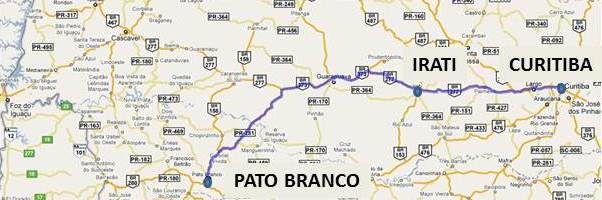
Today we travelled from Curitiba to Irati to learn how Conservation Agriculture has been scaled up by government and communities. EMATER made an excellent presentation in the morning (will post it later, having technical problems now), then in the afternoon the Roik family welcomed us to their 24-hectare conservation agriculture farm, where we saw demonstrations of manual and animal powered tools (see videos below).

Agro-ecological info:
Irati is about 900 meters above sea level and is a sub-tropical forested area. It receives approximately 1700 mm of rainfall per year (1000 in summer, 700 in winter). The sedimentary soils are very acidic with high stone content, low declivity and an abundance of steep slopes . Main crops are maize, common beans, tobacco and wheat.

About half an hour’s drive from Irati town centre, in a dramatic green and hilly landscape we arrived at Vittorio Roik’s family farm. The farm is the average size for a family farm in the region, and is completely under CA cultivation. Roik’s son and daughter-in-law work on the steep hills cultivating various crops, while Roik and his wife concentrate on milk production. Today the farm is a model CA farm, used as an example by IAPAR, but ten years ago everything was different.

In 2001 Vittorio was invited to participate in an event organized by EMATER and IAPAR in Ponta Grossa to learn and see what CA can do to yields. He came out of the event impressed, and initially planted half hectare of maize using CA methods. Seeing significant yield increases, the family decided to adopt CA on the entire 24 hectares. This was not an easy decision, as the initial investment on the necessary equipment such as the no-till seeder and knife roller were expensive. But the family together agreed to sell their only cow in order to be able to shift completely to CA.

This brave decision proved to be the right one for the Roik family. They have been able to diversify from original maize and beans to include onions, tomatoes and tobacco, and now they have over twenty heads of cattle that provide over 200 litres of milk every day. While the yields before the shift to CA on the farm averaged 2000 kg/ha, now the farm produces up to 10,000 kg/ha, an impressive improvement in the production levels.

Demonstration Video: Knife Roller

Demonstration Video: Animal Traction Seeder

In addition to the demonstration videos, later today we will introduce three workshop participants from Tanzania (Marietha Owenya - English), Mozambique (Magalhaes Miguel - Portugues) and Mauritania (Mamadou Guye - Francais) who will share their impressions each day.

read Day 1 blog

read Workshop Introduction blog

Sunday, July 10, 2011

Day 1: Conservation Agriculture "Virtual"Field Workshop in Brazil

Read Introductory Blog for Workshop

On the morning of the opening day of the workshop the group of around 25 workshop participants gathered in the conference room of a Curitiba hotel. Many had travelled for over 24 hours to reach Curitiba, but soon after breakfast we were up and running with the day’s programme. Much of it concentrated on the background on conservation agriculture (CA), and challenges that African countries are facing in its adoption.

Herbert Bartz (at left), a pioneer conservation agriculture adopter in Brazil in the early 1970's (and now President of the Brazilian CA Federation), told the group how he borrowed money to visit an American farmer in Kentucky to learn about CA, and imported the first no-till planter into Brazil.

In his presentation, Dr. Abednego Kiwia, a soil health programme coordinator of AGRA, stated that a major challenge for smallholder agriculture in Africa today is poor soil fertility and consequent low productivity levels. This, he said, due to numerous reasons, including diverse agro-ecologies and farming systems, limited national R&D capacity, over-reliance on rain-fed agriculture, and inadequate enabling of agricultural policies and investments. The presentations of seven AGRA-projects participating in the workshop further identified problems for African agriculture, including high levels of food insecurity, low farm income, unsustainable use of inorganic fertilizer, and limited or no market access for both inputs and outputs. Nevertheless, several African participants highlighted positive outcomes from initial CA experiences, including increased yields and improved food security and household income.

Researcher Dr. Marc Corbeels from CIRAD provided an analysis of yield trends in controlled rainfed CA experiments (see his ppt below), highlighting that while long term yield increases are observed, in the short term yields decrease on average, indicating a major hurdle for adoption of CA by poor smallholders. In addition, he said, CA brings trade-offs, including competing uses for crop residues that can lead to excessive removal of ground cover, difficulties in keeping grazing cattle off of the field after harvest, and shifting in labor patterns (less labour is needed for tilling, but more labour input is required for weeding). Also, he noted that due to poor functioning of markets farmers have limited access to necessary inputs, including herbicides and no-till equipment. Finally, he stressed that CA is knowledge-intensive and must necessarily be tailored to a large diversity of farmers and agro-ecological conditions.


Stephen Lyimo from Tanzania emphasised that the adoption of CA required a change in mindsets for smallholders: they need to be shown both the yield and income analysis before changing their strategies. Finally, as Patrick D’Addario from the organizing LaGuardia Foundation noted, while the participants will see plenty of options during the workshop, there is not a recipe to follow, "nothing to copy:" each project must find local solutions for uptake and upscaling of CA.

Stay with us for Day 2. From tomorrow, we will have our first demonstration: weed control through the use of cover crop and the use of the knife roller!!

Don't miss the demonstration video and reactions from our representative voices from Tanzania, Mozambique and Mauritania.

Wednesday, July 6, 2011

You're Invited: A Conservation Agriculture "Virtual" Field Workshop in Brazil - starts SUNDAY July 10, 2011


posted on behalf of Jeff Brez

Please join Project Breadbasket, Alliance for a Green Revolution in Africa (AGRA), the Brazilian No-Till Federation (FEBRAPDP), EMATER, the LaGuardia Foundation and other partners on a six-day "South-South learning journey" to Parana State to support scaling up of conservation agriculture (CA) among smallholders in Africa. My name is Jeff - responsible for environment and climate learning at IFAD - and I'll be your virtual classmate, linking you directly to the participants.


We will share our daily activities with you each day via blog posts with photos, video interviews and video demonstrations (technology permitting). We hope you will share your experiences, expertise and feedback via social media along the way. Don't be shy - send us your questions!

How can you participate virtually? You can follow us on Twitter, Facebook and on this blog. You can either post your comments here on the blog, or send them as a tweet to @IFADnews (#ENRM). Last but not least you can also post your comment on our Facebook page.
I'll do my best to share the perspectives of the participants - from Brazil, Ghana, Lesotho, Malawi, Mali, Mauritania, Mozambique, Tanzania, Zambia and Zimbabwe. Among the contributors to the workshop we also find technical experts from Brazil (FEBRAPDP, EMBRAPA and the Parana State agricultural agency IAPAR). The objective is ambitious: explore how to scale up CA approaches to benefit over 420,000 smallholders in Africa.
So, between now and Sunday the 10th July (Day 1 of our reporting back to you) send us your comments and questions - feel free to be very specific. We also appreciate if you will share with us below good links on conservation agriculture (a favorite publication, paper or article). You can comment in FRANÇAIS, ESPAÑOL, and PORTUGUÊS, as well as ENGLISH. We are looking forward to your active participation in this exciting South-South cooperation initiative.


Tuesday, June 14, 2011

Another example of how social media is rural development's best friend


On 1 June 2011, IFAD launched its Environment and Natural Resource Management (ENRM) policy with a webcast discussion on “How to scale up investments in sustainable intensification of agriculture.” We decided to do a social media campaign to market the event, create awareness around the issue, and showcase our policy and case studies. The response was amazing!

We managed to create a lively discussion at IFAD HQ with UN agencies, NGOs, Civil Society, Private Sector, Media, and Academia colleagues and interested people from all over the world. These virtual participants were far from passive viewers. They engaged in the conversation by posting comments on our website and sending their questions via Twitter and Facebook.
Why use social media?
From the beginning we asked ourselves: How can we spread the word about ENRM issues? How can we engage others outside of IFAD in the discussion? How can we make people aware of the conclusions of the policy?

ENRM’s depth and breadth is immense and it is a topic that is of interest not only to experts but also to many others. So the challenge was how can we make sure to get everyone on board? How can we discuss the issues in an inclusive manner without excluding anyone?

We decided that using social media as a channel would enable us to interact with people in a dynamic way. Our decision was based on the fact that effective communications is not a one-way avenue, but rather it’s about the dialogue and interaction. And social media gives everyone with internet and/or cell phone access a voice and opportunity to contribute and join the conversation.

How did we create the social media campaign?
We started working on the campaign 4 weeks before the event. We created a landing page on the IFAD website. This page included information on the policy, on the event, and on the webcast and the social media activities that would take place. We included pictures, videos, and case studies of IFAD’s work in ENRM.

Then we formulated our main messages in tweets (max 140 characters). This is the tricky part. How can we capture the essence of a policy of 30 pages, to a tweet-friendly message in 140 characters? Well, the good thing is that you don’t need to limit yourself to one tweet. We created a number of tweets, some contained information about the event and webcast, some contained statistics from the policy, and others contained questions to the audience to get their feedback on how to scale up.

We sent out the first tweet 10 days before the event, and in the following days we continued sending tweets to spread information and encourage action and feedback. Our UN social media partners engaged and sent out our tweets, spreading the word to all their followers. The Environment and Climate Division informed their networks, and encouraged them to contribute to the discussion. Then on the big day of the launch, during the webcast, we could pose the comments and questions live to the discussants in the room. We connected ideas, and added new voices to a conversation that otherwise would have been limited to the IFAD HQ.

What did we achieve?
  • Reached over 50 000 people with over 300 tweets
  • People engaged interactively by re-tweeting our messages, and also by sending us comments and questions. We got approximately 100 new followers on Twitter during the campaign, and we were pleased to see that the private sector was engaged in the debate.
  • The ENRM site had 1300 unique visitors during the campaign, peeking to about 600 visitors on the day of the event
Our lessons learnt
For a social media campaign to be successful you need to:
  • Plan and prepare
  • Be clear about: what you want to say, who you want to reach, what you want as an outcome
Most importantly, to be successful on social media, you need to:
  • Provide good content that engages people
  • Respond to the questions and feedback
Our colleagues at the Environment and Climate Division did an excellent job in engaging with the audience. They asked follow-up questions, and replied to the technical questions. They created a dialogue.

If you missed the event (and even if you participated in the event), make sure you:

A #HighFive to Jeff Brez and his team, the Communications team, the excellent moderator Kevin Cleaver, IFAD Associate Vice-President of Programmes as well as all the people out there who followed us and engaged in the conversation. We all look forward to the next IFAD webcast and social media chatter. Until then, make sure you keep in touch with us via our Twitter, Facebook, Blog, YouTube, Blip.TV and Slideshare channels.

Wednesday, June 1, 2011

Global food crisis: Smallholder agriculture can be good for the poor and for the planet

by Elwyn Grainger-Jone

Agriculture needs to be seen as an interaction with wider ecosystems – so that farming becomes a renewable rather than an extractive activity

Want to fly more? Face more climate change. Want lower taxes? Receive less public services. Because economists can provide logical, bottom line figures for returns on investments, this "trade-off" thinking permeates public policy-making.

This is why most policy-makers think they have to choose between feeding the world and protecting the environment – a straight choice. Does it have to be this way? No. To the contrary – we can and must achieve both, or we will fail on both.

In the long run, continued agricultural production cannot be sustained at the cost of undermining natural assets. In most parts of the world, we are seeing the environmental costs of unsustainable agriculture: 15 out of the world's 24 main ecosystem services are being used unsustainably; agriculture accounts for 70% of freshwater use and of that 15%-35% is used unsustainably; 75% of crop diversity has been lost since 1900; 70% of fish stocks are being harvested unsustainably; about 5.2m hectares of forest are lost every year; and agriculture and land use change account for 14% and 17% of global greenhouse gas emissions respectively.

While large-scale agriculture is a major driver of environmental degradation, 500m smallholder farms are an important part of the equation. They account for 60% of global agriculture, manage vast areas of land, and through ingenuity and sweat manage to feed about one-third of humanity (providing up to 80% of food in sub-Saharan Africa and Asia). They also make up the largest share of the developing world's undernourished. Large numbers of smallholders are women heads of households or indigenous peoples – they live in the most ecologically and climatically vulnerable landscapes, such as hillsides, drylands and floodplains, and rely directly on weather-dependent natural resources.

For some years now, a combination of enlightened government officials, community groups, civil society organisations, thinktanks and international aid agencies such as the International Fund for Agricultural Development (Ifad) have been developing a more sustainable approach to agriculture, with great success and huge potential to include smallholders. Examples (often overlapping) include sustainable land management and conservation agriculture, agroforestry, sustainable forest management, watershed management, integrated pest management, and organic agriculture.

Baffled? In essence, these typically create or maintain healthy landscapes with maintained groundcover, diverse production systems and fertile soil that can retain moisture and nutrients.

Back to trade-offs. As much by lucky coincidence as design, these techniques typically increase yields, reduce poverty, increase resilience to climate change, enhance biodiversity, and reduce greenhouse gas emissions. These are the "multiple-benefit", or "multiple-win" approaches that poor rural people need. Take the example of agroforestry – planting "fertiliser trees" in the smallholder maize fields of Malawi has doubled yields, increased the resilience of the soil to land degradation (by improving its organic and nitrogen content, water retention capacity and moderation of micro-climate), reduced soil carbon emissions, and increased biodiversity by being a source of food for insects and animals.

Such techniques are already being successfully scaled up. For example, agroforestry is now practised on between 12.5%-25% of total agricultural land worldwide. Brazil currently practises minimum-tillage for about 60% of its cultivatable area. Conservation agriculture is used in about 100m hectares worldwide (about 8% of arable land). Current trade in organic food, drinks and cotton amounts to about $60bn a year. India, Indonesia and the Philippines have removed insecticide subsidies and reduced insecticide use on rice by 50%-75%, while rice production continued to increase annually.

We can work with smallholder farmers in developing countries to do this even faster. IFAD's new Environment and Natural Resource Management Policy, launched on Wednesday, describes how our organisation will support an "evergreen revolution".

The main challenge is to change mindsets. Agriculture needs to be seen as an interaction with wider ecosystems – allowing agriculture to be practised as a renewable rather than extractive activity. In addition, the real value of natural assets, including cultural values, needs to be recognised. Government ministries (and international governance structures) can seek multiple-benefits rather than compete around trade-offs. From this will flow the change in policies needed to reward better stewardship of the planet.

The problem of environmental degradation in agriculture is more serious and systemic than many previously thought. Thankfully, we have the tools and knowledge for smallholder agriculture to play a key role in feeding a growing population in a way that is good for the poor and good for the planet. Let's invest in them.

Originally posted on Poverty Matters Guardian blog

Popular Posts