Showing posts with label Brazil. Show all posts

Tuesday, May 8, 2012

Webcast - Rio + 20 journalist workshop


Workshop for Journalists from Latin America and the Caribbean towards the United Nations Conference on Sustainable Development 

Schedule
May 8 (Mexico time) 
16:30 - Michelle Bachelet, Executive Director of UN Women on gender in Rio + 20.
17 - Panel on green economy

May 9
10:00 horas  - Access and sustainable management of water
11:30 horas - Agriculture and food security: keys to sustainable development
12:00 horas - Organization of Rio + 20
12:30 horas - Update on Rio +20
13:30 horas - Logistics for journalists
14:00 horas - The position of Paraguay
15:15 horas - Civil society
16:00 horas - Panel on energy
17:00 horas - The Caribbean in Río+20
17:30 horas - Preparations for Rio+20 with Jorge Chediek, Resident Coordinator UN Brazil

A two-day workshop for journalists from Latin America and the Caribbean, with participation of more than 15 United Nations Agencies, as well as representatives from various governments and civil society, will address the themes and media logistics of the upcoming United Nations Conference on Sustainable Development (Rio+20). The purpose this event is to provide the media with the necessary information and tools to monitor, directly from Rio de Janeiro or from a distance, the multiple means available to cover the Conference. The workshop will take place the 8 and 9 May from 9am to 5pm CDT (Mexico City local time), in which high-level experts from different locations will discuss the themes on the agenda of Rio+20. Including, Labour, Energy, Water, Cities, Disasters, Health, Gender, Environment, Sustainability and many more from a journalistic perspective. Logistics of media participation, including accreditations, accommodations, online resources, media facilities, official programme, parallel events, and others will also be addressed, with a view to facilitating the media participation.

Monday, May 7, 2012

'To remain always a child'

Video documentation in Latin America highlights lessoned learned from projects past and present
Learning from our past to guide how we work in the future is a central pillar to IFAD's operations and knowledge management practices in the Latin America and the Caribbean region. Truly, as Cicero taught us… "To be ignorant of what occurred before you were born is to remain always a child. For what is the worth of human life, unless it be woven into the life of our ancestors by the records of history?"

In order to expand this knowledge base, learn from our history and promote inter-institutional dialogue, we are making a concerted effort to share the lessons learned from the projects we fund across the region through video documentaries, reports, newsletters and more.

One of the first steps here has been resuscitating the video documentaries from projects we’ve funded in the past. In the embedded video playlists below, you’ll find see over 40 videos that document rural empowerment projects in Argentina, Bolivia, Brazil, Colombia, Haiti, Nicaragua, Mexico, Peru, Uruguay and Venezuela. We hope these videos serve as an institutional record and historic marker as we continue our efforts to learn from our past and build on our future. 

Argentina

Bolivia

Brazil

Colombia

Haiti

Nicaragua

Mexico


Peru

Uruguay

Venezuela


Share it! 


Thursday, October 13, 2011

High-level Brazilian delegation visits IFAD to discuss new rural poverty reduction project for the state of Sergipe


Governor Marcelo Déda Chagas meets with IFAD Vice-President to push project forward

A high-level Brazilian delegation met with International Fund For Agricultural Development (IFAD) Vice-President Yukiko Omura, IFAD’s Director of Latin America and the Caribbean Division Josefina Stubbs and other senior IFAD staff October 12 to hammer out details of the new US$37.8 million Small Producers Rural Business Project, better known in Brazil as Project Dom Tavora.

The Brazilian delegation included Sergipe Governor Marcelo Déda Chagas, Secretary of Agriculture and Agrarian Development José Macedo Sobral and the President and Director of the Agricultural Development Agency Jefferson Feitozza de Carvalho.

“This project looks to fight rural poverty in a sustainable way by helping businesses and small-scale producers to improve their productivity and technical capabilities, and access new markets and financial services,” said Iván Cossio, IFAD Country Program Manager for Brazil. “At the same time, we are looking to build the technical capacity within the vary agencies that will be implementing the project, thus ensuring the project’s long-term viability.”

During the visit, the governor gave a presentation to IFAD staff on the Brazil Without Extreme Poverty Program (Brasil Sem Miseria), underlining how the national program works in the state of Sergipe and how it could work in conjunction with new IFAD-funded projects in the region.

“Finding ways to effectively coordinate IFAD-funded programs with these massive government programs will be key to ensuring strong results on the ground and long-term sustainability for these initiatives,” Cossio said.

The Dom Tavora Project is slated to benefit some 32,000 poor rural families in 15 municipalities in the State of Sergipe. Approximately 12,000 families will receive direct support from the project while another 20,000 will benefit from the improved technical assistance offered by the implementing agency.

The IFAD Executive Board is expected to review the project this December. The project benefits from a US$16 million IFAD loan to the State of Sergipe, with the Government of Sergipe providing another US$12.6 million. Project beneficiaries will provide another US$9.2 million in financing.

“The Sergipe Project is especially innovative as its principal strategy is based in catalysing and stimulating growth for businesses run by small-scale producers. Given the right support, these small-scale producers are capable of creating efficient, sustainable and profitable businesses,” Cossio said. “And as we’ve seen throughout the world, treating agriculture as a business is one of the most effective means to reduce rural poverty.”
Photos: ©IFAD/Publifoto

Tuesday, July 12, 2011

Day 3 – Conservation Agriculture Success? Institutional Partnerships with research and farmers at the center

Today we visited a thriving smallholder farm as well as IAPAR’s research station in Pato Branco. In the 1970s and 1980s Parana State was losing 100 tonnes of soil per hectare per year - that’s a loss rate of 1 centimetre/ha per year, while it takes nature 400 years to make 1 centimetre per year of soil! (source: IAPAR, Parana State Agricultural Research Institute) Something needed to be done.

So in the early 1970s, soon after Herbert Bratz made his pioneering trip to the USA, IAPAR began research into conservation agriculture methods. What has become crystal clear to the workshop participants, is that integrated institutional partnerships – with farmers themselves and their associations and cooperatives at the center– are necessary for changing mindsets and affecting change. The hard work paid off beginning in the early 1990s when the number of hectares under CA began to skyrocket.


One of the keys to the success of CA in Parana state was a focus on its crop-livestock systems. Not only permanent soil cover, but also more livestock forage was necessary, and IAPAR’s research helped determine which winter crops could best serve as both cover crops and forage for dairy cattle. Before 1992 there was almost no no-till in Parana State, while now, 20 years later, it is almost all no-till. Of course, IAPAR has not achieved this alone – it has worked with the national extension service, EMATER, with EMBRAPA, with municipalities, with SEAB, with FEBRAPDP, often sharing and embedding staff.


On the bus ride back to town, participants from AGRA (Alliance for a Green Revolution in Africa) and Lesotho stressed that demonstrations need to be guided by researchers and extension staff, but also carried out in farmers’ fields, so farmers can see firsthand the comparative advantages, benefits and costs of adopting conservation agriculture. An EMBRAPA participant enthusiastically agreed, saying this was the modus operandi in Parana State and elsewhere in Brazil.

Pictured at left, (Marietha Owenya, SARI, Tanzania) Marc Corbeels (CIRAD) and Waltteri Katajamaki (IFAD).

Day 2 – Reflections from Mauritania, Mozambique and Tanzania + more demos!

In the 1970s and 1980s, Parana State was seeing extreme erosion. When farmers lost their soil, they lost their farms, and began moving to urban areas in large numbers. Conservation Agriculture was a key part of the solution, strongly supported by all levels of government, including Parana State, to stop the desperate migration and increase the productivity of the farms, giving farmers a chance to make a livelihood on their land.

Conservation Agriculture: No plough! Use cover crops (continuous soil cover)! Crop rotation! (No burn! )

Because we didn’t have time to download everything yesterday, we are adding the below demonstration videos and interview videos now in a second posting for Day 2 – and also EMATER’s powerpoint.

No till agriculture in parana state brazil-july 2011 by emater

The interview videos below convey the initial impressions of participants after 2 days of workshop and our visit to the Roik family farm. We ask these questions: 1) What is the current situation of conservation in your country today? 2) What do you feel about what you have seen and learned so far here in Brazil? 3) What do you see as the main challenges for scaling up conservation agriculture in your country?

Interview video - Marietha Owenya, Principal Agriculture Field Officer, Selian Agriculture Research Institute (SARI), TANZANIA – English

Interview video - Magalhaes Miguel, Plant Physiologist, Agricultural Research Institute of Mozambique, MOZAMBIQUE - Portugues

Interview video - Mamadou Guye, Secretaire General de l’Association des Usagers du Walo, MAURITANIE - Francais

A note on the knife roller demonstration video we posted in our previous blog: normally the cover crop would be higher. The knife roller “lays down” or “smashes” the cover crop without cutting it, to obtain a slower decomposition and thus retain soil cover for as long as possible, and also to avoid clogging the blade of the Animal Traction Seeder (also featured in our last blog). You can also see a photo of a knife roller in action in a taller cover crop IAPAR’s powerpoint in our Day 3 blog (coming soon!).

As a bonus, we are posting two more demonstration videos – very short – just in case you’ve never seen a “Fitarelli” Manual Jab Seeder or a manual sprayer in action.

Demonstration video: Manual Jab Seeder

Demonstration video: Manual Sprayer

And as an even bigger bonus, we spoke with Ataides Fitarelli (in photo) who joined our workshop. His grandfather Reinaldo invented the first manual jab seeder before traction animals were available. He said, “The jab seeder was much easier to use on the slopes and made the work easier for the smallholder farmers – it helped them to feed themselves. Today, we continue to produce for the smallholder market, the large industries don’t invest in them. We produce about 10,000 jab planters per year and we export our various products – www.fitarelli.com.br – to more than 50 countries.”

Monday, July 11, 2011

Day 2: Conservation Agriculture South-South “Virtual” Field Workshop in Brazil: First Demonstrations

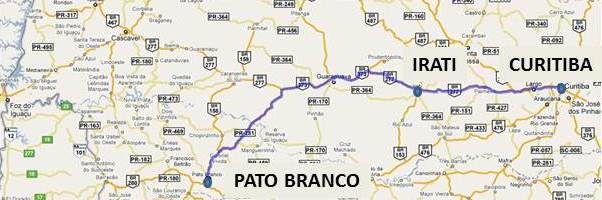
Today we travelled from Curitiba to Irati to learn how Conservation Agriculture has been scaled up by government and communities. EMATER made an excellent presentation in the morning (will post it later, having technical problems now), then in the afternoon the Roik family welcomed us to their 24-hectare conservation agriculture farm, where we saw demonstrations of manual and animal powered tools (see videos below).

Agro-ecological info:
Irati is about 900 meters above sea level and is a sub-tropical forested area. It receives approximately 1700 mm of rainfall per year (1000 in summer, 700 in winter). The sedimentary soils are very acidic with high stone content, low declivity and an abundance of steep slopes . Main crops are maize, common beans, tobacco and wheat.

About half an hour’s drive from Irati town centre, in a dramatic green and hilly landscape we arrived at Vittorio Roik’s family farm. The farm is the average size for a family farm in the region, and is completely under CA cultivation. Roik’s son and daughter-in-law work on the steep hills cultivating various crops, while Roik and his wife concentrate on milk production. Today the farm is a model CA farm, used as an example by IAPAR, but ten years ago everything was different.

In 2001 Vittorio was invited to participate in an event organized by EMATER and IAPAR in Ponta Grossa to learn and see what CA can do to yields. He came out of the event impressed, and initially planted half hectare of maize using CA methods. Seeing significant yield increases, the family decided to adopt CA on the entire 24 hectares. This was not an easy decision, as the initial investment on the necessary equipment such as the no-till seeder and knife roller were expensive. But the family together agreed to sell their only cow in order to be able to shift completely to CA.

This brave decision proved to be the right one for the Roik family. They have been able to diversify from original maize and beans to include onions, tomatoes and tobacco, and now they have over twenty heads of cattle that provide over 200 litres of milk every day. While the yields before the shift to CA on the farm averaged 2000 kg/ha, now the farm produces up to 10,000 kg/ha, an impressive improvement in the production levels.

Demonstration Video: Knife Roller

Demonstration Video: Animal Traction Seeder

In addition to the demonstration videos, later today we will introduce three workshop participants from Tanzania (Marietha Owenya - English), Mozambique (Magalhaes Miguel - Portugues) and Mauritania (Mamadou Guye - Francais) who will share their impressions each day.

read Day 1 blog

read Workshop Introduction blog

Sunday, July 10, 2011

Day 1: Conservation Agriculture "Virtual"Field Workshop in Brazil

Read Introductory Blog for Workshop

On the morning of the opening day of the workshop the group of around 25 workshop participants gathered in the conference room of a Curitiba hotel. Many had travelled for over 24 hours to reach Curitiba, but soon after breakfast we were up and running with the day’s programme. Much of it concentrated on the background on conservation agriculture (CA), and challenges that African countries are facing in its adoption.

Herbert Bartz (at left), a pioneer conservation agriculture adopter in Brazil in the early 1970's (and now President of the Brazilian CA Federation), told the group how he borrowed money to visit an American farmer in Kentucky to learn about CA, and imported the first no-till planter into Brazil.

In his presentation, Dr. Abednego Kiwia, a soil health programme coordinator of AGRA, stated that a major challenge for smallholder agriculture in Africa today is poor soil fertility and consequent low productivity levels. This, he said, due to numerous reasons, including diverse agro-ecologies and farming systems, limited national R&D capacity, over-reliance on rain-fed agriculture, and inadequate enabling of agricultural policies and investments. The presentations of seven AGRA-projects participating in the workshop further identified problems for African agriculture, including high levels of food insecurity, low farm income, unsustainable use of inorganic fertilizer, and limited or no market access for both inputs and outputs. Nevertheless, several African participants highlighted positive outcomes from initial CA experiences, including increased yields and improved food security and household income.

Researcher Dr. Marc Corbeels from CIRAD provided an analysis of yield trends in controlled rainfed CA experiments (see his ppt below), highlighting that while long term yield increases are observed, in the short term yields decrease on average, indicating a major hurdle for adoption of CA by poor smallholders. In addition, he said, CA brings trade-offs, including competing uses for crop residues that can lead to excessive removal of ground cover, difficulties in keeping grazing cattle off of the field after harvest, and shifting in labor patterns (less labour is needed for tilling, but more labour input is required for weeding). Also, he noted that due to poor functioning of markets farmers have limited access to necessary inputs, including herbicides and no-till equipment. Finally, he stressed that CA is knowledge-intensive and must necessarily be tailored to a large diversity of farmers and agro-ecological conditions.


Stephen Lyimo from Tanzania emphasised that the adoption of CA required a change in mindsets for smallholders: they need to be shown both the yield and income analysis before changing their strategies. Finally, as Patrick D’Addario from the organizing LaGuardia Foundation noted, while the participants will see plenty of options during the workshop, there is not a recipe to follow, "nothing to copy:" each project must find local solutions for uptake and upscaling of CA.

Stay with us for Day 2. From tomorrow, we will have our first demonstration: weed control through the use of cover crop and the use of the knife roller!!

Don't miss the demonstration video and reactions from our representative voices from Tanzania, Mozambique and Mauritania.

Wednesday, July 6, 2011

You're Invited: A Conservation Agriculture "Virtual" Field Workshop in Brazil - starts SUNDAY July 10, 2011


posted on behalf of Jeff Brez

Please join Project Breadbasket, Alliance for a Green Revolution in Africa (AGRA), the Brazilian No-Till Federation (FEBRAPDP), EMATER, the LaGuardia Foundation and other partners on a six-day "South-South learning journey" to Parana State to support scaling up of conservation agriculture (CA) among smallholders in Africa. My name is Jeff - responsible for environment and climate learning at IFAD - and I'll be your virtual classmate, linking you directly to the participants.


We will share our daily activities with you each day via blog posts with photos, video interviews and video demonstrations (technology permitting). We hope you will share your experiences, expertise and feedback via social media along the way. Don't be shy - send us your questions!

How can you participate virtually? You can follow us on Twitter, Facebook and on this blog. You can either post your comments here on the blog, or send them as a tweet to @IFADnews (#ENRM). Last but not least you can also post your comment on our Facebook page.
I'll do my best to share the perspectives of the participants - from Brazil, Ghana, Lesotho, Malawi, Mali, Mauritania, Mozambique, Tanzania, Zambia and Zimbabwe. Among the contributors to the workshop we also find technical experts from Brazil (FEBRAPDP, EMBRAPA and the Parana State agricultural agency IAPAR). The objective is ambitious: explore how to scale up CA approaches to benefit over 420,000 smallholders in Africa.
So, between now and Sunday the 10th July (Day 1 of our reporting back to you) send us your comments and questions - feel free to be very specific. We also appreciate if you will share with us below good links on conservation agriculture (a favorite publication, paper or article). You can comment in FRANÇAIS, ESPAÑOL, and PORTUGUÊS, as well as ENGLISH. We are looking forward to your active participation in this exciting South-South cooperation initiative.


Thursday, June 9, 2011

Brazil in focus

Interviews with IFAD Evaluation Committee members provide unique insight into poverty reduction, sustainability, South-South Cooperation and scaling-up

“Striking.”
“Innovative.”
“Synergies.”
“Involved.”
“Dedication.”

These are just a few of the superlative descriptors used by members of IFAD’s Evaluation Committee to describe their recent visit to Brazil. Concern over sustainability, replicability and scale also marked the cautiously optimistic feedback provided by the committee members.

On the week-long mission, committee members representing Burkina Faso, Canada, Holland, India, Indonesia, Mexico and Nigeria – IFAD’s board member from Sweden also came along for the ride – had the opportunity to meet with government representatives on the state and federal level, to interact with family farmers, to learn from project personnel and IFAD staff, and to actively engage in a well-rounded and well-informed dialogue on everything from knowledge management and South-South Cooperation, to the role IFAD should play in Middle Income Countries, environmental stewardship, and the importance of pro-poor policies and demand-driven development.

Rather than attempt to distil a week’s worth of work, conversation, sweat, debate, collaboration and learning into a thousand-word blog, we figured we’d go to the members of the Executive Committee themselves for their reflections on the IFAD-supported Dom Hélder Câmara Project, Brazil’s emergent policies for pro-poor growth, the role of BRIC’s in poverty reduction, sustainability, replicability, climate change and knowledge management. The informal interviews were undertaken in the field with our little flip-cam. And while the quality of the recordings doesn’t meet BBC standards, the candour and incisiveness of the reflections from the EC members representing Canada, India, Nigeria and Sweden are well worth the listen. Their responses provide unique insight into the synergies between Africa and Brazil, the relevance of IFAD in Latin America and the rest of the world, and the need to lay-out clear policies and platforms that will enable poor rural people to break the cycle of poverty.

Watch the videos
Amalia Garcia-Thärn – EC representative from Sweden

Iain MacGillivray – EC representative from Canada


Yaya Olaniran – EC representative from Nigeria

Shobhan Kumar Pattanayak – EC Chairman from India

Learn More
More information on the Dom Hélder Câmara Project

English | Portuguese

US$4 million knowledge-sharing programme provides new hope for rural poverty reduction in northeast Brazil

English | Portuguese

IFAD Social Reporting Blog posts on Brazil

Popular Posts