Showing posts with label United Nations. Show all posts

Wednesday, July 13, 2011

Horn of Africa: The Rains will fail in 2015, 2016, or 2017, but must we also fail?

By Kevin Cleaver, IFAD Associate Vice President

The current drought in the Horn of Africa, the worst in the past 60 years, has governments in the region and the international donor community scrambling to raise additional funds for emergency relief and provide desperately required food, medical care and shelter to the affected populations in Somalia, southern Ethiopia and northern Kenya to address their dire immediate needs.

Drought in this part of the continent is not unknown and has been an increasingly frequent occurrence. Datelines change (2005, 2006, 2008 and now, 2011) but the stories of unimaginable hardship, death and depravation, while differing in magnitude from one drought to the next, remain much the same. Drought never only has localized consequences. Its effects cascade through countries in the form of higher food and fodder prices, civil unrest and diminished social services as governments redeploy budgets to meet the most pressing needs of their citizens. These effects multiply the impact of the drought, dragging millions of families who had improved their living conditions back into poverty and deepening the hole of those fighting to climb out of poverty.

Although governments and their development partners cannot make the rains come, they can mitigate the impact of these recurring droughts in East Africa by helping farmers and herders build resilience to these inevitable meteorological occurrences. This is a cornerstone of the work the International Fund for Agricultural Development (IFAD) in the region. Much greater investment in agricultural research, an area long neglected by both governments and donors, is essential to develop and diffuse drought and disease-resistant food and fodder crops which are better able to withstand moisture stress. There needs to be greater government and donor support for integrated soil fertility management, erosion control, agro-forestry, and reforestation, which are fundamental to preserving the natural resources — the principal capital asset of smallholder farmers and herders. Minimizing post-harvest food and fodder losses through better on-farm storage facilities, improving farmer and herder access to credit to purchase agricultural and veterinary inputs, supporting transparent and accessible markets, and strengthening farmer and herders’ organizations are all critical to building the resilience to mitigate the effects of drought.

News coverage of the unfolding events in East Africa brings stark images of desperation, disease and death into the living rooms, boardrooms and government offices in developed countries, eliciting sympathy, and hopefully the necessary financial support to address this growing emergency. But building resilience of farming and herding communities in East Africa requires a long term, sustained commitment on the part of the region’s governments and the international donor community. When the next drought comes in 2015, 2016, or 2017, will there be fewer refugees, walking fewer miles to get the help they desperately need? Will there be more water points, and greater availability of livestock feed and supplements? Will the granaries be full enough to tide over many who are now hungry? The answers to these questions depend largely on the continued commitment of the international community. The rains will fail. But let us not fail, too.

Sunday, December 5, 2010

Rural Poverty Report 2011: Mixed progress but also new hope in reducing rural poverty #rpr2011

by Kanayo F. Nwanze

On 6 December 2010, at 11:00GMT at the opening of a major international conference on food security convened by Chatham House IFAD will launch the Rural Poverty Report 2011.

Just think, what would your life be like if you were one of the 1.4 billion women, men and children who live in extreme poverty? Chances are you would live in a rural area, as 70 per cent of the world’s extremely poor people do.

Like Pascaline Bampoky from Senegal, you wouldn’t have had much of an opportunity to study, you would be farming rice, raising pigs, selling ice cream and cleaning houses – all in a day’s work to feed your family.

Like Shazia Bibi from Pakistan, you might wonder if your garlic will compete at the market with lower priced imports and whether your profits will cover the costs of your children’s education and treatment for your heart condition.

And if you are a young man like Williams Novoa Lizardo in Peru, you might lose hope of making a living where you were born and consider migrating to a city to find work.

The good news, according to the Rural Poverty Report 2011 issued by IFAD, is that over the last ten years more than 350 million rural people have pulled themselves out of extreme poverty. During this time, the percentage of the world’s rural inhabitants living on less than US$1.25 a day has dropped from nearly half to about one-third.

Accounting for much of the progress has been East Asia, and particularly China, where the number of extremely poor people in rural areas fell by two-thirds – from 365 million to 117 million – as did the rate of extreme poverty, which went from 44 to 15 per cent.

There was also good progress in both Latin America and the countries of the Middle East and North Africa, where extreme poverty rates in rural areas fell by about half over the past decade.

But, this progress notwithstanding, the problem remains a pervasive one, especially in Sub-Saharan Africa, where the rate of rural poverty has fallen slightly in the last decade but is still above 60 per cent, and in South Asia, which is home to half of the world’s one billion extremely poor rural people.


Just as these statistics tell a story of uneven progress in reducing rural poverty, changes that are underway in rural areas are giving rise to both challenges and new hope for rural people in their struggle for a better life.

The challenges include increasingly volatile food prices, which complicate life for rural people both as producers and buyers of food. And there are other emerging threats such as the deterioration of the natural resource base, growing competition for land and water, and the potential harm that climate change can cause to the rural landscape.

But good things are happening, as well. As cities expand and the world becomes more urbanized, there is a growing demand for high value food, and accordingly agricultural markets are expanding and becoming better organized. Supermarkets, for example, have grown rapidly across much of the developing world, and in some parts of Latin America they typically account for 60 per cent or more of retail food sales. To be sure, modern markets and value chains bring with them their own challenges for some smallholder farmers in terms of higher entry costs, but the potential opportunities they also bring cannot be overlooked.

And while agriculture continues to be a key driver of rural growth – four-fifths of rural households worldwide are engaged in farming at some level – technological advancements and changes in the global economy are also creating non-farm jobs and development in rural areas. The potential for growth is further enhanced by the search for renewable energy sources that is ramping up around the world.

All of this means opportunity for greater numbers of poor rural women and men to lift themselves out of poverty and create a better life and a future for themselves and their children. But making the most of it requires an overall policy and investment approach that is, at the same time, both market-oriented and environmentally sustainable.

For starters, national governments and the international community need to reverse the longstanding neglect of rural development. We need to improve governance in rural areas and create a better economic environment for smallholder farmers to succeed and grow not only food but their businesses as well.

We need to invest in rural infrastructure and in the education and skills of rural people so that they themselves can make the most of new opportunities to engage in agricultural markets or work in non-farm industries. We need to strengthen their collective capabilities so that they can support each other in managing the risks they face, learn new techniques for improving their productivity, and market their products.

Above all, we need to stop treating the rural poor as charity cases and truly recognize that they are people whose innovation, dynamism and hard work will ultimately lead the way out of poverty’s darkness and into the bright sunshine of growth, development and prosperity.

Nothing less than global food security hangs in the balance. The experts say that agricultural production will have to increase 70 per cent by 2050 – and output in developing countries will have to double – in order to feed the world’s growing global population, expected to reach nine billion by then.

I have no doubt that Pascaline, Shazia and Williams are up to the challenge. Are the rest of us?


On 6 December at 11:00GMT you may download the English version of the Rural Poverty Report 2011 at http://www.ifad.org/rpr2011/report

Meet the women and men from rural areas whose thoughts and perspectives were influential in the preparation of theRural Poverty Report 2011 Read testimonies and watch the video testimonials

Thursday, June 3, 2010

A changed Africa still needs our help to grow: African governments must ramp up their investment in agriculture to meet the Maputo target

When I read Sir Nicholas Stern’s commentary ‘A changed Africa still needs our help to grow’ published in the 31 May edition of the Financial Times, I was reminded of Nelson Mandela’s famous words:
"Like slavery and apartheid, poverty is not natural. It is man-made and can be overcome and eradicated by the actions of human beings. And overcoming poverty is not a gesture of charity. It is an act of justice. It is the protection of a fundamental human right, the right to dignity and a decent life. While poverty persists, there is no true freedom."

Sir Nicholas points to the potential of the region if it receives the right kind of sustained support. But I would like to point out one aspect that is often overlooked – agriculture and rural areas. We urgently need to focus on three issues if the African continent is to stand on its own feet. Governments and development agencies must:
  • invest in agriculture
  • boost economic growth in rural areas
  • support young people

African governments must ramp up their investment in agriculture to meet the Maputo target of 10 per cent of national budget. Some countries have already reached this benchmark – and they should be loudly congratulated for doing so – but many are still falling far short and must make a special effort to boost their public spending on agriculture.

Economic growth in rural areas both fuels and - is fuelled by - growth in the agricultural sector. Both are underpinned by functional infrastructure – including roads, energy supplies and markets. A vibrant rural sector generates local demand for locally-produced products and services. In turn, this demand can spur sustainable off-farm employment growth in services, agro-processing and small-scale manufacturing. This growth is crucial for rural employment and it is crucial for feeding a growing urban population. Without local jobs, young people will be driven away from rural areas in search of work in the cities. And then who will feed the world in 2020 or in 2030?

Recognizing smallholder farms as businesses, irrespective of their size or scale, is an important first step towards making the rural sector a viable choice for Africa’s young people. Unfortunately, too many smallholders in Africa are trapped in a cycle of mere subsistence.

Governments, donors and the private sector need to act – individually and collectively – to take smallholder farms beyond subsistence, into viable businesses, particularly for women and young people, who shoulder the future of African smallholder farming. We need to turn smallholders into entrepreneurs, into the main engine of economic growth. We need to make agriculture a business opportunity for Africa’s young women and men. We need to make agriculture a pathway out of poverty.

Kanayo F. Nwanze
President, International Fund for Agricultural Development (IFAD)

Tuesday, May 25, 2010

Participatory Monitoring and Evaluation Workshop - Day 2 - Banjul, The Gambia


The Rural Finance Project/West Africa Rural Foundation Participatory Monitoring and Evaluation (PM&E) workshop continues. The second day of the workshop has been interactive and lively even though it coincides with two national holidays, President Jammeh's Birthday - to whom will all wish a Happy Birthday - and African Liberation Day.

Participants were able to identify the key stakeholders and actors of the projects in The Gambia (project staff, beneficiaries and their organisations, government - national and local - service providers and the like) and reflected on their roles, responsibilities, rights, relationships and return in terms of project implementation and objectives. These actors were then placed into a power versus interest matrix. Much interesting debate sprung from this analysis especially regarding the roles and responsibilities and the power relationships that were identified.

The facilitators underlined how important these exercises are and insisted on the value added for projects in design phase, as these matrices clearly map out institutional arrangements and linkages and are a valid tool for later implementation.

More specifically, the matrices, if analysis is undertaken correctly, identify key partners in project execution (high on both the interest and power scales) and those in most need of capacity building to protect their interests (those high on the interest scale but low on the power scale).

The theme of the day was the importance of having clear and simple objectives, indicators and criteria and being able to communicate those to all of the actors involved in PM&E.


We then broke up into groups and engaged in role playing to identify objectives, indicators and criteria for projects. It was becoming quite obvious at this stage that agreeing on clear and simple objectives is not an easy task, especially when this is activity is undertaken with a participatory approach, and this was only a simulation!


Monday, May 24, 2010

Participatory Monitoring and Evaluation Workshop

Today, the FRAO/RFP Participatory M&E workshop was inaugurated in Banjul, The Gambia.


The Rural Finance Project in The Gambia (RFP) has organised with the support of the West Africa Rural Foundation FRAO/WARF a Participatory Monitoring and Evaluation (PM&E) training workshop in Banjul from 24 to 29 May 2010.

The objective of the workshop is to reinforce PM&E capacities of project teams and partners engaged in the implementation of IFAD funded projects in the Gambia in including VISACAS, service providers and government. Representatives of the IFAD Country Programme in The Gambia were present as well as representatives from the Ministry of Agriculture, the Microfinance Department of the Central Bank of The Gambia, Gambian Microfinance Associations (GAWFA, NACCUG) service providers and others.


The one week workshop has been set up in a participatory manner so that participants can share their views and learn from each other under the leadership of Mr Mohamed Kebbeh and Mr Adama Ndiaye of WARF who are facilitating the workshop.

Today, participants were able to brainstorm on Participatory Monitoring and Evaluation (PM&E) starting from its definition moving towards its importance in project implementation and the advantages and improvements it will bring to projects in terms of results and impact.


The lively group agreed that PM&E is a fundamental aspect for project implementation, as PM&E is not just a regular data collection or research activity, instead it increases ownership of the project for its inclusive nature, it gives a sense of accountability of project results to the communities in which interventions are taking place and it could improve project overall activities and outcome.


In summary PM&E is a shared learning process based on effective team work, necessary because of the large number of participants, negotiation of interests and possibilities and flexibility as the acceptance of PM&E implies a shift in power relationships because all participants are equal in PM&E.


Finally, PM&E allows for overall better results and gives continuity and sustainability to projects beyond their official life span thanks to beneficiaries designing the system based on criterion they have chosen rather than imposed indicators.


The key steps to PM&E are summarised as follows: (i) deciding to set up a PM&E; (ii) identifying the stakeholders; (iii) defining expectations and objectives; (iv) selecting criteria and indicators; (v) deciding on the tools and methods; (vi) collecting and analysing data; (vii) implementing change and manging and maintaining the system.

How to adapt his model to the context of Gambian projects and managing the system once its in place will be discussed during the course of this training.

Tuesday, May 11, 2010

Brazilian President: IFAD is ‘doing essential work’


Lula addresses high-level conference on food security and South-South Cooperation in Brasilia

In this week’s Brazil-Africa Dialogue on Food Security, Fighting Hunger and Rural Development, Brazilian President Luiz Inácio Lula da Silva said that the International Fund for Agricultural Development (IFAD), along with the Food and Agriculture Organization (FAO) and the World Food Program (WFP), are essential for food security in the developing world.

The President went on to say that IFAD is well position to help local programs ensure that smallholder farmers have access to credit and land titles. In his panoramic speech, Lula also called for increased knowledge sharing between Africa and Brazil, and a line of credit to help Latin America and Africa modernize their agricultural technology.

Technology, of course, is something that Brazil does not lack. After all, the national agricultural research institution Embrapa has some 8000 employees, more than 2000 with PhDs, and the nation invests around 1 per cent of GDP into agricultural research each year.

But aside from the technology Brazil can share with Africa – advanced crops, new seeds, better planting techniques – Lula acknowledged that with his country becoming a donor nation, Brazil has to put money into its budget to work toward food security in places like Africa.

“Tackling poverty is only possible if… we address it as a priority issue for every country,” said Lula, adding that Brazil has weathered the world economic crisis well in large part because the nation’s poor are integrated into the economic machinery. “The ability of poor people to consume – especially in the North-East of the country – helped Brazil withstand the world economic crisis.”

IFAD-funded projects in the North-East state of Bahia may also have helped smallholder farmers withstand the battering winds of the economic crisis.

“The Rural Communities Development Project targets the poorest rural municipalities of Bahia – an area where agricultural productivity is very limited,” said Josefina Stubbs, Director of IFAD’s Latin America and the Caribbean Division. “Being a semi-arid region, most smallholder farmers struggle to cultivate the land at a subsistence level and are forced to migrate to urban areas during the dry season. With this in mind, we are funding projects that aim to improve management of water resources and, of course, improve productivity and environmental stewardship.”

But IFAD’s contribution to South-South Cooperation extends well beyond the Brazilian countryside, and in her address at the conference, IFAD Vice President Yukiko Omura said that the organization is well-positioned “to serve as a key partner, mediator and facilitator for South-South Cooperation,” also noting that South-South trade has intensified in recent years.

“Brazil, along with China and India, is leading this trend as its trade volume with Africa rose from US$5 billion in 2002 to $19.9 billion in 2007,” Omura said in her address. “Part of the reason for this positive trend is the fact that the infrastructure sector has become a priority for development. We must not forget that without them, trade – and rural development – is difficult if not impossible. In the end, water, energy, roads, ports and telecommunication are essential elements to development and growth. Further, without infrastructure of any magnitude – from small feeder roads to large ports and highways, water for irrigation, energy for automation and telecommunication for access to market information – food security will not be achieved.”

‘Innovation Marketplace’ provides knowledge sharing forum for Africa and Brazil


The new IFAD co-financed program starts operations this week

South-South Cooperation is a wonderful concept. And in many senses, the concept that looked good on paper years ago is now becoming a reality. Just look at the trade volume between Brazil and Africa, which rose from US$5 billion in 2002 to $19.9 billion in 2007.

But without true forums for knowledge sharing, South-South cooperation may do little to truly address the needs of the rural poor. After all, while trade may increase, only by giving smallholder farmers the necessary tools and information will they truly be able to rise up from poverty.

With the idea of creating such a forum, the International Fund for Agricultural Development (IFAD) decided to co-finance the Africa-Brazil Agricultural Innovation Marketplace, a program designed to share knowledge between the two regions. And as you know, “knowledge is power.”

The program was inaugurated this week as part of the Brazil-Africa Dialogue on Food Security, Fighting Hunger and Rural Development. With an initial grant of US$500,000 from IFAD, the Innovation Marketplace will fund four to seven projects over the next two years. The projects will look for ways to share productivity-enhancing technologies, natural resource-management practices, and policy and marketing initiatives between Brazil and Africa.

And while the initial investment may seem small, with Embrapa and the Forum for Agricultural Research in Africa (FARA) taking the lead, there is considerable knowledge and technology that can be shared through the new forum.

“South-South dialogue is a two-way process. Only by allowing for the fluid interchange of ideas, technologies and goods between the regions will we truly achieve sustainable results,” said IFAD Vice-President Yukiko Omura in her address at the Brazil-Africa Dialogue. “Brazil offers technological know-how, strong grassroots organization, proven methods to bring products to market and well-planned resource-management practices.”

“On the technological front, the experience of institutions such as Embrapa provides a unique opportunity to transfer the latest agricultural technology, including better seeds, higher yield crops, enhanced planting techniques and overall improved farming systems,” Omura added.
With portions of Africa and Brazil sharing similar ecosystems, crops and climates, it’s possible that the interchange of technologies could make a real difference.

In his address to the Brazil-Africa Dialogue, Brazilian President Luiz Inácio Lula da Silva said that the land used to produce biofuels in Brazil is very similar to Africa’s Savannah, but added that part of Africa’s lands should go to ensure food security, while the other portion can be used for cash crops.

Brazilian public policies – for instance one policy that requires 30 per cent of school lunch food come from local producers – could also help Africa’s smallholder farmers.

Sure, the Innovation Marketplace is not a silver bullet – the creation of forum’s like this alone will not end rural poverty – but at least it is a step in the right direction.

Thursday, April 29, 2010

Change Africa from Within

by Kanayo F. Nwanze, IFAD President

ROME – A severe food crisis currently threatens southern Sudan. In East Africa, where millions of people already are dependent on food aid, a sharp rise in the cost of staple crops looms.
These are just the latest sources of concern in a turbulent period that began two years ago when food shortages hit many countries in Africa and Asia due to a worldwide spike in prices. Higher food prices meant that poor people, already struggling to meet basic human needs, were pushed deeper into poverty. On its heels came the global financial crisis, which also hit the poorest the hardest.

Agriculture is the main employer, job creator, and export in most developing countries. Historically, agriculture has driven economic performance in many countries, generating growth that has been shown to be at least twice as effective in reducing poverty as growth in other sectors. Investment in agricultural and rural development is therefore vital to food security and sustainable economic development.

Indeed, the vast majority of today’s developed countries grew from strong agricultural foundations, where surplus production generated wealth and prosperity. This is what is happening today in Vietnam, and it is the path that China and India took on their way to becoming engines of economic growth.

Poverty is predominantly rural. Globally, three-quarters of people living in extreme poverty are in rural areas and depend on agriculture and related activities for their livelihoods. About 380 million women, children, and men in sub-Saharan Africa live on less than $1.25 a day.

Many are malnourished or hungry. But, with some 80 million small farms in sub-Saharan Africa producing 80% of agricultural goods, smallholder farmers have a key role to play in resolving the financial and food crises and unleashing Africa’s potential to feed itself.

In order to lift people out of poverty and ensure food security, a sustained effort is needed to develop Africa’s agriculture and the associated infrastructure – notably roads, telecommunication, and energy – needed to unleash agricultural potential. Strengthening agriculture is one of the best investments any African country can make.

Members of the African Union recognized this in 2003 in Maputo, Mozambique, pledging to increase spending on agriculture to at least 10% of national budgets. Although eight countries have met or surpassed that target, the continent as a whole has not.

But reaching this target is not enough. Governments must create the right policy environment to allow for appropriate investments in research and development to enhance productivity and increase production.

Investment in agriculture in Africa must focus on creating a dynamic smallholder sector. A vibrant rural sector generates local demand for locally produced goods and services. In turn, this can spur sustainable non-farm employment growth in services, agro-processing, and small-scale manufacturing. This is crucial for rural employment, without which poor rural young people will be driven away from their communities in search of work in the cities.

Agriculture, predominantly on a small scale, accounts for about 30% of sub-Saharan Africa’s GDP and at least 40% of export value. In a number of small countries in Africa, agriculture plays an even greater role, representing 80% or more of export earnings.

The potential in these numbers will remain untapped unless African countries put the right policies in place to help agriculture to develop and flourish. But transformation of African agriculture will not happen until the private sector is fully engaged in agricultural production, processing, and marketing. Governments must become more investor-friendly to attract greater private-sector interest.

More broadly, African countries need to put their political and economic houses in order. They must continue to deepen the foundations of democracy and ensure the political stability that is so critical to economic growth. It is also crucial that they continue to improve their systems to create an enabling environment for dynamic rural growth to transform subsistence farmers into entrepreneurs.

Given their central role not only as mothers and caregivers, but also as farmers, rural women hold the key to food security. That is why any nation that does not provide opportunities for women will not reach its full potential. Significant progress must be made in Africa to advance both women’s empowerment and their status in society – particularly with regard to land and credit.

Finally, although investment in development assistance is key to supporting Africa’s advancement, nations will ultimately have to take responsibility for their own development. No nation, no people, ever experienced growth that sprang solely from external support.

So Africa’s development must be made in Africa, by Africans, for Africans. Every tree, every plant, must be fully rooted in its own soil to flourish. Change cannot be imposed from outside, it must be cultivated from within.

Opinion editorial also published on:

Thursday, February 11, 2010

IFAD's Governing Council, an occasion for many debuts

For the first time in IFAD's history we are holding our annual Governing Council at our headquarters. Like any debut, the making of the GC is an exciting and unique experience. For the first time, all of us, and not only those closely involved in the preparations are experiencing the making of the Governing Council. Many colleagues have commented that "now that we are seeing it all happening under our nose, we feel part of it".
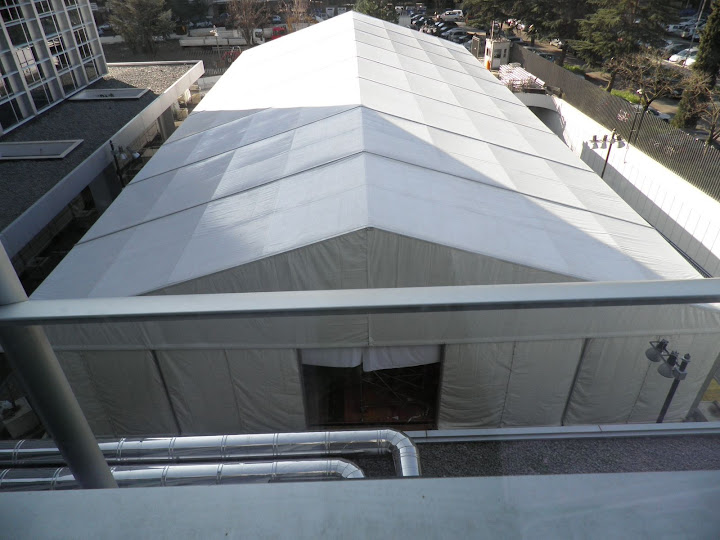
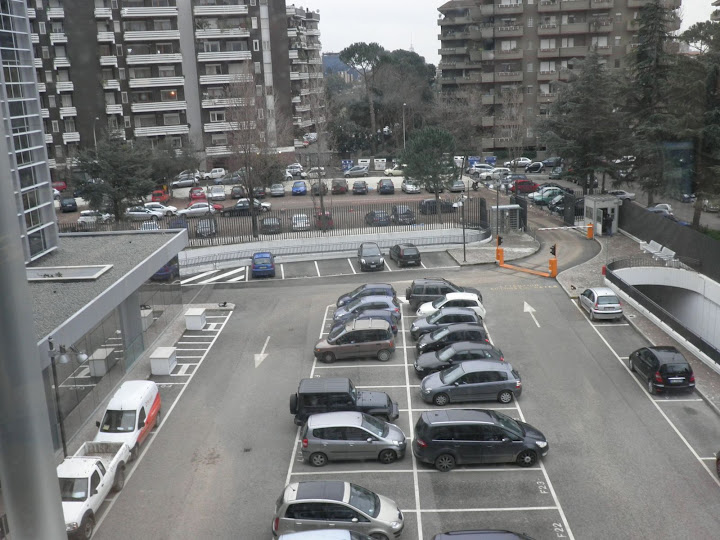
On Monday morning, when we came to the office we saw a tent erected in our outside parking space. This was the first visible sign of the GC preparations. Everyone was amazed how in just less than 48 hours the workers had managed to put up the tent. The tent will be the heart of the event serving as the plenary hall.
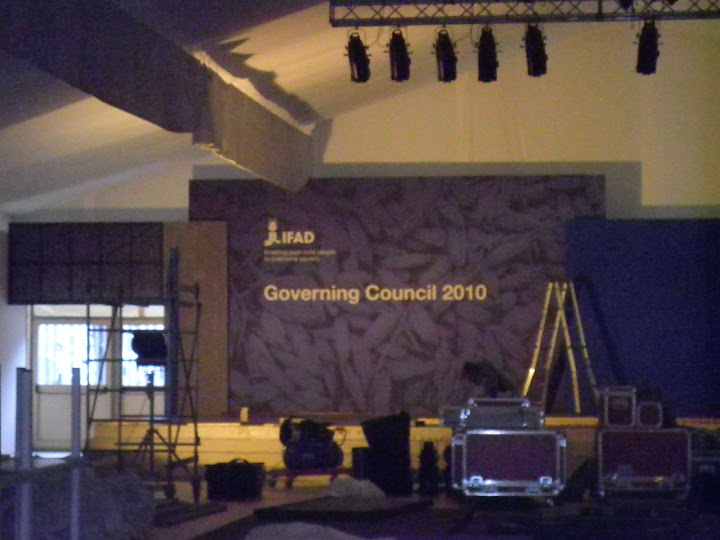
For safety reasons, administrative services declared the whole area off-limits. But your social reporting team was granted special access to visit the construction site on regular intervals to share with you the making of the GC.

Over the last couple of days, we've seen the tent come life and I must admit both the outside and inside the tent looks absolutely fabulous. My colleague who provided the creative inspiration and my administrative services colleagues were telling me that they been receiving so many compliments.
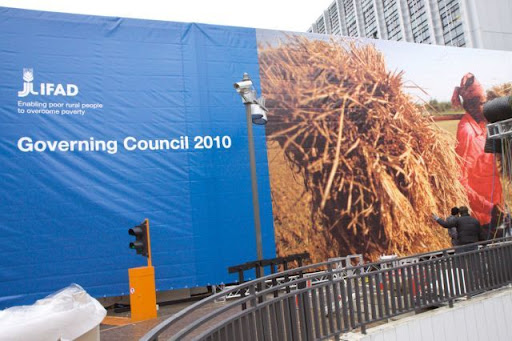
This whole undertaking is another testimony of the commitment, inventiveness and passion of IFAD staff. Everyone is doing their bit to make this debut a smashing success.

In another debut, this year the IFAD social reporting team will use social media to report live from the Third Global Meeting of Farmers' Forum and the Thirty-third session of the Governing Council. We'll be using Twitter and this social reporting blog to share the highlights of the Farmers' Forum and the Governing Council. Make sure you follow us on Twitter @ifadnews and you can use the blog and Twitter to pose your questions and comments.

Looking forward to "hearing from you".


Watch the making of the GC tent

Tuesday, January 26, 2010

Rebuilding Haiti From Davos

When the captains of business and industry meet in Davos for the World Economic Forum this month, the devastation caused by the recent earthquake in Haiti will be near the top of their agenda. It should be, for there is much they can do to help.

Haiti was in dire straits even before the earthquake struck. Rapid population growth, coupled with political and social turmoil, helped make Haiti the poorest nation in the Western hemisphere. Right now, the international relief efforts in Haiti are rightly focused on the country’s urban areas, which suffered most in the earthquake. But when rebuilding starts, rural areas must not be overlooked.

In fact, many of those who have lost their homes and jobs in Port-au-Prince and other Haitian cities will likely return to rural communities where they have family. This will put pressure on the rural economy and place more strain on areas already grappling with meager resources.

Agriculture plays a vital role in Haiti’s economy, yet the country does not produce enough food to feed its people. Some 60% of the food Haitians need, and as much as 80% of the rice they eat, is imported. Sustainable agricultural development is essential to improving the country’s prospects for long-term economic and food security.

The International Fund for Agricultural Development (IFAD) has seen first-hand how investing in agriculture can help people recover from natural disasters. Our experience in developing countries tells us that investments in agriculture can be twice as effective in reducing poverty as similar investments in other sectors.

Less than two years ago, Haiti was devastated by a hurricane that caused about $220 million in damage to food crops – at a time when the population was also struggling to feed itself because of high world food prices. IFAD funded a program to kick-start food production. The 2008 winter planting yielded $5 million in bean crops, helping to improve food security and the incomes of poor farmers.

While the crisis in Haiti is a major setback in achieving increased food production, it should not be a stop sign on the path to long-term development. The challenge is to ensure that earlier efforts are not lost, and that recovery includes a push toward sustainable agricultural production systems for Haiti.

One group now rising from the rubble is Fonkoze, a microfinance organization operating predominantly in rural Haiti. With assistance from IFAD’s multi-donor Financing Facility for Remittances, Fonkoze purchased satellite phones and diesel generators in 2007, and began delivering remittance services in rural areas where basic infrastructure is often weak or lacking.

Only today is the true value of that investment coming to light. Fonkoze was back in operation only days after the earthquake. Remittances transferred through Fonkoze are free, giving recipient families in Haiti vital resources to meet short-term needs while also encouraging long-term development.

More than $1.9 billion was sent to Haiti in 2008 through remittances, more than official development assistance and foreign direct investment combined, with more than half of these funds going directly into the hands of families in rural areas.

When I am in Davos, I will highlight for the CEOs and business leaders the mutual benefits of forming partnerships with small producers. Much-needed capital investment can enable smallholder farmers to provide the private sector with a sustainable supply of high-quality agricultural produce.

Indeed, smallholder farmers are often extremely efficient producers per hectare, and can contribute to a country’s economic growth and food security. For example, Vietnam transformed itself from a food-deficit country to the second-largest rice exporter in the world by developing its smallholder farming sector. As a result, poverty fell from 58% in 1979 to below 15% today.

In Haiti, and in developing countries around the world, smallholder farmers can contribute to food security and economic growth just as they did in Vietnam. But they cannot do so without secure access to land and water – as well as to rural financial services to pay for seed, tools, and fertilizer. They also need roads and transportation to get their products to market, and technology to receive and share the latest market information on prices. Above all, they need a long-term commitment to agriculture from their own governments, the international community, and the private sector, backed up by greater investment.

The productive capacity of Haiti’s small farmers will be crucial in helping the country to overcome this crisis and avert severe food shortages. That is why Haiti needs the private sector now more than ever – to help rebuild both the country and the livelihoods of poor rural people.

Indeed, the private sector has a pivotal role to play in rural development, not just in Haiti but throughout the developing world. But public- private partnerships must be backed up with the right policies and support for rural communities, so that poor rural people can increase food production, improve their lives, and contribute to greater food security for all.

Organizations like IFAD can help link the private sector and smallholder farmers. We can support investments that expand the productive potential of the smallholder sector in the developing world by helping investors reduce their risks, and by assisting smallholder farmers in accessing new financing and markets through private-sector partnerships.

Klaus Schwab, the founder and chairman of the World Economic Forum, has said that this year’s Davos meeting should be used to “solicit commitments in practical help for relief of the continued pain of Haiti’s people, and particularly for the reconstruction of Haiti.” In Davos, I will work to ensure that the interests of the world’s smallholder farmers – in Haiti and in developing countries around the world – are represented.

Kanayo F. Nwanze, is President of the International Fund for Agricultural Development (IFAD), an international financial institution and a specialized agency of the United Nations.

Sunday, January 24, 2010

Basement blues


Saturday, 23 January 2010. The final day to wrap it all up. We spend the full and only day in the hotel basement, a kind of behaviour that has probably not yet been seen in Cusco, the tourism capital of Peru. Maria is back with us, having overcome the altitude sickness.

The first session, a left-over from yesterday, draws conclusions from the rural financial services in the project. The overall feeling is that the savings-based approach is very sound and sustainable, and that the combination of savings with micro-insurance, especially life insurance, is very powerful in assisting the rural poor to acquire assets while making sure no calamity throws them back to square one. It was suggested to limit the savings subsidies in time, and to include an insurance package in the savings products similarly to the credit products.

Lunch is spent preparing the innovation plans with which we hope to put the learned bits and pieces to practice in our own work, without which the entire tour is useless, as Ariel reminds us.

Making sense of it all

The Rwanda team kicks of with a joint proposal to integrate CLARs and competitions to provide capacity building grants through 2 IFAD-financed projects and one financed by Belgium. The plan would use local structures already being set up, but with a new focus on popular presentations of the proposals and results to be assessed by CLARs. An innovation would be the strong involvement of community innovation centres (CCIs) as secretariat to the CLARs supported by project staff, thereby supporting sustainability. The plan is explicit in its implementation plan, aiming at organising the first community competitions in December 2010.

Next is Venezuela. Their innovation plans promoting rural financial services, especially a savings culture, starting with a few pilot MFIs (cajas rurales), by providing subsidies to savers and additionally using competitions between savers (especially women) to allocate credit to the most performing savers that request credit. This sounds like a very interesting combination of elements of the SSDP. Marcela suggests undertaking exchange visits with Colombia.

The Colombians themselves, true ambassadors of their country, start their presentation with a publicity movie on Colombia. They continue with a talking map, evidently having learned something on the trip. It proposes:
  • a pilot activity on including cultural identity in the business promotion, also to respond to the cultural diversity of the clients;
  • the inclusion of micro-insurance with small subsidies; and
  • the promotion of local talents. Finally, Marcela from the Inter-American Institute for Cooperation on Agriculture (IICA), Colombia, plans to orient the local authorities in its development efforts, carry out exchange visits and to promote rural savings strategies.

The Irrigation and Rural Livelihoods Development Project (IRLDP) in Malawi wants to pilot some activities in 3 districts. The project team wants to move from project-driven grants for inputs and materials to CLAR-type allocation systems, include services by talents through direct sourcing in the these grants, link farmers to microfinance institutions and improve community-level marketing, and use PRAs to develop talking maps for natural resource management. Ariel suggests that convincing the authorities of the changes will be a challenge, and we propose that the project look for allies to support the cause.

Elizabeth Farmosi’s proposal is called Alliance Sierra Sur – Mother Earth. It is targeted at the Sierra Sur project, with new mechanisms for the population to access resources, alliances with public and private institutions, and improvements to the conditions of the competitions in favour of the poorer members of the participating communities. Good stuff, but possibly the recommendations are a little late for the project and can rather flow into the next design.

Maria Hartl proposes a Learning Route on rural financial services in Peru, targeted at IFAD-financed projects, IFAD staff (especially field staff) and other partners, covering savings, credit, insurance and leasing. Recommendations to Maria were to include remittances, and to match well the innovation needs and experiences available. I wonder how many of us are considering whether this should be their next route.

The final stretch is the auto-evaluation of the Learning Route, which I find really embarrassing: how can you just praise everything. In desperation, I propose organizing the background material so that it’s a little easier to work with. But honestly, the organization and contents was terrific, and now it’s on us to implement the learning plan, as otherwise Ariel will come back some day and tell us that it was all futile. I hope we can count on some ongoing support from PROCASUR and the project for that.

The last night we spend at Chicha, a restaurant specialising in refined traditional dishes. The tour ends with a fun round of surprise awards of certificates between routeros, at which it becomes clear to us that we’ve become a close group of friends that has shared a very intense experience.

I wouldn't be surprised if it turned out that this tour was the best thing I did this year.

Claus Reiner, Country Programme Manager, IFAD

Maps that can talk


Friday, 21 January 2010. After a long wait for the bus in front of our rather basic hotel on the unpaved roads of Yauri, a town that should be rich with mining revenues, we all meet for breakfast at the Katamaran restaurant with its peacocks running around outside. Bellies filled, we’re off to the Comunidad Campesina de Antaccollana, which presents its development plans that include many elements of natural resource management. A number of sub-committees manage different aspects: tractor management, irrigation, mirocredit, playschool, etc.

After this brief introduction that included not only traditional music but collective dancing, we jump in the buses to have a look at one of the small hand-dug reservoirs. Now in the rainy season, it's hard to imagine how crucial its water will be during the 9-month dry season.

As we discuss water and pasture management, our drivers turn the buses around and get them both stuck in the mud. Immediately they get different and even contradicting proposals, it seems in Africa and Latin America the approaches to this quite common situation are rather different. As the former throw stones under the wheels, the latter take them out again and replace them with grass. But somehow we push the two busses out, and continue to different families that demonstrate sound natural resource management at household level. I join the group visiting Lorenza, a lady whose exemplary improvements to her cattle, pasture, silage, compost, weaving, cooking and cheese making activities leave us all well-impressed. You name it, she's improved it.

What’s more, she goes around encouraging and teaching others all the various skills she learned from the local trainers contracted by the community. And to top it, her personal development plan, skilfully painted by her nephew, illustrates so well what she's already done and what's still up. We leave her thoroughly impressed.

Heaps of alpaca for lunch back at the Katamaran. Thereafter, it's not exactly easy to continue with a 4-person working session on the Rwanda innovation plan, with which we want to adopt the CLARs. But it's well productive, and we continue in the entire group with an analytical round on the territorial development, the talking maps and business plans. All well-appreciated tools, effectively applied by the project. Of course the group also has recommendations to make to the project team, although the heavy rain on the roof makes communication rather difficult. A particularly tough time for the interpreters.

Just before dark we board the buses for Cusco. The rid takes ages, partly due to the heavy rain, partly as the accompanying pickup has a double puncture and we stay together. I happen to be on the bus without heating, and it feels more like a mobile fridge. By midnight, we pull into Cusco, and are more than glad to be back to warmth and wireless.

Claus Reiner, Country Programme Manager, IFAD

Wednesday, January 20, 2010

Learning about territorial rural development, cultural maps and ecotourism

Wednesday, 20 January 2010. Departure from Chivay to Sibayo. Breathtaking landscape with rugged mountains, steep gorges, stone walls, some alpaca and cattle, very few people. We arrive in the small town that is in a process of reconstruction, fully on the basis of its low stone houses and thatched roofs. Martin from Malawi likes the place so much he'd like to stay. Today it’s Maria Hartl’s time to get altitude sick, and Lorena from the Lima office takes good care of her, after a visit to the health post Maria retreats to the room. This is also the town that won the support for the underground electricity connections with its elaborate play at the CLAR yesterday. We visit the Sumac Pallay handicraft association that has managed to start a medium-scale business processing the wool of the 20 members. With a local trainer and some matching grant support, their lives have clearly improved. Yet for further growth they are still dependent on grants, and for the assets they own it's surprising that the only financial service they use is a savings account. All seems to be targeted at tourism. It intrigues me that there aren't any tourists, but Raúl, the mayor, assures me they come in organised tours by the busload year-round.

We continue through the picturesque town, past stone walls on which cacti were planted to discourage animals from climbing across. Next is a company of 10 local partners producing trout in many large tanks built and owned by the municipality. The tanks are managed by the company under a contract, without rent, and have a capacity to produce 5 t of fresh fish per month. The business is new, albeit well operational, and according to Raúl it represents a model for economic development. However, for an investment as large as this it appears that more partners could be involved, and possibly it might have been more equitable and less risky to set it up as smaller units.

He then proceeds to give a passionate presentation in a thatch hall, outlining his development approach in working with local associations and companies that need to compete for public support. He likes incentives. The municipality provided a laptop to the best scholar of the agricultural college, it subsidises thatched roofs, English courses, daily pay for road works for residents, lots of things. And he likes competitions. Any support the municipality provides it allocates through public competitions: pasture improvements, rehabilitation of houses, reforestation. What could be a sleepy little town is actually a dynamic local capital that manages to leverage 14 Sol for every Sol of its budget, and a participatory budget at that.

After the warm midday sun the cold sets in. We follow a couple of presentations on the concept of territorial rural development, cultural maps and ecotourism, and after a good round of comments and questions disappear with our host families to their rustic guest houses where we'll spend the night. Janvier, Benson and I are staying with Dora, a little lady in her 50s with traditional dress, and share a room that fits just about 3 beds and a table. Very homely, simple, clean. We help ourselves to coca tea, and for the joint dinner in the town hall Elizabeth Farmosi arrives in traditional Colca dress. After dinner there’s music with a local group, we move out to the log fire that struggles badly with the thin air, but when it finally gets going there’s dancing around the fireplace until we’re all warm and tired.

Claus Reiner, Country Programme Manager, Rwanda

Tuesday, January 19, 2010

Learning across continents: Latin America sharing knowledge with Africa

Tuesday, 19 January 2010. Today we start with the real thing. A CLAR in action, this is what we came for, so it’s difficult to hide the collective excitement. Plus it’s a warm sunny day, much in contrast to yesterday’s cold rain. But first we go off to the project office, strangely by bus, as we could have easily walked the 300 m.
A casual chat with project staff. Maria Hartl enquires about the definition of communities, and it turns out that the ancestral laws have found their way into modern Peruvian legislation. These extended families have legal status, and are dealt with by the project just as other registered groups and companies. Mary from Rwanda asks about the collaboration with local government, which is promoted in the SSDP by facilitators in each municipality. Staff fluctuations in the municipalities are a problem. For communication with communities, the project’s events in the main squares are the best advertisement for its initiatives. Benson, the vice mayor of Kirehe in Rwanda, really likes the idea of using the CLAR competitions to build up local support, after all this can be very helpful in local elections.

We move back to the main square, where the CLAR session is already in full swing, together with the rural enterprise fair. The fair has been built up across the street from the municipality, a row of colourful booths offering mainly handicraft and cheese, in front of which a tent has been pitched to accommodate the members of the CLAR. Behind them the local project office has set up a mobile office to provide administrative support. In front of this tent, one group after another does not only a presentation of what they’d like to do (and for ongoing ones, what they’ve achieved so far), but full-blown shows with dancing, singing, flower-clad bodies and – the absolute killer – a complete play with several stages and an array of actors including human houses and real tourists. Only the development worker was missing! The groups further show that they manage the project by showing maps and accounts, and by answering questions from CLAR members. Once all are through, the CLAR will declare its verdict on each request for funds. As clouds and some raindrops come over the surrounding peaks, the plaza clears conspicuously and the day’s results get announced: most projects are approved; the group representatives receive the announcements with relief. We flee for lunch, and I guess our groups are not indulging in such a lavish meal, with causas, trout and alpaca.

But no time to relax, Ariel rushes us on to the discussion round with CLAR and group members. We learn how dead easy the voting works, that the community groups hire local TA to prepare their progress reports, that they receive occasional unannounced visits by CLAR members, and how small the CLAR members’ allowances are. Véridianne declares she is deeply impressed with the competitions with judges from different interest groups and client groups that present their own plans and reports.

After a short preparatory break we run the first analytical workshop, at which we jointly analyse the overall project. Our praise is so comprehensive, it almost feels awkward to keep repeating it. There is a genuine feeling that it is amongst the project types of the future. Luckily, to keep things somewhat balanced, we also found some weaknesses, including some targeting aspects, the strong involvement by the project unit, the credit gap for successful enterprises and the low involvement of the communities in preparing and revising their business plans. Nonetheless, the overall feeling is that the Southern Highlands project is too good to be true, and having reached 20h00 again we decide our communal nackerdness has reached a level that doesn’t allow us to launch the final item of the day, an analytical round of the CLARs and the enterprise fair we witnessed today. We keep that for tomorrow, and a group of cold Africans forms around the mobile gas heater as we wait for dinner.

Claus Reiner, Country Programme Manager, Rwanda

Thursday, January 14, 2010

Le FIDA aide les petits exploitants agricoles en Afrique

L'article de Joan Baxter publié dans le Monde Diplomatique de janvier (voir p.18) intitulé: "Un mouvement spéculatif mondial : Ruée sur les terres africaines" cite à deux reprises le Fonds international de développement agricole (FIDA), faisant référence à sa politique foncière et à ses activités en matière d'investissement. Je tiens à apporter quelques écaircissements permettant, je l'espère, de dissiper d'éventuels malentendus.
Le FIDA est une institution financière internationale de développement et une agence spécialisée des Nations Unies octroyant des prêts et des dons à ses Etats membres et à ses partenaires pour financer des programmes de développement et de lutte contre la pauvreté rurale. Les programmes soutenus par le FIDA visent à faciliter, promouvoir et dynamiser le développement de l’agriculture paysanne et des communautés rurales, souvent dans les régions les plus pauvres.

Ces programmes sont ciblés principalement sur les petits exploitants agricoles, les pasteurs, les peuples autochtones et en particulier les femmes et les jeunes en milieu rural. Un accès sécurisé à la terre – et en particulier aux terres cultivables – pour ces acteurs du développement est donc de première importance pour le FIDA. De fait, améliorer et sécuriser l’accès des ruraux pauvres aux ressources naturelles, terres et eaux, est le premier des six objectifs stratégiques du FIDA retenus dans notre cadre stratégique 2007-2010 facilement accessible sur notre site web. Par ailleurs le Conseil d’Administration du FIDA a approuvé en 2008 un document de politique sur l’amélioration de l’accès à la terre et de la sécurité foncière et en 2009 une politique d’engagement aux côtés des peuples autochtones. J'invite le lecteur à consulter ces documents de politique sur notre site ainsi que les nombreuses informations disponibles concernant les projets financés par le FIDA dans le monde et en Afrique en particulier.
On y peut constater qu’en aucune manière le FIDA n’est « tenant » d’une approche du développement agricole consistant à «installer en Afrique des fermes industrielles géantes pour y produire des denrées alimentaires et des agro-carburants entièrement destinés à l’exportation ». Cette approche n’a jamais été la nôtre, au contraire caractérisée par une préférence stratégique et systématique pour l’investissement dans les petites exploitations familiales et la microfinance rurale. Le dernier paragraphe de l’article de Joan Baxter (« Pourtant des solutions existent… ») décrirait parfaitement le type de programme que finance réellement le FIDA. Nous regrettons qu’un organe de presse de la qualité du Monde Diplomatique publie de telles informations ne correspondant ni au mandat ni aux activités d’une institution des Nations Unies travaillant depuis plus de trente ans pour le développement de l’agriculture paysanne.

Par ailleurs, il est vrai que le FIDA collabore actuellement avec la FAO, la Banque Mondiale et d’autres partenaires à la définition de principes directeurs en matière d’investissement dans l’agriculture (non pas d’un « code de bonne conduite ») ainsi que d’un manuel répertoriant les pratiques d’investissements responsables dans ce secteur. Ce faisant notre objectif n’est évidemment pas de promouvoir l’accaparement des terres paysannes par une agriculture industrielle d’exportation, mais de montrer que d’autres pratiques et partenariats mutuellement bénéfiques sont non seulement souhaitables mais aussi possibles entre investisseurs privés responsables, communautés rurales et petites exploitations familiales.

Enfin le FIDA soutient et participe activement à l’initiative de la FAO pour la préparation de Directives volontaires sur la gouvernance responsable de la tenure des terres et des autres ressources naturelles. Ces directives volontaires aideront les pays à améliorer la gouvernance de la tenure foncière dans une perspective de développement agricole durable et de sécurité alimentaire.

Jean-Philippe Audinet
Programme Management Department
Fonds international de développement agricole (FIDA)
Via Paolo di Dono, 44
00124 Rome, Italie
http://www.ifad.org
http://twitter.com/IFADNews
http://ifad-un.blogspot.com

Monday, December 7, 2009

In Japan, meetings with JICA and the new government representatives

On his first visit to Tokyo since taking office, the President met key policy-makers at Foreign Affairs, Finance and Agriculture within the new administration, as well as a high profile politician and senior officials from the Japan International Cooperation Agency (JICA). Nwanze is not an unknown figure in Japan, having visited and negotiated at high levels in his previous capacities. NERICA is still widely discussed in the development circles in Tokyo.

The President’s visit to the capital falls between the recent World Summit on Food Security in Rome and the upcoming Copenhagen COP 15 meeting. The delegation comprised Munehiko Joya and ourselves.

On his first day, IFAD President held a high-level meeting at JICA, with the Vice President, Ambassador Kenzo Oshima in a new building, hosting the new JICA that merged with JBIC. In the discussions, Ambassador Oshima commented on the CARD (Coalition for African Rice Development) exercise being on track and now the need for a major push for early results. IFAD's active involvement has been much appreciated in JICA.

CARD is a comprehensive initiative to support the efforts of African countries to double African rice production within ten years. It also forms a consultative group of donors, research institutions and other relevant organizations to work with rice producing African countries.

The President emphasized the relevance of the initiative, stating that the JICA approach fits very well with that of IFAD, aiming to increase food production for local consumption, access to markets, increased capacity, empowerment of women as fundamental elements for successful long-term rural and agricultural development.

The CARD initiative is the first step toward a broader partnership The President and Oshima agreed that the two task teams will work over the next months to identify 3 to 5 projects or programmes for collaboration including co-financing. On assessment of the outcomes, the two institutions will decide on the collaboration framework. He added that we don’t want partnership just for the sake of it but to bring real added value to the poor people we serve. South–South cooperation and JICA's experience with Brazil and Mozambique also featured in the discussions.

An extraordinary meeting took place between former Prime Minister Yasuo Fukuda and IFAD President at the Diet (parliament) building. Fukuda oversaw the Hokkaido G8 Summit and hosted TICAD IV (Tokyo International Conference on African Development) during his time as Prime Minister. He remains an active voice in parliament and an influential member of the Liberal Democratic Party that held power for five decades. The President and Fukuda discussed aid trends, including the urgency of greater attention to climate issues that particularly affect smallholder farmers. He commended the President for taking up leadership of IFAD and highlighted the need to increase the fund's profile in Japan.

Fukuda chairs an advocacy group of parliamentarians with a strong commitment to development issues. He invited the President to the 2010 meeting of the Inter Action Council, which brings together a group of former heads of state or government from various parts of the world. Members include, among others, Jimmy Carter, Bill Clinton and Jean Chrétien.

Journalists from leading Japanese media - including, among others, Nikkei, Asahi Shimbun, Mainichi newspapers, Japan Times, Agricultural Development News and Jiji news agency - met with the President for a briefing. Most of them raised issues around the upcoming Climate Change conference in Copenhagen, the implications for agricultural development and how the smallholders would adapt. Questions revolved around land issues, food security and IFAD’s work. NHK Television conducted an exclusive interview with the President.

The Director General, International Cooperation Bureau in the Ministry of Foreign Affairs, Masato Kitera welcomed the President and assured him of the Ministry’s confidence in IFAD’s work. Despite the fiscal problems faced by the country, they would like to continue their support.

For the first time in several decades the country has faced a major political shift. Politicians are currently assessing and reviewing public expenditure including ODA. Kitera said he was confident that Japan would continue to play a major role in the international arena.

During the meeting, President thanked the Government of Japan for its leadership, citing the TICAD process as a fine example of the country's engagement in Africa's development. He gave an overview of his discussions with Ambassador Oshima and expressed optimism about showing concrete results through collaboration with JICA under CARD. The President shared his perspectives on food security and land issues.

In closing, Kitera pointed out that in the current financial situation yen loans would remain one of the major aid instruments which can be very attractive because of the low level of interest rates on the Japanese currency.

On the second day in Tokyo, a meeting held with the Vice Minister for International Affairs, Ministry of Agriculture, Forestry and Fisheries, Shuji Yamada focused on land investments. Yamada said that the food crisis and persisting price volatility are fostering interest within the private sector and governments to secure food availability through land lease/acquisition. Japan is very keen to see the development of appropriate rules for dealing with this growing phenomenon.
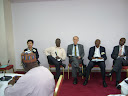
The President recalled the current effort by IFAD, FAO and the World Bank to frame guidelines for responsible investments, in order to achieve win-win solutions. During the meeting, climate change implications for agriculture and trade-related issues were also discussed.

Nobumitsu Hayashi, Deputy Director General International Bureau, Ministry of Finance and IFAD Alternate Governor, expressed great appreciation for the work taken forward by the President since taking office and expressed confidence in his leadership. Hayashi enquired about the comparative advantage of IFAD within the international aid architecture. The President highlighted the IFAD specificities and briefed Hayashi on accountability. The result-based management system allows IFAD to clearly report to its members about the outcomes achieved through the use of financial resources paid in by taxpayers in donor countries.

Vice Minister for Foreign Affairs, Shuji Kira stressed the confidence of his administration in IFAD and in the new leadership. Despite severe budgetary constraints, Japan decided to increase the pledge to the 8th replenishment by more than 80 per cent. The new administration is committed to food security and poverty reduction. The two men discussed in details the outcomes of the visit and about strengthening of the partnership with JICA. They agreed on the relevance for IFAD and Japan to further develop partnership through the APOs programme.

By Farhana Haque-Rahman and Gesolmina Vigliotti

Wednesday, December 2, 2009

IFAD Western and Central Africa workshop adopts knowledge sharing methods

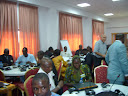
Day two of the Western and Central Africa regional implementation workshop started with three parallel chat shows focusing on the following three themes:
  • Agricultural value chain development
  • Rural and agricultural finance and rural enterprises
  • Support to capacity building

During the chat show participants shared their insights, experience and knowledge about the various challenges and opportunities of the above themes. For many, this was the first time they had participated in a chat show and most of them thorougly enjoyed it.

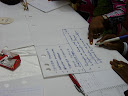
At the end of chat show the hosts (Carlo Bravi and Chrisitiane, Perin Saint-Ange and Coumba Fall, Mohamed Manssouri and Stefania Dina) quickly formulated three questions based on the insight that emerged from the chat show. These questions were then addressed during the World Cafe.

Your reporter had the daunting task of acting as cafe host for all three parallel world cafes. I must admit this was quite challenging also because I had to set up the cafe tables for Carlo's group. Encouraged by the enthusiasm of the participants, I started with Carlo and Christiane's group outlining the process. 5 minutes later I went to Perin and Comba's group and did the same. I then rushed upstairs to Mohamed and Stefania's group.

Stefania and Mohamed were great cafe hosts and had explained the process to the participants. Drenched, I headed back to the secretariat for a sip of water.
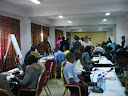
The cafe host is also the time keeper. So 20 minutes into the first round of questions, I did my rounds to ask colleagues to move table and get on with their second question. I must admit that everyone collaborated and they moved orderly to the next table, trying their utmost to keep 5 to table.

Mohamed and Stefania had done their maths right and had managed to have 5 francophone and 5 anglophone tables!!! The participants in all three cafes were completely engaged. I heard comments such as: "This cafe thing is really good". Martin Raine said: "You know, I was a skeptic, but this structured chaos is really great!". Steven reflecting on the process said "I wish we had started by asking the participants to talk about their successes, because when we did that at the last round, the energy level changed." And Steven is right, the question is one the important ingredients of a world cafe, it can make it or break it.
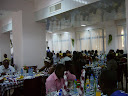
I am currently immersed in a series appreciative leadership courses, so his comment resonated completely with my changed mindset. He was right on: we always need to start looking at strengths and build on these, rather than falling in the trap of looking at weakness.

After lunch, participants regrouped in their original table to do the summary of their discussions. These were then used for the speed geeking. An hour later, a total of 30 table hosts descended to the open area, carrying flipcharts or their flipchart papers. They created their stands waiting eagerly to present their table's work to other participants.
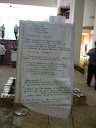
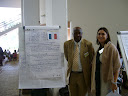
I think the speed geeking could have gone a bit better, if before the participants made their way downstairs, we would have reminded them what was expected from the table hosts and from the other participants. This said, the outputs were remarkable. I walked to three stands and must say I was quite impressed.
Kudos to the Western and Central Africa for having fully embracing using knowledge sharing methods at their events. This is now the second time. Early this year, they used the same knowledge sharing methods at their community-driven development workshop.

For your reporter, it was an absolutely rewarding day. I hope colleagues back home get a flavour of the richness of this day. Hope I've done justice to the great work that went on today.

Now, we are all getting ready for a well deserverd dinner somewhere near the beach. We'll talk tomorrow. If you feel inspired, please comment on these blogposts.

A domani.


Tuesday, December 1, 2009

ICRISAT – A Homecoming

We all knew it was going to be a big moment in the India mission. The President’s visit to ICRISAT at Pantacheru, near the southern Indian city of Hyderabad, was more than just a homecoming to a site where he had spent a decade of his professional career.

ICRISAT’s Director-General, William Dar, told him it was an honour and a pleasure to have a key player in agriculture and development – and a staunch supporter of ICRISAT and the whole CGIAR system – as chief guest at their Annual Day on December 1.

For the President, it was a precious opportunity for catching up with colleagues from his time as a scientist. As he toured the institute, various white-coated colleagues emerged from their labs to recall the working time together. When he arrived at the entomology lab, where he had worked, it was an emotional moment.

It was also the chance for a belated farewell party. When the President was called to take over his post as Director-General of the Africa Rice Centre (then WARDA), there was little time for all the farewells to be fitted in prior to his departure.

The President was keen to visit the large test plantations that surround the research site. And he identified a few plots that he had actually worked on himself, more than a decade ago. The expansion in test plots that has taken place in the meantime was significant.

The institute has dedicated to President, the Kanayo F Nwanze Crop Protection Laboratory and his visit was used to inaugurate the lab centre. Another facility was named after former chair of ICRISAT’s governing body, Dr Ragnhild Sohlberg from Norway.

The ICRISAT senior management met with the President where, among other issues, a grant proposal for research on understanding economic opportunities in semi-arid agriculture in South Asia and Sub-Saharan Africa was discussed.

The President pointed out that there had been excellent collaboration between ICRISAT and IFAD well before he took office and that this was the result of the high quality work that ICRISAT produces. He also told the Director-General that it was good to see them reaching out to the private sector for partnerships.

The President delivered the keynote address to the Annual Meeting on the role of agricultural research in the face of global challenges, including food security and climate change.

On the first day at Pantacheru an animated press conference was held attended by some 25 journalists.

“Agriculture, even smallholder agriculture in remote areas, must be treated as a business, that provides a livelihood and an income" , the President told the reporters, who were well-versed in agricultural and rural poverty issues.

“This business attitude is already happening in many parts of India” he said, noting that supporting smallholders with the right government policies was vital, policies that would link them to vibrant local competitive markets.

While in Hyderabad, the President also met the Chief Minister of Andra Pradesh, K. Rosaiah, who requested him on the possibility of IFAD supporting a major food security project covering seed development, mechanisation, farmer training and water conservation techniques. Media coverage in Hyderabad was extensive, as it was throughout the India visit.

By Farhana Haque-Rahman

Ghana Minister of Food and Agriculture pledges to double rice production in Ghana


Day one of the Western and Central Africa workshop is coming to a close. This morning we had the honor and privilege of having the Honorable minister of agriculture at the opening session of the workshop.

The minister reminded the gathering that the workshop coincides with the celebration of Farmers' Day which is an important day for Ghana, a day that the country honours farmers for their untiring and relentless efforts of feeding the nation.

"The food crisis experienced recently was a loud awakening to the world, particularly for those of us in developing countries as we now need to redouble our efforts and better plan for our nation's food security", said the minister.

In his speech, the minister reminded the audience that by 2050 world population would reach 9.1 billion, and that nearly half of the additional 2.3 billion people in the next 40 years will reside in developing countries.

The minister then proceeded to say: "Feeding these extra people is a challenge we need to recognize and plan for. The 'business as usual' approach will be catastrophic."

"The time is ripe for us to rethink our agricultural development efforts, recognizing that agriculture is no longer just a production tool for industry but a tool for satisfying objectives of growth, poverty reduction, food security and sustainable rural development in a complex setting influenced by globalization and climate change."

The minister shared Ghana's strategy for reviving and strengthening the agriculture sector. "I are planning to revolutionize agriculture. I have promised to double rice production in two years", pledged the minister.

He concluded by sharing the key principles behind Ghana's Food and Agriculture Development Policy:
  • value chain approach
  • focus on selected commodities for greater impact
  • diversification for income generation and stability
  • enhanced productivity
  • transforming smallholders through improved organization of farmer-based organizations
  • public-private partnership
  • improved coordination and harmonization in the agriculture sector

After the official opening, the minister and Mr Beavogui hosted a joint press briefing which lasted 40 minutes and attended by 40 journalists.

The afternoon sessions were dedicated to country team meetings, where the participants reviewed the Douala action plan and reported on progress, opportunities and challenges.

We'll end the day with promises to be a fun evening of Ghanaian hospitality. I see the musicians setting up in the atrium. Make sure you tune in to learn about the Ghanaian hospitality.

Popular Posts