Showing posts with label foodsecurity. Show all posts

Friday, May 18, 2012

Scaling up the fight against poverty and hunger in Africa #globalag

By José Graziano da Silva, Director-General of Food and Agriculture Organization (FAO), Kanayo F. Nwanze, President of the International Fund for Agricultural Development (IFAD) and Ertharin Cousin, Executive Director of the World Food Programme (WFP) 

Agriculture is a powerful tool for reducing poverty and hunger. Events of recent years – such as food price increases, droughts, growing climate change impacts and other emergencies – have put agriculture high on the international agenda. We should be clear that agriculture is the solution. Economic growth generated by agriculture is more than twice as effective in reducing poverty as growth in other sectors. Agricultural development is also an effective means of assisting developing countries in building capacity and infrastructure as well as introducing innovation and technology.

Future food and nutrition security and the eradication of poverty will be profoundly influenced by the steps we take today to support the 2 billion people in developing countries who depend on small-scale farms, herding, fishing and other forms of agriculture.

The past year has seen a food security crisis in the Horn of Africa and a developing emergency in the Sahel region of West Africa, where we are just entering the peak hunger season. The Food and Agriculture Organization of the United Nations, the International Fund for Agricultural Development and the World Food Programme have responded in a variety of ways, from immediate humanitarian relief to building the capacity of smallholders to grow more food, increase their livelihoods and feed their families and communities.

But it is clear that much more needs to be done at every level. Far-reaching partnerships, broader consultation in the formulation and implementation of country-led development processes, as well as long-term commitments, must be made and maintained. In order for development efforts to be successful, is essential to have the participation of civil society, farmers’ organizations and the private sector at every stage.

Beginning with the L’Aquila summit three years ago, the G8 has led a serious and sustained process to mobilize support for greater aid to food and nutrition security. At the L’Aquila Summit, US$22 billion was pledged over three years. The Global Agriculture and Food Security Program (GAFSP) trust fund that emerged from the L’Aquila commitments is a new vehicle to ensure accountability in the implementation process for aid for food security and agriculture to some of the poorest countries in the world.

This financial commitment to support country-owned plans can help to make a big difference, but official development assistance alone has not and will not solve the problem. A favourable climate for investment must be created to attract other resources and partners in the framework of established development plans.
For example, in Africa, the Comprehensive Africa Agriculture Development Programme (CAADP), with its national compacts and investment plans, provides a key platform for public and private efforts  to converge towards agricultural development and food security.

Governments are primarily responsible for providing public goods and services that underpin and facilitate private investment, as well as the governance mechanisms that ensure socially and environmentally sustainable benefits from private investment. Farmers and their organizations must also be supported to benefit from increased investments, and they must be engaged from the outset in real, meaningful partnerships from public policy and programme design onward through evaluation.

Private sector investment, particularly through small- and medium-sized enterprises, is a critical factor for reaching the goal of a hunger-free Africa. However, the quality of this investment is of key importance. In this regard, Voluntary Guidelines for the Responsible Governance of Tenure of Land, Fisheries and Forests, in the Context of National Food Security were endorsed earlier this month by the Committee on World Food Security (CFS). Implementing these guidelines, which have been agreed upon by governments, civil society and the private sector, will help ensure that responsible governance of tenure contributes to responsible investment, enabling sustainable social, economic and environmental development around agriculture and towards food security.

The United Nations Rome-based agencies welcome the G8’s renewed commitment to keep food security high on the global agenda and the creation of the New Alliance for Food Security and Nutrition.
The New Alliance complements ongoing activities and processes, starting from the CAADP itself, and is a tool that can accelerate progress in eradicating hunger and poverty in Africa. These efforts can and will succeed if they support smallholder production and market integration. This includes ensuring that technologies and inputs are adapted to local conditions, and promoting environmentally and socially sustainable farming practices to boost local economies. Stakeholders at the national and local level must drive and own the process from the start.

The New Alliance should avail itself of the opportunities to build upon, and further foster, truly participatory processes involving the G8, African countries, and the private sector, including first and foremost agricultural producers. In this way, it will respond to the needs of rural families and communities, and to the broader needs of African societies.

At the same time, we need to ensure that environmental sustainability is squarely addressed in the type of agricultural investments that are promoted, and that safety nets are in place and emergency preparedness is sustained to protect vulnerable people from the consequences of drought and other shocks.

Together, our agencies have been working with national governments, non-governmental organisations and civil society to help build resilience in developing countries. This includes targeted productive safety nets, such as school meal programmes, and other efforts that ensure that when the next disaster occurs, poor people are better equipped to feed themselves and protect assets such as livestock and property.

We welcome that the New Alliance is promoting a set of enabling tools related to markets and finance, risk and insurance, and science and technology, that can address gaps and strengthen smallholders’ position in the value chain.

We would, however, like to draw particular attention to the need to support women’s empowerment. Women make up nearly half of farmers in sub-Saharan Africa but face disproportionate barriers in access to resources and markets. The New Alliance must also address the aspirations of rural youth, who are key to long-term sustainability and the viability of rural agricultural communities.

Ending hunger and achieving food and nutrition security for the people of Africa is a pressing issue that cannot wait. Smallholders and rural people, who face the daily threat of food insecurity, urgently require access to science, technology and the most basic tools and services that would allow them to invest in their farms and businesses. With these benefits and a renewed commitment across all sectors we have an opportunity to reduce poverty, solve hunger and strengthen food security.

Cross-posted on Food for Thought blog

President Obama keynote address

Wednesday, May 16, 2012

What can G8 leaders do differently to ensure food security #globalag

Tomorrow IFAD President, Dr Kanayo Nwanze will be leaving for the States to attend the symposium on Global Agriculture and Food Security - Advancing food and nutrition security at the 2012 G8 Summit.

The symposium takes place on the eve of 2012 G8 Summit and brings together senior global leaders to discuss new G8 efforts on food security and the opportunity and benefits of private sector investment in African agriculture and food sectors.

There is already quite a bit of buzz on social media about this event (#globalag), and everyone is looking forward to the live webstreaming and keynote addresses by President Obama and Secretary of State Hillary Clinton.

IFAD President will be participating in a panel discussion on "Farm futures: Increasing trade to drive economic growth".

Earlier this afternoon, IFAD social reporting team met with the President and asked Dr Nwanze to share his views on the progress made since the G8 summit at l'Aquila and what he would like the G8 leaders to do differently.


It was heartening to hear that the glass is half full and that there is a renewed emphasis and commitment to the l'Aquila Food Security Initiative. "Food security is fundamental for global political stability", said Nwanze.  

Those of you following IFAD social reporting blog are familiar with the President's contributions and probably are not surprised hearing him ask the world leaders gathered for the G8 summit:
  • not to make new commitments and not to make new declarations
  • rather, look at what has worked in the previous initiatives and reinforce their commitments and put in additional resources
  • to bring private sector into African agriculture focusing on domestic indigenous private sector
  • to call upon developing countries to demonstrate political commitment 
We can only hope that these messages will be heard, endorsed and put to practice by the world leaders gathered for the 2012 G8 Summit.

What are you expectations from 2012 G8 Summit? Share your ideas and views. Do not miss the live webcasting and follow the conversation on Twitter #globalag

Thursday, February 16, 2012

Farmers Are Ready to Do Their Part on Climate Change

By Kanayo F. Nwanze, IFAD President
Originally posted on Huffington Post

The half billion smallholder farms spread across the world's developing countries are at the intersection of humanity's two greatest challenges: reversing climate change and feeding a rapidly growing global population.

Most of the people who operate these farms are desperately poor. But it would be foolish to contemplate environmental and food security solutions without them. Together, smallholder farmers manage vast areas of our planet, including 80 percent of the farmland in sub-Saharan Africa and Asia.

The task before them is immense. To ensure global food security they must reduce their crop losses and post-harvest waste, and substantially increase their annual output over the next several decades. They have to do it on virtually the same amount of arable land that they have today. And, in many areas, they must overcome increasingly volatile agricultural markets, the growing insecurity of access to land, and the degradation of natural resources on which they depend.

At the same time, while farmers themselves are among the most vulnerable to the risks that climate change brings, they too must find ways to work in more environmentally sustainable ways. Agriculture itself, including large-and small-scale operations, accounts for 14 percent of the greenhouse gases emitted each year, and when you factor in land-use change and forestry, where agriculture is the primary driver, the figure jumps to a whopping 30 percent.

The experience of the International Fund for Agricultural Development (IFAD) shows that no matter how small their operations or how poor they are, small farmers in developing countries can actually grow more while at the same time adopting sustainable, environment-friendly methods that help them adapt to the problems that climate change often creates for them. But we must support developing countries to improve policies and incentives to enable small farmers to adopt climate-smart practices and approaches.

Creating an enabling environment for them to manage their risks, access markets, and get the technical know-how they need to succeed in their businesses are all essential to driving them toward a climate-smart, more productive agriculture. We must all recognize that, above all else, farming is a business, even for the poorest farmers on the planet. Today's focus needs to show small farmers not only how to increase their yields through sustainable approaches, but also how to make money and improve their lives when they implement such approaches.

In addition to this, we must rethink agriculture in the face of today's climate change and food security challenges. The enormous, life-giving success of the "Green Revolution" -- which a generation ago focused on the proliferation of high yielding, pest- and-disease-resistant varieties of staple crops like rice and wheat -- needs to give way to new, environmentally sustainable approaches that preserve and enhance the soil and ground water and use natural processes working with, rather than against, ecosystems to fertilize crops and to ward off pest damage.

At IFAD we've seen these techniques work in many places. In parts of Africa, new agroforestry methods such as planting acacia trees in maize fields have helped farmers double their yields, as well as improving soil conditions for longer term productivity. In South Gansu province of China, I saw with my own eyes how local farmers are fighting drought and improving soil quality through a variety of basic techniques such as rainwater harvesting. And in Burkina Faso, smallholder farmers are deploying simple water harvesting techniques such as planting pits and permeable rock dams, along with crop-livestock integration to increase their productivity and restore degraded land.

These may sound like very simple practices, and they are. But these examples, and many others like them, show the enormous potential of the world's small farmers to improve their life by adopting climate-smart techniques. We need to scale up these approaches so they become common practice by reshaping the architecture of public and private development finance so that small farmers can learn these techniques, see their value, and make a profit.

As we look ahead to the Rio+20 climate talks, let us keep in mind that agriculture, food security and climate change are all bound tightly together. Clearly, the challenge of growing more food can be met only if sustainability is the foundation of approaches to food security and poverty reduction in every country and every community.

Monday, January 23, 2012

Beyond the Arab Awakening: Food security and conflict in the Middle East and North Africa

As popular discontent swept across much of the Arab world over the past year, some observers were puzzled. “How is it,” asked the World Bank’s World Development Report 2011, “that countries in the Middle East and North Africa could face explosions of popular grievances despite, in some cases, sustained high growth and improvement in social indicators?”

Last week, experts from IFAD and the International Food Policy Research Institute (IFPRI) took a stab at answering that question in a panel discussion at IFAD headquarters in Rome. Their observations were based on early results from a three-year research project, co-funded by IFAD and IFPRI, examining the nexus of rural development, food security and conflict.

The study’s initial phase covers 24 “Arab-plus” nations, comprising all the members of the Arab League plus Iran and Turkey. The panellists emphasized that it is a work in progress and said the presentation was, in part, an opportunity to solicit feedback from colleagues who brought their own expertise to the table.

Those caveats aside, the researchers’ preliminary conclusions were provocative. While conditions vary from country to country, they said, indicators of well-being in the region are not as positive as official figures suggest. What’s more, Arab nations may be exceptionally vulnerable to conflicts associated with food insecurity and poverty.

A proxy for poverty
Given the severe rates of youth unemployment and rising commodity prices in many Arab states, there’s little doubt that economic grievances triggered at least some of the unrest they’ve experienced. Yet the official statistics issued by governments show a steady decline in poverty amidst economic growth.

At the panel discussion, IFPRI research analyst Perrihan Al-Riffai presented evidence that the government data may be flawed and incomplete. To set an accurate baseline for analysis, she explained, the IFPRI researchers have selected a proxy for official poverty figures. Rather than income, they’re looking at the rate of stunting among children under five – because stunting is a clear marker for vulnerability and food insecurity at the household level.

“The nutritional indicator is more comprehensive than the poverty indicator,” said Al-Riffai. “It really paints a different picture. When we plot the nutrition-growth relationship, we find that the Arab-plus countries are not doing as well as the rest of the world in reducing poverty through economic growth.”

This analysis matters, Al-Riffai and other panellists argued, because reliable data provide the only sound basis for evidence-based budget and policy decisions that will reduce poverty and promote stability.

Risk of food insecurity
The figures on child stunting also shed new light on food insecurity in the Arab world. Based on the proportion of revenues that each country spends to import food, the researchers found that the risk of food insecurity ranges from “low” to “serious” across the region. When the child-nutrition data are factored in, however, the risk shifts toward “alarming.”

Three countries in the Horn of Africa – Sudan, Somalia and Yemen – are among those registering the highest risk. And the rural poor are the most vulnerable population overall.

As IFPRI senior researcher Clemens Breisinger pointed out, investments in agriculture usually reduce poverty more cost-effectively than any other form of development. Yet smallholder farming has not thrived in the Arab-plus countries. In fact, farming is no longer the main source of income for the region’s poorest rural households, who now earn more than 80 per cent of their income from non-agricultural activities.

“Agriculture is globally the most pro-poor sector, but not in the Arab world,” said IFPRI senior researcher Clemens Breisinger. “There are some serious issues of growth not reaching the poor.”

Links to conflict
Another panellist, IFPRI senior researcher Jean-François Maystadt, went on to highlight some of the links between lagging agricultural development and conflict.

In general, said Maystadt, periods of political transition heighten the risk of violence between groups within a society, and recent events around the Middle East and North Africa surely seem to verify that point. More broadly, he said, the Arab world faces an ongoing risk of conflict stemming from myriad factors. These include weak institutions and a demographic ”youth bubble,” as well as dependency on oil exports for foreign exchange.

In some places – such as Somalia, the subject of a case study by the research team – climate change also fosters conflict by depriving rural populations of their traditional livelihoods.

But in many Arab countries, the disconnect between overall economic growth and persistent rural poverty may be the most inflammatory factor of all. “Rising food prices increase food insecurity,” said Maystadt, “and this increases the risk of conflict.”

Basis for investments
These finding suggest that a broad-based approach to food security, focused not only on agricultural development but also on stimulating the wider rural economy, could mitigate the risk of future conflicts in Arab nations. More study is needed to determine which policies will have the greatest impact.

To that end, the IFAD-IFPRI project team will supplement its initial research with visits to IFAD programmes and interviews in the field. In addition, the team will use its newly developed Atlas for Rural Development and Conflict, a comprehensive digital database, for further analysis and modelling. Their on-going work will concentrate mainly on Egypt, Gaza and the West Bank, Iraq, Jordan, Lebanon, Somalia, Sudan, Syria, Tunisia and Yemen.

Ultimately, the goal of the research project is more practical than academic. “It will give us a more quantified and empirical basis for our investments,” said IFAD Country Programme Manager Omer Zafar. Over time, informed by solid research, those investments should make a real difference in rural lives across the Arab world.


Sunday, May 1, 2011

Small farmers can energize rural economies in Africa, they hold the future of food security in their hands

by Tina Joemat-Pettersson and Kanayo F. Nwanze


As news headlines scream fresh concerns about global food security – and as many African countries continue to struggle with poverty and hunger – too little attention is being directed at what could be a major part of the solution to all this: smallholder farming.

Africa’s smallholder farmers not only have the potential to produce enough food for export – and thereby contribute to food security worldwide – but also to lead the way to robust growth and development across the continent.

It is an accepted fact that price volatility for agricultural commodities is no longer the exception, but the norm. And we believe that, with the right kind of investment, access to information services and markets, African farmers can lead an economic renaissance on the continent.

But to get there we have to accelerate the investments and policy prescriptions that will invigorate African agriculture and empower smallholder farmers to increase their productivity and their success.

The first steps in this direction are already showing great promise. Thanks to new policies and innovative investments by national governments, donor countries and multilateral organizations – as well as many civil society organizations and private sector enterprises – rural women and men in a number of African countries are reaping the benefits of access to markets where they can purchase seeds and fertilizers, and where they can sell the crops they grow. They are responding by increasing their yields, increasing their production and increasing their marketed surplus. And their surrounding communities are benefiting from this.

But much more needs to be done for people living and working in sub-Saharan Africa’s rural areas to enable them to raise their productivity and increase their incomes.

According to the recently released Rural Poverty Report 2011 by the International Fund for Agricultural Development (IFAD), sub-Saharan Africa has the highest incidence of rural poverty anywhere in the world, and is the only region in the world where the numbers of rural people living in extreme poverty is still on the rise. More than 300 million rural people on the continent – some 60 per cent of the rural population – live in extreme poverty.

The importance of farming as an income source on the continent cannot be underestimated. Agricultural markets are changing. No longer do we need to think exclusively in terms of export crops; new market opportunities are emerging on Africa’s own doorstep. As cities expand and incomes increase, people in the urban areas are changing their eating habits and are becoming consumers who want more meat, dairy products and vegetables, and they expect higher quality standards – we are seeing this across the continent. And agricultural value chains are expanding and becoming better organized to respond to this new demand. These modern markets bring with them their own challenges for some smallholder farmers in terms of higher entry costs, but the potential opportunities they bring cannot be overlooked.

So what needs to happen to make the most of these opportunities, and for smallholder agriculture in Africa to lead the way to economic growth and food security?

For starters, national governments and the international community need to reverse the longstanding neglect of rural development. We need to improve governance in rural areas and create a better economic environment for smallholder farmers to succeed and grow not only food but their businesses as well.

We need to invest in rural infrastructure. Nearly a third of the rural population in Africa lives more than five hours away from a market town, and fewer than 20 per cent live within an hour of a market town. Only one in five Africans has access to a national electricity grid. Targeted investments in road-building and utility construction can go a long way toward improving farmers’ capabilities and access to markets.

Similarly, we need to make investments in the education and skills of rural people so that they themselves can make the most of new opportunities to engage in agricultural markets or work in non-farm industries. This should include strengthening their collective capabilities – and particularly farmers’ organizations – so that they can support each other in managing the risks they face, learn new techniques for improving their productivity, and market their products.

Importantly, our investments need to recognize and address the major challenges and risks that rural people in Africa face – such as the deterioration of the natural resource base, growing competition for land and water, and the effects of climate change on the rural landscape. We need to help small farmers not only to become more productive, but to farm in a way that is more sustainable in their use of natural resources, and more resilient to the shocks of climate change.

The rural poor are not charity cases. They are people whose innovation, dynamism and hard work will ultimately lead the way into a new era of growth, development and prosperity across Africa.

If we can succeed in creating the conditions for poor rural people in Africa to move permanently out of subsistence and into the marketplace – in country after country – then we will have our best chance to transform Africa into a continent that not only feeds itself, but also exports surpluses to increase global availability of food. What a momentous and welcome accomplishment that would be.


Tina Joemat-Pettersson is South Africa’s Minister of Agriculture, Forestry and Fisheries. Kanayo F. Nwanze is President of the International Fund for Agricultural Development (IFAD), an international financial institution and a specialized UN agency. They will be participating in a 3 May event in Cape Town, New challenges, new opportunities: African agriculture in the 21st Century convened to discuss IFAD’s Rural Poverty Report 2011.

Monday, August 30, 2010

The Road to Food Security


by Kanayo F. Nwanze, IFAD President
Recently, I was on a road in the Southern Choma District of Zambia to meet with Rosemary Pisani, a smallholder farmer and mother of eight who struggled to feed her children prior to joining a farmer’s cooperative to raise goats. Thanks to the cooperative and support from other farmers, she now has a thriving business and all of her children are in school.
On the way to meet her, I passed women walking through mud to the market with large loads of fruit and vegetables stacked on their heads. I imagined how I might be on my way to a very different rural community if the road we were on was paved and well maintained.
Often in Africa, the few paved roads that do exist are littered with potholes and lead to unpaved ones that are nearly impossible to navigate without a proper vehicle. Closer to farming communities, roads disappear entirely. This leaves rural areas, which have the potential to feed the more than one billion hungry people, cut off and isolated. In sub-Saharan Africa, almost 70% of all people living in rural areas live more than a 30-minute walk from the nearest maintained road.
Kofi Annan, Chairperson of the Board of the Alliance for a Green Revolution in Africa (AGRA), has acknowledged this isolation: “The average African smallholding farmer swims alone. She has no insurance against erratic weather patterns, gets no subsidies, and has no access to credit. I say ‘she’ because the majority of small-scale farmers in Africa are women.” Indeed, half of the world’s smallholders are women, and we must keep in mind their punishing task of walking long lengths to get their produce to market.
At the International Fund for Agricultural Development (IFAD), we believe that farming, regardless of size or scale, must be seen as a business, and smallholder farmers as small-scale business owners rather than poor people who need handouts. There is growing recognition that these smallholder farmers and their rural communities are a major part of the solution to food insecurity and poverty – but only if they have what they need to do their jobs.
The Green Revolution of the last century had a tremendous impact on agricultural yields and food production, transforming the lives of millions of people. Much of this success stemmed from infrastructure that was already in place. India’s road density at the start of its Green Revolution in the 1970’s was 388 kilometers per 1,000 square kilometres. This compares with 39 kilometers per 1,000 square kilometers in Ethiopia today and 71 per 1,000 in Senegal.
New roads bring other essential services to rural communities. In Ethiopia, only 2% of rural people have access to electricity, and telephone communication is more or less absent. Researchers believe that this is because only 17% of rural communities in the country live within one mile of a paved road.
Together with poor infrastructure, many small farmers in Africa have insufficient access to productive assets, such as land, water, and new technologies. As a result, yields are generally too low to allow the millions of rural households to generate marketable surpluses. Even if smallholders are able to produce a surplus, their lack of access to downstream activities, such as processing and marketing, prevents them from selling it easily.
The cause of these missing, but vital, resources lies in the shameful neglect of agriculture in the past two decades. Both developed and developing countries – caught up in rapid economic expansion and technological development – got distracted. They turned off the tap to agriculture, leaving small farmers to rely on basic farming practices and on government and donor handouts.
That tap must be turned back on. In IFAD’s experience, working simply to double the income of a smallholder farmer who scrapes by on less than a dollar a day is poverty management, because at two dollars a day, he or she still remains poor. But supporting that smallholder in launching a farming business that could generate a five-fold increase in income amounts to poverty eradication.
If smallholder farmers are to be given the opportunity to become viable businesses, it is essential that they be connected to markets. Indeed, support for rural infrastructure – including last-mile roads, electrification, post-harvest facilities, support for agricultural associations and cooperatives, and access to land and irrigation facilities – is a crucial element in the value chain.
Each link in the value chain, from the smallholder to the local trade agents and agro-processors to regional and national markets, needs to be strengthened. We need to link food producers with the people who need their product through viable and well maintained infrastructure. In addition, we need to provide them with research and technology to ensure that they can grow the best-quality produce, and storage capabilities so that they can sell at peak prices.
If smallholder farmers have the basic infrastructure they need to get their goods to market, they will not only be able to feed themselves and their communities, but will contribute to wider food security. We just need to put the pavement down so that farmers like those I saw in Zambia can more easily make their way on the road to food security.

Wednesday, July 14, 2010

Future of Smallholder Farming, seminar by Peter Hazell


What challenges do smallholder farmers face today? What are their viable options for growth and prosperity? What is their future? The Office of the Chief Development Strategist invited Peter Hazell, Visiting Professor at Imperial College London and formerly of the World Bank and IFPRI, to share his views on the changing context of smallholder farming. The discussion will help shape the concept of a proposed conference, to be held in November 2010 at IFAD.


Hazell started his lecture by observing that smallholder farming is not only persistent, but there are increasing numbers of smallholder farmers across the globe today . China, for example, has not yet reached a tipping point where the number of its smallholder farmers is decreasing. The trend exists because rural populations keep growing, yet in the face of this growth, many countries cannot create enough productive nonfarm jobs.

A minority of smallholder farmers have increased their incomes by specializing in high-value products, but most smallholders remain poor, face stagnation, and are partially diversifying into nonfarm employment to increase their income. Hazell made the point that this is a pathway of survival, not prosperity—most part-time nonfarm jobs undertaken by smallholder farmers require little skill and are very low wage.

Hazell challenged the audience by saying that an important question to ask when opening any discussion of smallholder farming is, what has changed? He argued that after all, smallholder farms have been present since the advent of settled agriculture. Presently there are several facets of change in smallholder farming.

  • Firstly, small farms are becoming increasingly small.
  • Secondly, new market chains have emerged that present opportunities for profit but which can also be difficult to join.
  • Thirdly, globalization has introduced increased competition into both export and domestic markets.
  • Fourthly, the growing privatization of agricultural research is leading to the neglect of problems specific to small farms.
  • And lastly, climate change may create new problems for smallholder farmers.

Numerous conferences have been held on the state of smallholder farming and we understand the contours of the issues fairly well at this point. What is lacking is an understanding of the operational steps required in the near future. So the challenge is how can we enable smallholder farmers to capture new opportunities and prosper?

The prospects for smallholder farms becoming viable businesses will ultimately depend on their connection to the market. Market access is more important for business development than any other factor, including technology adoption. Smallholder farmers have shown themselves to be naturally entrepreneurial, however, there is an important role for training farmers in the acquisition of business skills. The reality of dealing with a variety of private sector agents such as input sellers, wholesalers, and sourcing agents requires skills and empowerment. Particular attention needs to be paid to vulnerable groups such as women and indigenous populations.

Difficulty lies ahead for the development community in targeting those farms that are potentially viable businesses. How many smallholder farmers can engage in business and how many will be left out? This necessarily excludes a segment of traditional beneficiaries of IFAD and other agencies, and the development approach for this group of people will become a critical issue.

Hazell pointed out that while agriculture is widely regarded as a main driver of economic growth, the debate over small versus large farms continues. There is not necessarily broad popular buy in for a small farm agenda in many countries and the likely solution will involve some mixture of big and small farms. This issue deserves further clarification.

Environmental sustainability will often be at odds with market-driven agricultural development. Consider the case in which the market demands a particular crop that contributes to soil degradation – market forces will dictate specializing in that crop but a cycle of environmental deterioration will ensue. The issue of sustainability and natural resource management will need particular attention within a business context.

Climate change will have a tremendous impact on smallholder farmers, who are already vulnerable due to limited access to technology and resources. However, outside of areas where deforesting is a problem, smallholder farmers are not among the major contributors to climate change and thus mitigation efforts may best be focused elsewhere. One interesting area for mitigation efforts is payments for environmental services, which could improve farmer livelihoods. Overall, smallholder farmers may be best served by adaptation strategies.

Off-farm opportunities are also important when considering smallholder farming and national economic development pathways. Rural-urban migration will have to play a bigger role in Latin America and Africa. In the Asian Green Revolution, agricultural development stimulated the growth of the nonfarm economy, which in turn provided employment opportunities for those moving out of agriculture. Today, however, the backward linkages to the rural economy are urban and industrial rather than agricultural. Backward linkages have been stagnant in Africa, where the nonfarm economy remains flat and exit opportunities are scarce.

New innovations include the rise of producer organizations as a means by which to connect smallholders to modern market chains. Much potential lies in this form of organization and it will be useful to look at which types of organizations have worked and what can be scaled up. Also, social enterprises will allow NGOs to engage on a commercial level while maintaining a development agenda. Innovative ways of supplying inputs and stimulating markets can be explored. Finally, there is a changing role for governments in coordinating investment and growth strategies, but too much involvement (such as in the Asian Green Revolution) is not desirable. The proper role for governments is that of stimulating partnerships. There is a need for innovative partnerships, include public-private and unions linking smallholders with medium and large-scale farms.

Hazell concluded his lecture by saying that with a renewed interest in agriculture at the international donor-community level, it is an exciting time to be involved in rural development. For guidance we need to look at the success stories: the organizations, programs, and interventions that have worked and could be scaled up. Of particular interest are cases that have involved private sector operators, social enterprises, and financial service providers. The challenge for IFAD will be to capture the knowledge that exists here, identify the gaps, and operationalize findings into development strategy.


Tuesday, November 17, 2009

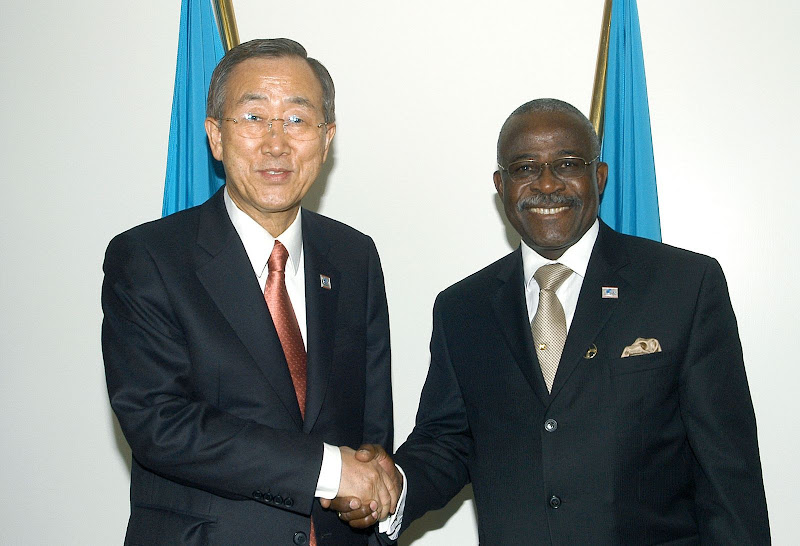
UN Secretary-General visits IFAD

IFAD was honoured to welcome the UN Secretary-General for the second time to its new head-quarters. The motorcade of the Secretary-General pulled in to IFAD premises at 15:30. Mr Ban Ki-moon was greeted by IFAD's President. "We consider your visit a special privilege given your very busy schedule", said the President.

IFAD staff welcomed Mr Ban Ki-moon with a long warm applause as he made his way to the President's office. In his private conservation with the President, the Secretary-General reassured the President of his fullest support and recognition of the services IFAD renders to poor rural people. Before addressing IFAD staff, Mr Ban Ki-moon exchanged a few words with IFAD management team.

In his address to staff, the Secretary-General thanked staff for their warm welcome. "I was very much touched when I was entering this building and you welcoming me in such a wholehearted manner”, said the Secretary-General. He commended staff for their commitment and hard work. "I am proud of you and I hope you are proud of having me as your Secretary-General", said Mr Ban Ki-Moon.

The Secretary-General complimented IFAD President for his leadership and underscored the important role IFAD plays in eradicating hunger and poverty. He called on IFAD to "help others to unite in action against hunger and poverty".

Mr Ban Ki-moon reminded staff that food security cannot be resolved without tackling climate change. He concluded by saying that "the world is watching us and that as United Nations we are the beacon of hope".

Earlier in the day, the President delivered a speech to the World Summit on Food Security. After the Secretary-General’s visit, IFAD President held a joint press conference with the UN Secretary-General, FAO’s Director-General and WFP’s Executive Director.

Sunday, November 15, 2009

IFAD and the Islamic Development Bank reach a landmark cofiancing agreement

On the eve of the World Summit on Food Security, the International Fund for Agricultural Development (IFAD), and the Islamic Development Bank Group (IsDB) have reached a groundbreaking US$1.5 billion framework cofinancing agreement that will strengthen their 30-year collaboration in supporting the world’s poorest people in common member countries. The agreement – the result of talks held in Rome today between Ahmad Mohamed Ali, President of IsDB, and Kanayo F. Nwanze, President of IFAD – comes at a critical moment, when the international community has recognized that agricultural development is fundamental to feeding the world’s population. Today, sustained investment in agriculture – especially smallholder agriculture – is acknowledged as the key to food security.

Using their own resources, IFAD and IsDB will jointly finance priority projects in most of the 52 common member countries under their respective three-year lending programmes for 2010-2012. The two institutions hope that this cofinancing arrangement will attract additional funding from other development partners for joint interventions. With their shared objectives in the field of agriculture and rural development, the two institutions will focus their efforts on increasing productivity, yields, processing capacities and access to markets. Microfinance, combined with capacity-building and technology transfer, will enable hundreds of thousands of project beneficiaries to undertake a multitude of microenterprises and income-generating activities. IFAD and IsDB are committed to working together to improve rural infrastructure, promote local economic development and enhance food security.

Popular Posts