Showing posts with label sfrome. Show all posts

Sunday, February 19, 2012

#IFAD President shares his expectations of #ifadgc

We're 72 hours away from #ifadgc. There is a lot of buzz and excitement in the building. Over the weekend 30 young people came together to discuss the opportunities and challenges of agriculture and what it takes to make agriculture a profitable business.

Tomorrow, the Fourth global meeting of the Farmers' Forum will kick off. And on Wednesday our building will host world leaders, prominent guests, global movers and shakers.

As part of our "back story" and interview series, we had the opportunity to have a conversation with IFAD President and ask him what are his expectations for this session of #ifadgc.

In this interview, the President shared his excitement about having a first class international meeting  focusing on the hot topic of climate change  with renown panelists and prominent guests. He also mentioned he is looking forward to this event being an open one thanks to social media and webcasting.

You can imagine the smile on my face, when the President mentioned that #ifadgc is almost like what we experienced last September with the Share Fair! (The spirit of #sfrome is alive and kicking!)


The President, one of our best social media advocates, is looking forward to an interesting exchange of ideas and interaction on social media. Have a look at how, yesterday during the youth in agriculture session, he engaged in a conversation with WFP's Executive Director, Josette Sheeran.

This is your chance to interact with the renown panelists and guests. Send us your questions for Bill Gates and the other panellists. Join us in making #ifadgc a memorable event!

Help us show the world and the skeptics the power and potential of social media! We count on YOU and look forward to having an engaging and compelling conversation.


Friday, December 30, 2011

Thanks to DJ Titus Twish, a slice of #sfrome makes it to The Economist


One of the best moments of the week, is when I get around to read one of the latest issues of The Economist, as typically I have to catch up with two and sometimes three issues!

What ever the case may be, I love that fraction of a second when I go the pile in my room and pick the latest issues, because I know I’ll be spending a couple of gratifying hours.

The readers of IFAD Social Reporter blog will remember our coverage of the Second Global AgriKnowledge Share Fair and Rob Burnet’s keynote address “Sex and Money”. 

So you can imagine how thrilled I was when in reading the Christmas issue of The Economist, I came across the story entitled “Kenya and Charles Dickens: Great expectations - Some parts of Kenya can justly be called Dickensian”. 


In this issue, The Economist covered the story of  DJ Titus Twist -  the very person at the heart of Rob's keynote speech. The very person who kept 400+ participants in a state of awe for over 40 minutes. The very same person who came to life thanks to the artistic talent and creativity of our very own Nancy White.


I was so happy that the story of DJ Titus Twist had made it to The Economist! Kudos to Well Told Story, kudos to Shujaaz, kudos to DJ Titus Twish, and kudos to Rob and all the team.

And as I was reading the article, I thought to myself thanks to DJ Titus, a slice of Share Fair and #sfrome also made it to The Economist!

For those who missed Rob Burnet’s keynote address: “Sex and Money”, you can remedy by watching the inaugural ceremony of the Share Fair. Rob’s keynote is around 50th minute to the recording.   
Also make sure you read the blogposts from our army of social reporters and check out issue 3 of the Daily Corriere
For us at IFAD, the Share Fair was one of the many highlights of 2011. We would like to finish the year by paying tribute to all our keynote speakers -  Etienne Wenger, Rob Burnet, Mark Davies and Michele Payn-Knoper; to our army of social reports; to the insightful presenters; to the wonderful facilitators; to our sister-agencies; to the steering committee members; to all our partners; to the 700+ participants who for four days energized our building, to the volunteers  and to the wonderful share fair support team, who on 21 December received one of the 2011 staff awards,  for their instrumental role in making this event such as memorable one.

In closing, we wish you all a Happy New Year. May 2012 be a peaceful and prosperous one for everyone and let's join forces to keep the spirit of #sfrome alive. 

Wednesday, December 21, 2011

Celebrating 27 extraordinary colleagues at #IFAD: What a great way to finish the year

This afternoon we came together for the 2011 staff award ceremony.

IFAD staff awards is very special. What makes it different from other awards and recognitions is the fact that its an award for staff by staff.

Every year we have the opportunity to nominate and reward our colleagues and peer for their leadership, for being agents of change, for spearheading and contributing to an outstanding project and/or activity.

And this year, we had the opportunity to honour 27 extraordinary colleagues!


Our lovely colleague Shyam Khadka got the award in the leadership category. The award paid tribute to Shyam’s eloquent and consistent leadership, to his role as the “programme management department anchor” for all major corporate evaluations including direct supervision and country presence. Shyam was recognized for his strong negotiating skills, ability to constructively engagement with others, his tact, his relentless focus on achieve the best possible results. Shyam is not only a leader, but a mentor and a role model for many of us. This year's award for leadership could not have gone to anyone better than Shyam!


In a true team spirit and to celebrate cross-departmental and cross-divisional work - the embodiment of breaking down silos - two teams got the awards in the outstanding project/initiative category.

Shamela Brown, Victoria Chiartano, Paola de Leva and Amedeo Paglione were awarded for having conceived, planned, developed and implemented the Member States Interactive Platform. The award recognized the hard work that went into turning this initiative into reality. They were acknowledged for their vision, commitment, for coming together from different parts of the house, to provide IFAD with a better way to effectively communicate with our donors.

The other team is one known to the readers of IFAD Social Reporting blog - the team who worked behind the scenes to make the Second Global AgriKnowledge Share Fair possible. This team that was instrumental in opening IFAD's doors to 700 participants from 60 countries in September 2011. Thanks to the exemplary teamwork of Alessio Accardi, Christian Assogba, Fabio Caruso, Jean Philippe Decraene, Christian De Santis, Roberto De Tora, Severino Manuel, Roberto Montalto, Dave Nolan, Birgit Plockinger, Roberto Rea, Beate Stalsett, Elisabetta Vaccari and Florence Yu,  IFAD was able to orchestrate an “out-of-the-box” and successful event. They are indeed a dream team, a true testament of "IFAD at its best" and  sterling example of team work within and between divisions, one that cuts through divisional and departmental silos, and gives true definition to the word team.

We finished by celebrating three extraordinary colleagues and our GoGreenGroup as agents of change.


Rahel Getachew was rewarded for consistently showing relentless commitment to excellence and for always going the extra mile. Rahel was recognized for enhancing IFAD’s image, both internally and externally, she was recognized as being the embodiment of the true professional, tirelessly gracious and tenaciously supportive even when under the most intense of pressure.  The award paid tribute to her many wonderful attributes which are appreciated by all levels of staff and stakeholders, and reinforces the recognition of all the hard work done by Rahel,  that is not always visible but that is the foundation of the organization's internal strength.


Hubert Boirard  was recognized for his outstanding performance in managing the challenging country portfolio of Sierra Leone and Liberia. Everyone recognized his efforts in transforming Sierra Leone portfolio into  high performing and disbursing one. He was commended for implementing an innovative project management unit as an integral part of the Ministry of Agriculture in Liberia.  Thanks to Hubert's work,  the World Bank and African Development Bank decided this year to  assign their programmes to be managed by this project management unit. The award recognized Hubert’s abilities and skills of innovator and change agent  delivering tangible results that turned around the performance of the country  portfolios in Sierra Leone and Liberia.


Dina Nabeel, who unfortunately was not present, was recognized for her initiatives to drive and support the changes that facilitated and allowed IFAD to successfully take over the responsibility of supervising  its projects. Her work was instrumental in building staff capacity at headquarters and in the field to handle fiduciary aspects associated with supervision and implementation support. This award recognized Dina’s ability as a change agent that supports and motivate peers to deliver important changes in the way we work which has led to tangible improvements  of project results on the ground.

We paid tribute to the IFAD Go Green Group, composed of  Moses Abukari, Hazel Bedford, Miriam Blanco, Steven Jonckheere and Sabine Pallas for their outstanding contribution in promoting a green and environmental friendly attitude at corporate level. The Go Green Group was established as small group of volunteers in August 2008, following the Secretary-General’s request to launch a UN initiative to reduce energy consumption and the carbon footprint of the United Nations Headquarters. The group has had its share of challenges, as initially it was met with some scepticism. However, their  passion and tenacity has inspired many colleagues to the point where IFAD is now working together with other UN agencies in the Sustainable UN network to become climate neutral by putting in place systems to reduce IFAD’s environmental impact (Greening the Blue Initiative).


We all look forward to 2012 edition of IFAD staff award, which will definitely pay tribute to many more colleagues. And before I sign-off, congratulations to Ron Hartman for receiving the Presidential award. We all thank Ron for his great work in re-engaging with Australia. And happy holidays to all our readers. May 2012 be a peaceful and prosperous year for you all.

Wednesday, December 7, 2011

Second Global AgriKnowledge Share Fair: After Action review #sfrome

by Willem Bettink


Weeks after the closing of the Sharefair a large group of organizers, facilitators, volunteers, and presenters came together to do an After Action review(AAR). The AAR is a excellent knowledge sharing method to assess how things went: an event , a mission or a meeting. It allows you to benefit from the collective perspectives , experiences and learning of organizing and participating in a particular event .

The AAR for the Global Share fair was centred around a number  of questions to collect people’s feedback. For example we asked:  “What worked  well and why?”; “What could have been done differently or better?”; “What surprised you ?”; and finally “What  advice do you have for future share fair organizers”.

All expressed with enthusiasm that the Share fair was  a great event given  its spread, depth and diversity offered in the 9  themes resulting in more than 130 sessions. As one participant said: “The buzz in and around the IFAD building was very inspiring –I wish it could be like this always !!”

There was some very exciting and interesting stuff presented ranging from the numerous training sessions on knowledge methods, to more substantive topics such as “ how to  extract fertilizer from marble dust”, how to improve  working of a Community of Practice to  three very inspiring and out of the box key note  addresses  by Etienne Wenger, Rob Burnett and Mark Davies

People liked the market fair lay out with the tent and the bigger and smaller meeting rooms –best if they were emptied of meeting tables. The graphics and communication gave a very colourful and exciting ‘feel ‘ and transformed the IFAD building into a big open and creative and stimulating place.

Alas only 4 daily issues were possible of the Daily Corriere- after which it had to close ….. and the Chief Editor is looking for a new challenge…  

The social media coverage of the Global Share fair was very good: from the thousands of tweets to introducing the live twitter wall , live webcasting of key note addresses and thematic sessions, over 50 blogs of sessions and multiple video interviews and tons of pictures. All of this social reporting material helped and added value to the event for those who could not attend it in person and enabled writing of parts this publication.

In short it seems that the Second Global Agriknowledge Share fair was a big success. But was there anything that did not go well or could have been done differently or better? Yes  …there  was  quite a lot that AAR participants came up with as could have been better or could be improved:

• The format and lay out of call for proposal, to be filled out and submitted by those who wished to present /share their story, was not done very well. It obliged the organizers to send out a second form to obtain a better focus by asking participants what would be the three take away messages ; and how they wished to organize their  session and if they had any special requirements. In all this need to be changed for a future global share fair.

• The registration process resulted in more than 700 participants over the 4 days. Doing the registration felt like a steep learning curve- from no previous experience, finding and losing our ways through the hundreds of emails, to becoming registration experts by the end of the fair. A lot to be improved here – from earlier responses needed to whom requested financing, to the visa registration process. A software application may help in making it less burdensome on the eyes and sleep of the human actor….

• While people enjoyed the luxury choice from 130 sessions, it was felt there were far too many  parallel sessions- consider quality versus quantity. Often one could not attend 1st choice due to the parallel nature. As one consequence several sessions  had very few participants due to competing sessions. In future organizers should aim at a reduced number of sessions, thus allowing participants to go to more session and their preferred choices. Second one could try to  join into one session similar topics e.g.  a chat show as was done with social media , private sector and agricultural research.

• The  social reporting team should have been led by dedicated person(s) and set –up earlier e.g.  a month before the event in conjunction with draft programme. This would enable better planning of full coverage of session, seeking out needed skills in the social reporting team and build-up momentum and sharing of ideas amongst the team members. Do not ask facilitators to be at the same time social reporters-it proofed to be hard to focus on facilitation and collecting information for a blog afterwards- quality of one or both may suffer!

• Quality of content, presentation and chosen interaction during of sessions could be improved. First of all the facilitators of each session were identified and informed far too late, not allowing them enough time to interact and prepare with session presenters. Lack of clarity on  knowledge sharing methods by presenters hampered inter-active nature of  sessions. Finally consider better approach to determine the quality and richness of content at an early stage of submission for programme.

• The training day was hugely successful and did not build further through the program. Next time have training opportunities woven across the four days.

• An experiment tested at the KM4Dev face-to face meeting is that during the last day of a future Share fair, you ask people to spend 15 minutes to write a commitment to action. These commitment are then shared at the marketplace of commitments , so that people may find out what they can do together, harvest commitment to actions , and follow up 3-6 months to asseds what happened.

The above reflections, feedback and suggestions are just a selection of the wealth of insights harvested during the AAR sessions. We are going to solicit feedback from all 700 participants through a short electronic survey in early 2012. The aim is to assess what has been the impact of the Global Share fair on people’s  behaviour, old and new work practices, and  personal and professional networks.  And in looking ahead we will ask you for new  ideas, suggestions, or wishes you may have for any future share fair.

Monday, October 10, 2011

Using astronomy and animals, voices to predict rainfall: A Maasai practice #gyin #sfrome

There is growing recognition that indigenous peoples are affected by the economic, social and environmental impact of climate change and that their traditional knowledge may be critical for effective adaptation and mitigation strategies.

Mosses Ndiyaine from Tanzania, who was both at last month's Share Fair and now in Cotonou for the Young People Conference- Agents of Change, tells us how the Maasai use indigenous knowledge and astronomy to predict rainfall and adapt to climate change.

#sfrome: Knowledge management planning

Written by Edgar Tan

Knowledge management projects typically require significant awareness raising, education and change management efforts to get buy-in and participation from operational level managers. Such managers are often impatient with theoretical KM frameworks and concepts or high level strategies, and they can easily dismiss KM as too fuzzy and impractical to be useful. Knowledge managers frequently find themselves preoccupied with fighting defensive actions around understanding and buy-in, instead of directly planning, orchestrating and executing knowledge management strategies and programmes.

In the KM Planning workshop Edgar Tan and Kim Martins took the participants through a facilitated and staged participatory planning process using a set of performance support tools to:

* diagnose specific pain points in the operations that can be supported through KM
* identify cultural factors that support or inhibit more effective knowledge sharing and use
* focus managers on the areas they believe are of highest priority to them
* help managers identify appropriate KM approaches, methods and tools to support their priority areas

The value of a participatory planning approach is that operational managers are themselves working with the KM team to identify the main components of a KM intervention, rather than having a KM team impose a solution from outside. This removes much of the burden of getting buy-in (because prioritisation and selection of approaches are done by the managers themselves), and the awareness and education process is focused on explaining the approaches and methods that managers themselves select as possible candidates.

If you wish to see how the process works, read this blog post and watch the embedded video:


#sfrome: Nexus between rural employment and food security (65)

Written by Cristina Sette (CGIAR)

FAO is working on an integrated country approach for rural employment and decent work in Malawi and Tanzania aiming to support national capacities in mainstreaming rural employment and decent work; child labour prevention; and youth employment creation. The three-year programme is funded by the Swedish International Development Cooperation Agency (Sida) and supports the Millennium Development Goal 1 on ‘Eradicate Extreme Poverty and Hunger’, under the new target (1B) to achieve full and productive employment and decent work for all, including women and young people.


Peter Wobst, from FAO, presented the main aspects of the approach, its background, the rationale and its activities, such as child labour prevention in agriculture and junior farmer field and life schools (JFFLS). Peter shared with us the lessons he and his team have learned since the programme started:

  • Involvement of stakeholders such as national and local government, UN agencies, those active in the area (NGOs), and local communities is crucial for understanding all the issues involved in rural employment.
  • Using an integrated approach that better reflect issues on child labour and linking it with other areas of food security, collecting ideas beyond employment.
  • Paying attention to context and population groups to have tailored approaches (the reality of employment in fishing communities is different from crop farmers)
  • Influencing the formulation of policy and strategies at national and UN level.
  • Working through capacity development but need next steps

Peter’s team faces several challenges and wanted to discuss with participants of the session three main challenges: institutionalization of such an approach, ways for sustainability and linkages with existing investments in agriculture.


One participant suggested to avoid the word institutionalization as it can be associated with bureaucracy. And to look at this intervention as a complex systems with multiple dimensions. On the sustainability, working with policy makers on the values of the project, on creation of employment and reducing poverty, can be a way to move towards sustainability, where National governments take the responsibility for carrying on the programme in a near future. Just having policies is not enough, but helping governments to see the importance of such policies and the benefits of applying such policies can bring is the way forward.

Child labour is a sensitive issue but when discussing with national partners, the team linked it with poverty reduction and employment generation.

More information can be found at http://www.fao-ilo.org/


Giving a voice to young professionals through agricultural on-line events (30)

Written by Marina Cherbonnier (YPARD)

I was rather delighted to head to my session with, fresh in mind, one of the last advices from the « Communities of Practice clinic» that I was just leaving:

« First of all, launch informal discussions with people you envisage as beneficiaries of your community of practice and simply ask them what they want and need! »

I was going towards the good direction!

Presenting YPARD’s agricultural online events for giving a voice to our Young Professionals’ community… that’s what it was about…

but it was even more about launching an interactive discussion, with the people attending the session, on how to get more youth involved in (YPARD) online events*.

Let me jump into the conclusions:

Strengthen your social media strategy, your partnerships and your promotion
This was the conclusion of a previous discussion on the same topic in a previous share fair. How concretely apply this?

  • Express and promote what Young Professionals (can) gain from participating to YPARD online events**. Give concrete examples of the advantages that some previous participants got from it. Brand it as « success stories ».
  • Address challenges such as shyness to contribute, lack of confidence of young professionals (« My opinion is not relevant »), cultural tradition of the youth to keep silent as a respect to older people. How to Answer this? Show to the youth that you (community manager or whatever is your name), you are here for them as a supporter, an advisor and ready to help and assist them technically such as on the content itself.
  • Link YPARD representatives in the different regions and countries to the rest of the community more, so that the WHOLE community feels engaged in the movement. YPARD members are not simple followers but have each a role to play! Do you hear the key word “ownership” resonating loudly here? ( -note : YPARD is a worldwilde and decentralized movement -)
  • Use local and national newspapers, media and organisations to promote the online events as much as it can be!

Solicit content / subjects of interest
  • Encourage young professionals or supporters of youth’s cause to talk about local projects or local strategic decisions. Why ? I guess I don’t need to recall how much this is valuable as “food for thoughts”. Let me rather highlight that:
  • People like to learn about on-the-ground experience by individuals; people like to be told stories in which they can possibly identify themselves or recognize some elements from their own experience.
  • We only require young professionals to talk about their own experience in the simplest way they can… There shouldn’t be any fear of being « wrong » in telling their story. What do they know more than their daily life and reality?
  • Make sure that the individuals’ testimonies are combined to a person’s profile and a picture. It makes the thing much more personal and friendly!
  • Get conversations' key leaders for moderating the e-discussions. It enables to orient discussions into deeper considerations. These leaders could possibly be some specialists and recognized people. This gives more credibility to the discussions.

Provide attractive types of events
Blogs and discussions are most appreciated if there is a way for the contributor to see the number of views, to have his/her post “liked” and shared, to receive comments.

  • Pictures and videos attract more people, particularly the ones who are not sensitized to agriculture. It is indeed livelier, more fun and it humanizes concepts, projects, policies and evaluations.
  • The idea of developing contests has been emphasized as very appealing for young professionals. Being in competition and winning a price gets the things exciting. Why not get the opportunity to attend a conference or a forum and represent the movement created online on specific topics?
  • Video contests while they could seem quite time consuming for participants could be proposed in a way that only short interviews, snapshots of Young Professionals, series of few pictures are required.
  • E-conferences are much appreciated. Being able to follow a session through streaming while carrying on with some task in the office is seen as very convenient. Being able to contribute through social media on live is also very engaging.
Should we create a “free zone” on YPARD Website for Young Professionals to express themselves simply the way they want it, with text, pictures, videos, SONGS, drawings etc etc?… I am starting imagining a fresco similar to Nancy White’s drawings… A big one, where the whole community would have putted its pieces… There would be some sound as background and animated shots embedded… It looks good from here… Let’s push the thoughts and actions further…

It was a small session but with high and thoughtful participation! I thank once again the participants! Others, your comments are most welcome!

* Online events can be series of blogs, e-discussions, e-consultations, e-conferences, pictures galleries/exhibitions, video contests… songs contests, drawing exhibition etc etc…

** Benefits from contributing to YPARD online events: Learn from others and get inspired from their experience, create a strong network with your peers, “experienced professionals” and partners organisations, gain visibility, gain credibility and get a voice as an individual and as a community of youth; have your say on strategic and political level; get YPARD be the echo of your issues in strategic debates and furthermore get strategic decisions be in phase with what impact you!

Contact: Marina Cherbonnier, YPARD (Young Professionals’ Platform for Agricultural Research for Development) Marina.cherbonnier@ypard.net

Sunday, October 9, 2011

Let’s keep the Share Fair - #sfrome - spirit alive


Last night I had dinner with the organizers of the Global Youth Innovation Network and while eating, I could see their minds racing like an F1 car, thinking of all the things that needed to do, all those details that they needed to take care of. It reminded me of our state of mind two weeks ago as we were finalizing the preparations of the Second Global AgriKnowledge Share Fair.

Organizing the Share Fair was a nine-month affair and our friend and UNDP colleague, Johannes Schunter, in his blogpost “What does it take to make the Share Fair happen? Don’t ask ‘what’, ask ‘who’! ", eloquently summarized the essence of what and who it takes to organize a share fair.

I can tell you that this nine-month affair meant many long days, many working weekends, many vacation days dedicated to organizing the share fair, many new bonds and friendships, many moments of joy, happiness and laughter and infinite satisfaction.

From the outset we committed to make the Share Fair an “out-of-the-box”, memorable and outward looking event. From the feedback we’ve received and are receiving, it looks like we managed to fulfill this commitment.

So who is this royal WE? The WE are the 690 participants, the 160 presenters, the army of social reporters, the many facilitators, the “share fair angels” - the volunteers, all those who worked behind the scenes and the Share Fair steering committee.

WE should go proud of orchestrating such a memorable event. And for our IFAD colleagues, as someone said, this was IFAD at is best. We should all go proud of this achievement - indeed a feather in IFAD’s hat.

I would add that this was knowledge sharing and breaking silos at its best as the share fair gave everyone an opportunity to learn from the knowledge and innovations of colleagues from the private sector, public sector agencies, NGOs, academics, think tanks, bilateral, multilateral and UN agencies.

For four days, the participants and the presenters created a special buzz and energy. For four days we saw lots of happy and smiling people. For four days we saw many people connecting, sharing and learning. For four days we saw IFAD meeting rooms packed with people.

For four days we saw people conducting meetings in alternative, creative and innovative ways. For four days we explored new ways of documenting and recording meetings - be it through graphic recording, via Twitter, blogs, videos, Facebook and pictures.

For four days we experienced first hand the power and potential of social media. For four days the Twitter wall took centre stage and kept everyone in the building abreast of what was going on in the numerous parallel session. For four days we did not see many suits and ties. For four days we benefitted from the wisdom and insights of four avant-garde thought leaders. In essence for four days we witnessed a unique metamorphosis. And WE LOVED it.

Thanks to the Share Fair’s remarkable social media presence the event went beyond the walls of IFAD and reached approximately 2.4 million people. 4500 people watched the various webcast and participated in the conversation and debate through social media channels. And we got the best questions came via Twitter and Facebook.

As one of the quotes on the Share Fair panels said: “Knowledge is like a garden; if it is not cultivated, it cannot be harvested.” The challenge now is to implement the many stimulating ideas we picked during the Share Fair and keep the spirit and vibrant buzz of the Share Fair alive. Recently I came across a quote from B. Fuller which really resonated with the Share Fair spirit and it goes: "You can't change anything by fighting or resisting it. You change something by making it obsolete through superior methods".


I hope WE can commit to put to practice the Share Fair “superior methods”.

Let’s commit to conduct our meetings differently, let’s commit to take advantage of the power and potential of social media.

Dare I say, let’s commit to take meeting minutes via Twitter and Storify them. Dare I say let’s commit to invite alternative keynote speakers such as Rob Burnet, Mark Davies, Etienne Wenger, Michele Payn-Knoper to IFAD-sponsored events. Dare I say let’s commit to change behaviours.

Let’s keep the Share Fair flame alive. Let's dare to do things differently!  Here comes the Share Fair revolution..... Let's overthrow status quo!!!


Thursday, October 6, 2011

#sfrome: Afghanistan's poor farmers struggle to access markets (188)

By P. J. Bury

Gulla Jan Ahmadzai introduced us to the at time tough conditions for small Afghan farmers to increase their living standards through increased productivity, diversity and access to markets. Road conditions; a lack of consolidation of farmers associations (cooperatives, associations and federation); insufficient adequate product storage to influence and respond to market demands; and a lack of collaboration with intermediary traders and exporters do not favor the realization of their aspirations. Even IFAD itself, supporting them, has difficulties in identifying local context adjusted mechanisms to assist them in their endeavour.
Gulla presents and a lively exchange of experiences and suggestions ensues with among others colleagues working in similar environments like Kosovo.

Gulla will remain in touch with the 8 participants, send them the presentation and exchanged contact details.

Some notes on the discussion

  • Similar issues in Bosnia
  • Advise services to farmers are private in Afghanistan
  • Dairy projects, goats, poultry, training are donations
  • Trained para-vet at district level, 10 para-vet in each district, trained
  • Integrated dairy scheme
  • Micro finance: small donations
  • Loans provided by IFAD, people not keen in getting loan against interest
  • Conditions for the sharia loan: sharia production. Loan is given, pay back a % on benefits made. If no benefit is made, only the loan itself is to reimbursed
  • IFAD works with 4 implementing partners 
  • Project area about 500.000 ha.
  • No processing included, no storage facility, off-season problems
  • Example mellon to Pakistan exported in season and comes back more expensive to Afghanistan from Pakistan in off-season
  • Sugar cane is not processed, exported and Afghanistan imports sugar
  • Much is still in piloting stage, no loans provided up to know 


Challenges
Storage for off-season responding to demand
  • No off-storage does not allow meeting demand constantly, dispersed production doesn’t provide scale to invest in storage 
  • Bosnia exchanges experiences on storage, gradually improving through much external support (including fresh fish and berries, starting with milk production in UHT)
  • Traditional storage experiences IFAD works in 7 provinces, does not involve importers / exporters in project design (as IFAD does in Jemen and Jordan) 
  • Cooling facilities for milk products are not big enough to cater for other products 
  • Cooperative movements could address dispersed production and addressing dealing with private sector (Participant shares experience in Latin America) : farmer organizations are interested in investing this. 
  • Consolidation of cooperative movement seems hampered by levels of education? 
  • Ethiopia example of unions and federation of cooperatives, who then get access to bank loans 
  • No processing facilities to add value 
  • ICT can be used to increase market information: by voice or SMS 
Suggestion to increase information on markets, demand, fluctuation of prices
  • Look into traditional information channels 
  • Grapes a promising product, dry with solar 
  • Government strategy is weak because of political history 
  • Only policy existing is for grain, still in draft 
  • ILEIA suggestion: work more on cooperatives 
  • ICT , paper by Jensen on fishermen in Kerala using cellphone, initially the richer people. Benefits are higher to them than the cost of the cellphone and its use. (paper can be made available, see list of participants). 
  • In higher density areas people can benefit from only a few phones If they are organized they can influence the market prices.

#sfrome: Supporting Community Seed Enterprises to improve availability of quality seeds, increase production and support food security (98)

by Silvia Sperandini

A small but passionate group has animated an interactive session on the potential of local seed enterprises.

Jenny Rafanomezana (Policy and Research Advisor, SHA) presented the innovative intermediary role played by her organization in enabling smallholder farmers to engage in seed multiplication and establish local seed enterprises. Her intervention was followed by a short Video that, with its powerful music, at 9:20 a.m was a perfect energizer.

Then, starting from the concept of Integrated Seed Sector Development, Pietro Chiappini Carpena from Self Help Africa provided an overview on the concept of Integrated Seed Sector Development. While Elia Manda and Shimekit Maru shared their experiences in improving access to quality seeds for rural smallholder farmers through local seed enterprises in Zambia and Ethiopia.

The discussion kicked off by the guest panellists from SHA was just the starting point for a wider discussion of the issues raised. Michael Larinde (FAO/IFAD Senior Expert on Seeds) brought in his knowledge and lessons from recent missions. Other colleagues from AGRA shared their views. The rich debate touched a wide range of issues looking at technical, economic and social perspectives and the implications for seed practice and policy (including aspects linked to farmer organisation development, value chains, and multi-sector partnerships) and the dialogue flew across the world touching various country cases.

The audience concluded that farmers involved in seed initiatives now have a profitable livelihood strategy and that greater access to good seeds result in significant increases in productivity, enabling rural communities to become more food secure.

Once again knowledge sharing proved that barriers can be addressed and that this mutual learning is crucial to scale-up successful models.

Useful Links:


Tuesday, October 4, 2011

#sfrome: Partnership with young farmers to promote collective action and entrepreneurship development (38)

By Monica Romano and Zoumana Bamba

The story of a young farmer without land kicked off the discussion and experience sharing around what are the needs, expectations and challenges of rural young people and what institutions like IFAD can do to enable them become the leaders of tomorrow and build a promising future for themselves, their families and the communities they live in.

Start with nothing, but dream big. This is the story of a young entrepreneur, Leonard. Supported by the Songhai Centre after 18 months of training, Leonard rented a piece of land from the Centre and has been busy setting up a vegetable garden. Only a year after, Leonard’s life has changed. He is able to sell the harvested cabbage, carrot to the market with a support from the Songhai Centre. This was the beginning of his success. He has put some of the profit back into the business to buy a variety of seeds, thus having a vegetable of products to sell. Leonard is a shining example of the importance of persistence and commitment, in spite of initial difficulties. Leonard has become a proud young man earning an honest living from Agriculture. Another story which illustrates that agriculture can be attractive to a young generation looking for opportunities and that one can make money from it.

George Fernandez, President of the International Movement of Catholic Agricultural Rural Youth (MIJARC), stressed that agriculture is key to eradicating rural poverty and hunger, and that there is need to invest in rural youth to boost the agricultural sector, while supporting policies that can facilitate their engagement in agriculture. Over the past year, MIJARC has been implemented an IFAD-supported grant to map young farmer organizations, in collaboration with FAO. The grant aims to find out the reality of rural young people by mapping their own farmer organizations or those in which young people are represented. It also act as a platform for the rural youth express their views and explain their condition though a survey addressed specifically to them and the hosting of regional consultations in Africa, Asia and Latin America. Through these gatherings, young people are invited to share their experiences and indicate the support they need to become successful farmers and entrepreneurs.

Some of the main outcomes of the mapping exercise was presented by Charlotte Goemans (FAO), who showed that only a quarter of the surveyed farmer organizations was found to consist only of young members, whereas the majority of “mixed” organizations have nevertheless more than 50% young farmers as members. The figures increase slightly when data refer to Africa.

In reporting from the consultation that took place in Dakar at the end of August, Clemence Roger (MIJARC) meaningfully started by quoting from young people who participated in the event: “Rural youth are not aware of their rights” stated a Moroccan guy, echoed by another participant from Cote d’Ivoire, according to whom “ young people do not have enough experience in advocacy and lobbying”. The young people had a lot to say and made a number of recommendations indicating the way forward to successfully partner with them and effectively achieve objectives of rural development and rural poverty reduction. Education and capacity building programmes need to be defined together with the rural youth, and women need a special attention in order to ensure equal participation and mainstream gender considerations in selecting both themes and timing of the training. Young people also indicated that they should be involved in design and implementation of rural development policies, projects and programmes as well as to be adequately represented in farmer organizations.

A lively discussion took place after the various presentations across the session, with the facilitation of Philippe Remy, IFAD Country Programme Manager for Mali, and the moderation of Nora OurabahHaddad, Rural Employment and Institutions Officer at FAO. It was highlighted that innovation and creativity characterizing the youth should not forget about the importance of intergenerational transfer of knowledge from the more experienced farmers to today’s generation. The challenges of identifying farmer organizations that are really representing their members also apply to institutions of young people or those dealing with issues pertaining to them. It was also noted that the negative image of agriculture already starts to get built within the family, and then is consolidated at school and finally at the university. Finally, it was concluded that the approach to address youth-related issues needs to be holistic and that agriculture cannot be dealt with as a separate segment.

#sfrome: Innovative partnerships and multistakeholder approaches promoted in the RAS context (229)

by Nara Weigel

The 'river of life' drawing above was completed by the green cards in the course of the session and served as a storyline for the thematic input by Marylaure Crettaz (Swiss Agency for Development and Cooperation) and Nara Weigel (HELVETAS Swiss Intercooperation). The story started in the mountains with a personal reflection of Marylaure and continued with a brief introduction of SDC's interest in Rural Advisory Services (RAS) most recently expressed through providing support to the GFRAS (Global Forum on Rural Advisory Services). SDC's reorganisation including the creation of thematic networks - one of them being the Agriculture + Rural development network open to SDC staff and its partners - was illustrated as a bend in the river! The network has been capitalizing RAS experiences. This led to the presentation of two initiatives one at project level in Bangladesh and the other at a global level - where public private partnerships were at the core. See below for an illustration of the key actors involved.

The presentation served as a basis to subsequent discussions in a world cafe format on (1) the added value of public private partnerships - at project and global levels for the farmers and (2) whether private sector involvement at both levels leads to more sustainability. Participants agreed that the success of public private partnerships depends very much on the context....Nevertheless, most participants feel that private sector involvement can lead to new market opportunities for farmers as well as more efficient and relevant services, e.g. through facilitating a better flow of information. Under certain conditions (i.e. social inclusion) this can lead to improved livelihood opportunities. It was also highlighted that the role of the public sector remains crucial regarding quality control and setting enabling environments and policies. Finally, participants pointed out that civil society is an important actor, e.g. farmers as drivers of change and NGOs as facilitators. Nothing new under the sun of Rome ;-)

Community radio an extension to telecentre. What is the next frontier? (154)


by Antonella Cordone

John Tarawe from the E.Bario Radio, a small projects financed through the IFAD Indigenous Peoples Assistance Facility, shared his experience in setting-up the first community radio in Malaysia.
His story was about a dream that everybody thought it could not become real as the government would have not given a license for a community radio for indigenous peoples in Malaysia. John and his team thought their dream could become a reality if they were able to mobilize the right people and talk to the government….. and they were right.

Today the first licence has been issued by the government to the E.Bario Radio Broadcasting and furthermore, they are now supporting the government to design their policy on community radio. Mosses Ndiyaine from the Maasai people of Tanzania shared his experience on the importance of community radio with mobile and pastoralist peoples informing on how community radios are often the only means of communications that can provide services to the community, for instance informing on which are the areas available for mobile people to move their cattle and of conflicts/problems in one particular area.

The presentation by Joan was dynamic and well attended. There were several questions and people sharing experience from other parts of the world. A shairfair is being organized by E.Bario in November in Malaysia and already connections have been established to also invite people from Africa and link-up with on-going project with Bioversity in Malaysia. We will continue telling the stories of indigenous peoples tomorrow and day after with Mosses from Tanzania.

#sfrome: Net-map a great method to share implicit knowledge

by Paolo Brunello

The promises of Net-map appeal to many judging from the number of people who attended this workshop: indeed everyone admitted to have felt puzzled by complexity, overwhelmed by it, so when you propose a method to harness that complexity instead of succumbing to it, people respond. In fact Net-Map is a technique that allows for zooming out of our own little clearance of knowledge and hover above it, so that we can grasp the wider context and make sense of it.

We started with a "stone in the pond". It's a quick and effective technique to get a feeling of the group and it works like this: people stand in the middle of the room and who feels like it starts off by saying something along the line of: "Hi, I'm Judith, I work in farmers empowerment in Ghana and what I would like to get out of this session is a method to help me engage them more effectively". Everyone will then move, standing very close to Judith if they share her expectation or further away if they don't, along a continuum, like waves of a pond when a stone is thrown in the middle. Thus in few minutes we realised that there was a common interest in learning Net-Map both for strategic planning and monitoring and evaluation, in other words both to create a shared vision of the situation in order to optimise coordinated action and also to visualise the state of things at different times during a process, thus allowing for pre-post comparison.

Almost everyone was new to Net-map so the challenge to learn it in such a short time was big. After a short introduction to the basic steps of the method, three subgroups were created and started to work right away on their maps: they first chose a case study and identified the core question: "Who influences the success of...." and then started writing the names of all the different stakeholders on post-it notes to be placed on the map. Then they selected some relevant links connecting the different stakeholders, like money flow - who is paying whom? - or training - who is training whom? - and they drawn these links using different colors. Then they started assessing the relative influence of each actor in answering that original question, using some wooden discs to build "influence towers" besides each actor.

The final result was a map that portrayed the perceived distribution of power in the system under exam. But perhaps even more important was the process that lead to that map, since every member of the group had to explain why they thought a certain actor was more - or less - influential, thus making their premises explicit. This in one of the key feature of Net-Map: having to draw together, net-mappers are "forced" to share their implicit knowledge of the system under exam making it visible to others, so that we assist to a mutual "perception tuning" that can greatly help the coordination of any subsequent action. While the exercise was going on, some participants volunteered to take an observer's role, to focus on the process of net-mapping without being caught into the specific details of the case study. This then allowed the trainers to address the most burning questions in the final plenary discussion. Finally, as an evaluation, we asked the participants to line up according to their degree of willingness to use Net-Map in the near future and we were pleased to see that the majority of them were optimistic in trying it out in their context.

#sfrome: The Gift Garden


by Carl Jackson

How easy is it really hear and be heard by each other when we passionately build ideas together? How can we speed up the process of synthesising knowledge created by large groups without loosing consensus? At the ShareFair at IFAD in Rome today it was great to be able to propose that the Gift Garden method can help on both these points.

Gift Garden is a method developed originally for an interactive session on climate adaptation for 80+ participants at a conference in Ethiopia earlier this year. It brings together elements of large group facilitation from approaches including World Cafe and Open Space with playful approaches from Applied Improvisation. What is distinctive about the Gift Garden method is that it enables large groups to build new ideas quickly, collaboratively and creatively drawing on individual experience.

Sharing the method to today and running through the process with a group of really generous and knowledgeable facilitators lead to new insights and suggestions for improving the method. I’m always amazed how despite the anxiety I feel sharing new ideas, how quickly people put one at ease and give of their own experience so selflessly. Today was no exception and the suggestions for strengthening the Gift Garden Method included:

  • What to do if you have a very vocal person? Maybe have butterfly role to include equitable participation
  • Can you have multiple topics in the gift garden? Yes if you have more than one topic you can have just one round per topic as more topics provide opportunities for people to be both bees and butterflies
  • It would be logical to use the ‘Yes And’ Rule for the report back sessions to and that would encourage even more synthesis – Great Idea!
  • Maybe have post-its for each idea shared in report back and then add these to a big flower at the end of the session – nice idea but could be in tension with the idea of having lots of freedom to improvise as people will be thinking about what to write during the discussion sessions rather than actively listening to each other.
  • Having equal numbers of butterflies to bees seems like it could be too much – on reflection it still seems a good idea as butterflies need to support each other to play the active facilitation role they are charged with (with few butterflies they may not feel empowered).
  • If you want to make the outcome of the Gift Garden more action oriented you can ask a more focused question at the report backs – like “What should we do next to move forward on the topic discussed?”
  • The ‘Yes And’ rule experience: created a very positive atmosphere; challenged us to move beyond Yes But; showed how difficult but important active listening is; showed that silence in the discussion is positive as it allows time to reflect on what has been heard and respond in Yes And mode.
  • How to move the discussion from the natural end of one set of ideas and the starting a new set without breaking the Yes And rule needs thinking through as not clear yet in the method.
  • The Butterfly’s role needs to include actively asking Bees to repeat what was last said if they feel Bees are not actively listening or building on each others’ ideas.
  • Butterflies moderating dominant speakers in Bee groups is a tough assignment. It would help to empower Butterflies to have a huddle of people in this role to share tips on how to facilitate and encourage huddling through out each round to compare notes and decide if an intervention is needed to get bees back on track.
  • If someone really doesn’t want to be a butterfly then allow them to opt out, but don’t offer this up front as it may encourage people who just want to be Bees so they can push their ideas to take this option.
For a full explanation of how to run your own Gift Garden session and explain it to others please see the attached PDF note developed for the ShareFair Session today. I’ll update this blog post to point to links to photos and interviews about the Gift Garden that others are posting on other sites later today. 

If you’ve got ideas and suggestions about the Gift Garden method please let me know.


Monday, October 3, 2011

#sfrome: Scaling-up rural innovations. Lessons from the learning route (244)

The session "Scaling-up rural innovations - lessons from the learning route" brought together planners, managers, resource persons and field practitioners from Latin America, Asia and Africa with hands-on experience or potential interest in joining or promoting learning routes.

Our social reporter Marieclaire Colaiacomo talked to Roberto Haudry and Juan Moreno after the session, and you can watch their conversation here (in Spanish):

#sfrome: A new “mobile” has been officially launched …. (158)

Written by Maria Losacco

Mobile Extension Teams – An innovative approach for targeting nomadic community (WSRMP)


Model: Mobile Extension Team 2008

Specifications:
Country: Sudan
Locality: Western Sudan
Outreach: nomadic communities (which represent 30% of the 380 communities targeted by the project)
Composition: experts in different fields, e.g. veterinary, women, natural resources management

Features: Conducting an initial selection of communities to be targeted;
Introducing the project and ensuring nomads’ participation in project activities;
Ensuring that nomads benefit from the projects ;
Mobilizing communities members to form Community Development Committee and form the Local Extension Network (LENW);
Ensuring that the LENW in each community receives the required training;
Assessing community needs in terms of both social and productive services;
Ensuring these needs are incorporated in the AWPB of each respective locality and follow-up implementation of planned activities with the local extension team (LET);
Try and persuade nomad community to play a proactive role with regard to veterinary services.

#sfrome: Microfinance to support Gum Arabic Producers Associations (156)

Written by Maria Losacco

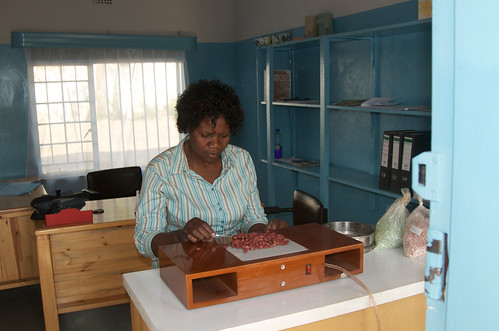
Do we all know what gum Arabic looks like and what it could be used for? The gum Arabic processed products that project staff brought from Sudan and the pictures from the field helped participants to “visualise” the project and its outcomes: this orange resin can actually take several commercial forms and be a precious source of income for people in Sudan.

In the fact IFAD-supported “Revitalizing the Sudan Gum Arabic Production and Marketing Project” aims to increase the production and income of small scale gum producers in selected areas of the gum belt. In particular, as gum Arabic tapping starts right before the sorghum harvest, when household food and cash reserves are at their lowest, addressing the problem of poor access to formal rural financing services for small-scale producers becomes key.
  • Which are the reasons for microfinance failure?
  • How can we tackle this difficulties?
  • Which tools/actions can we use to ensure the sustainability of microfinance?
These three questions led the group discussions.


It has been acknowledged that microfinance could fail mainly because of:
  • cultural constraints, with regard to trust and transparency;
  • faulty selection processes;
Among the tools that could be implemented to tackle these difficulties, the attendees stressed the need to have:
  • clear selection criteria (systematic, fair and transparent) and process in general;
  • enhanced outreach and capacity of microfinance institutions to supervise project loans and provide support as needed.
With regard to the sustainability of microfinance, the following aspects emerged as key:
  • the capacity of the government to create an enabling environment;
  • complete transparency, for example releasing annual reports and being available to explain figures and data to the community.

#sfrome: You want to be as strong as Popeye? Forget spinach. Just drink milk. (41)

Written by Maria Losacco

You think that without spinach Popeye would give up hope? Maybe … unless he drinks milk!

The story of Popeye has been used as the setting of a very creative video on milk processing in Bosnia and Herzegovina and Syria. A brilliant mix of Popeye cartoon and interviews has caught the attention of the attendees and illustrated the situation in the two countries.

In a country like Syria, studies estimate that about 15% of the milk produced gets wasted because of wrong methods of production, poor processing and marketing. It is a huge quantity worth over 25 million US dollars. In BiH, the same problems have been addressed by IFAD-supported projects through the introduction of improved milk processing, especially with regard to milk conservation and transportation methods.

So why not adopt a south-south approach trying and fostering cooperation between the countries? The two directors of the projects in BiH and a representative of the Syrian Ministry of Agriculture and Agrarian Reform were absolutely enthusiastic about the idea and have already started working on it!

Popular Posts