Showing posts with label Knowledge management. Show all posts

Monday, April 16, 2012

Mission accomplished: Convincing indicators to assess impact of networks found? #kmers

Ever since I embarked on knowledge management and knowledge sharing journey, I've been struggling to find convincing metrics to assess impact of KM/KS activities. In October 2009, I wrote this blogpost: "KM search and rescue operation: Looking for intelligent and KM-enabled indicator!" and got some good feedback. But it still was not quite the convincing indicators I was looking for.

What do you I mean by convincing indicators?  I mean metrics that make sense, metrics that show progress, metrics that combine both qualitative and quantitative aspects.

I am not a great indicator fan. I believe indicators detract attention from the bigger scope. They are very much like this faceless street artist.

Nonetheless, the type of business we are in, requires that we measure our activities and show the impact we are making. And ever since when I've been trying to find convincing indicators for KM/KS related activities.

So you can imagine my excitement while reading Collaboration  by Morten T. Hansen  to come across convincing indicators to measure the impact of networks!!! Hansen's book is based on years of research. The book itself is a gem, especially the last chapter where he takes you on a personal journey and acting as coach shows you how to become a collaborative leader.

In this book, Hansen argues that the goal of collaboration is to achieve greater results. He identifies the following as barriers to collaboration:

  • not-invented here barrier
  • factors contributing to hoarding
  • search barrier
  • transfer barrier
He makes the case that no collaboration is better than bad collaboration. He argues that for collaboration to happen leaders need to unify people and to do that they:
  • must craft a compelling unifying goal that makes people commit to a cause greater than their own individual goals
  • should pair competition on the outside of the company with collaboration on the inside. People who unite to compete against a common foe are juiced up by competing and by collaborating
  • should not talk competition, but collaboration and collaboration for results
Then he goes on to explain how to build nimble networks and it is in this chapter that I had an aha moment. I finally came across a convincing way to measure the impact of networks.

Hansen starts of by saying:
  • too much networking may be distractive
  • networking is costly because it takes time and effort to nurture relationships (this is if you are serious about it and want to do it well)
  • for networks to be valuable, their benefits need to be greater than the costs
  • secret of networking is to build result-based networks based on disciplined collaboration
He then proceeds to say that networks are good for identifying opportunities to take something further and to capture value and in doing so, effective networks need to reduce the collaboration barriers mentioned above. 

Hansen provides a framework with six network rules, which I see as great indicators to measure success of KM/KS networks. The first four are used to assess the impact of network vis-a-vis identifying opportunities and the last two to capture the value of networks.
  • build outward, not inward: to overcome the not-invented barrier, networks need to build many more outward ties than inward ones. One of the indicators is to measure how much undisciplined collaboration there is. Is there too much networking, too much butterfly syndrome, jumping from one thing to another without concluding anything?
  • build diversity, not size: to overcome search barrier you need to build a network based on diversity. In networks numbers do not count. What is important is the diversity of connections. You need connections that tap into diverse things and diverse people. This is what leads to more innovative products. Hansen challenges us that when we engage in professional relationship we should ask ourselves what diversity does this new contact bring me. He then proceeds to say that disciplined collaboration means adding contacts that bring more diversity into your network. And this too is a great indicator to measure the impact of networks
  • build weak ties, not strong ones: now how counterintuitive can one get. And yet, there is so much wisdom in this statement and this too is a superb indicator. Hansen makes the point that weak ties prove to be much more helpful in networking because they form bridges to world we do not walk within. His argument is that strong ties are to worlds we know and he is very right about this. Building weak ties contributes to overcome the search barrier
  • use bridges, not familiar faces: good networking means knowing who the real bridges are and to use them. Bridges are typically long-tenured people who have worked in different places and know about a broad range of topics. A successful network needs to have enough people performing bridging role. Using bridges and not familiar faces is another tactic to overcome the search barrier
  • swarm the target; do not go it alone: Hansen's advice here is if you believe the target identified in a search may not be forthcoming, enlist the help of others to convince the target. In other words swarm the target with influencers, people who are in position to exert influence and get your contacts to work on your behalf, appeal to common good and invoke reciprocity. If you want to measure the impact of your network, you should ask yourselves, how many times you've turned to your network members and asked them to do something on your behalf and how many times they did it for you. Hansen associates this as a remedy for the hoarding barrier
  • switch to strong ties; do not rely on weak ones: he finishes of his six network rules by providing a remedy to transfer barrier and making the point that to ensure easy transfer you need strong ties between team members so that they can trust each other and transfer complicated knowledge, which in KM language translates to good old tacit knowledge

I must say, I am thrilled to have finally found convincing and sound indicators for measuring the impact of networks. I now believe it is possible to find equally good indicators for other KM/KS aspects. The dilemma is whether anyone old person do so, or whether we need another Morten Hansen with years of research experience to come up with equally convincing indicators.

Bets are open!!! And I would love to hear your views and feedback on these indicators.


Friday, December 30, 2011

Thanks to DJ Titus Twish, a slice of #sfrome makes it to The Economist


One of the best moments of the week, is when I get around to read one of the latest issues of The Economist, as typically I have to catch up with two and sometimes three issues!

What ever the case may be, I love that fraction of a second when I go the pile in my room and pick the latest issues, because I know I’ll be spending a couple of gratifying hours.

The readers of IFAD Social Reporter blog will remember our coverage of the Second Global AgriKnowledge Share Fair and Rob Burnet’s keynote address “Sex and Money”. 

So you can imagine how thrilled I was when in reading the Christmas issue of The Economist, I came across the story entitled “Kenya and Charles Dickens: Great expectations - Some parts of Kenya can justly be called Dickensian”. 


In this issue, The Economist covered the story of  DJ Titus Twist -  the very person at the heart of Rob's keynote speech. The very person who kept 400+ participants in a state of awe for over 40 minutes. The very same person who came to life thanks to the artistic talent and creativity of our very own Nancy White.


I was so happy that the story of DJ Titus Twist had made it to The Economist! Kudos to Well Told Story, kudos to Shujaaz, kudos to DJ Titus Twish, and kudos to Rob and all the team.

And as I was reading the article, I thought to myself thanks to DJ Titus, a slice of Share Fair and #sfrome also made it to The Economist!

For those who missed Rob Burnet’s keynote address: “Sex and Money”, you can remedy by watching the inaugural ceremony of the Share Fair. Rob’s keynote is around 50th minute to the recording.   
Also make sure you read the blogposts from our army of social reporters and check out issue 3 of the Daily Corriere
For us at IFAD, the Share Fair was one of the many highlights of 2011. We would like to finish the year by paying tribute to all our keynote speakers -  Etienne Wenger, Rob Burnet, Mark Davies and Michele Payn-Knoper; to our army of social reports; to the insightful presenters; to the wonderful facilitators; to our sister-agencies; to the steering committee members; to all our partners; to the 700+ participants who for four days energized our building, to the volunteers  and to the wonderful share fair support team, who on 21 December received one of the 2011 staff awards,  for their instrumental role in making this event such as memorable one.

In closing, we wish you all a Happy New Year. May 2012 be a peaceful and prosperous one for everyone and let's join forces to keep the spirit of #sfrome alive. 

Wednesday, November 16, 2011

Managing for impact: learning from successes and failures


The East and Southern Africa (ESA) annual workshop focusing on managing for impact kicked off on 14 November in Arusha, Tanzania. The event brings together 200 participants from 17 countries. 

This is a special event on many fronts. To start with, the participants warmly welcomed colleagues from South Sudan. Secondly, they bid farewell to Ides de Willebois, who is moving on to lead the West and Central Africa division.  And last but not least, this is a unique event because for the first time, participants have embraced moving away their from traditional way of doing workshops and have embraced knowledge sharing methods.

Ides de Willebois in his opening remarks reiterated the fact this is a learning and sharing event. “Without learning and sharing we cannot improve and we cannot have impact”. He also went on to say that “we need to have a better understanding of what we do, so that we can do it better.”
In concluding his remarks, de Willebois mentioned that he is planning to start an exchange visit between East and Southern Africa and West and Central Africa. “I hope that West and Central Africa colleagues will join next year’s annual event, so that they can learn from your experience”. 

Breaking the mould
Whenever you decide to innovate or break away from business as usual, there is some apprehension. You feel gratified when breaking the mould ends up being successful and resonates with the expectations. And this is exactly what happened at the ESA event.

It was so refreshing to see 200+ participants embrace knowledge sharing methods such as openspace, spectogramme and world cafe type discussions. Thanks to these participatory methods, they started to mingle, bond and in no time they got to know each other.  

In the process, they heard many stories, including one about how ESA implementation workshops evolved from a being top-down loan administration events to more learning events owned and organized by the projects.

The majestic mount Kilimanjaro and the Kalali women dairy cooperative
As a child, when school was  over, I would be counting the days so that I could join my grandmother in Mount Damavand. Damavand is Persia’s tallest mountain in the Alborz mountain range. Grandma had these wonderful stories about mount Everest, the far way mount Fuji and then a majestic mountain in Africa - mount Kilimanjaro. 

I was intrigued by mount Kilimanjaro, because as a I child I found it difficult to fathom that Africa had mountains. So, on Monday when we had to sign-up for the field trips, I could not believe that finally I would be able to see this far far away mountain.

Unfortunately the majestic mount Kilimanjaro decided to remain pretty veiled and the clouds did not cooperate. But nonetheless, seeing it was an emotional moment and brought back many fond childhood memories.

We then moved on to visit the Kalali women dairy cooperative. This cooperative is part of the Agricultural Sector Development Programme where IFAD is investing loan funds in supplementing financing to the nationwide development programme, to counteract the depletion of the initial funds committed by development partners as part of a basket fund arrangement.

The cooperative is located in Machame division, Hai district in Kilimanjaro region. Inspired by a local daily community business, this cooperative was established with 132 members in 1988. The cooperative’s goal is to:
  • increase income of poor rural households, particularly women in the area through a number of different income generating activities
  • improve lives of orphans and provide assistance to poor families who were unable to provide education and sound nutrition for their children
“To get going the cooperative members contributed 1000 shillings each and payed a membership fee of 50 shillings,” explained Nancy Manasseh Kidin, the cooperative’s chairperson.

Considering their scarce income, these monies were paid in 4 installments. The cooperative started with 8 dairy cows. In 1995 they had 41 dairy cows.

Considering the vital role women play in rural societies, the cooperative decided that women headed-households were the ones to receive the cows.  They agreed that the person who receives the cow for a period of seven months would:
  • give one litre of milk a day to the orphanage
  • give the calves to other women headed-household and members of the cooperative 
As a result in a short time, 24 women who had signed up to this deal managed to provide dairy cows to 117 cooperative members.

Today the cooperative has a total of 260 members.

Diversifying activities
These industrious women used their income to diversify their business. In the 90s they bought themselves a milling machine.

“We provided milling service in the local market and expanded our business by buying a container to store the maize”, said Kidin.

“We also used the profits from the milling business to buy seeds.”

In 1993, they went one step further and bought themselves an electric machine and donated their diesel operated milling machine to another women group.

With the profit from their milling business they bought feed for the cows.

A terrible blow
They had a flourishing business, produced milk in abundance and sold this to a company in Arusha, thinking that a company is a reliable partner.

“We failed to ask for the money upfront and the company failed to pay us 12,000,000 schillings”, said Kidin.

This was a terrible blow for them. The community lost confidence in cooperatives and felt let down.
This mishap taught the cooperative an important lesson: never accept an “IOU”, always finish a transaction, sell, get your money and go on.

Despite this set back, they managed to back on their feet, thanks to the generous contribution of Italians.

A new door opens: dairy processing 
The Italians provided them processing instruments and that is how they started making butter and cheese.

Today they produce:
  • 400-800 litres of milk a day
  • 10-20kg of cheese per day
  • 50-95 packs of butter per week
  • 400-600 packs of yogurt per week
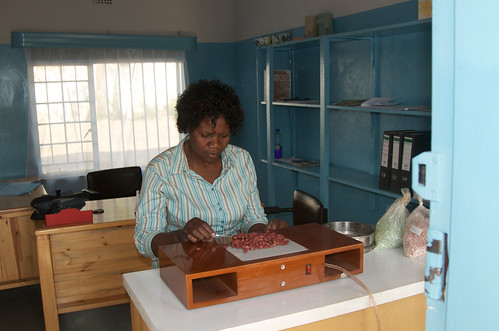
They keep track of their daily production and make some impressive graphs without using Excel. They also have a sophisticated booking keeping practice.

They package their products and have a registered trademark. “We sell the dairy products at Moshi, to grocery stores, to hotels and send our cheese and butter all the way to Zanzibar”, explains a proud Kidin.

The cooperative has the necessary certification to package its product, however, they are faced with the challenge of not having adequate technical support. This means they are unable to take their business to the next step and benefit from industry’s best practice.

One thing that we observed was the BEST BEFORE DATE on their products. Without exception their products seem to have a shelf life of one year!!!!

Kidin shared with us that the cooperative aspires to be able to:
  • procure large 50 litre metal containers to store the milk instead of using plastic containers
  • avail themselves of technical expertise and training so that their products are of high quality meet regional standards, have bar codes and can compete with Kenyan products
  • have access to veterinary service
  • have access to East African Community Market and get packaging machinery 
  • have all the women of the community become members of the cooperative
  • become a renown cooperative both inside and outside Tanzania
In conducting their business, the cooperative has learnt the importance of:
  • providing thorough and in depth training to the machine operators, so that they do not only know how to operate the machine, but also maintain it properly
  • understanding the market demand and their potential competitors
  • doing a good market search before buying equipment and better understanding what is needed and how a piece of equipment can help them 
Expanding the business and facing new challenges
With a relatively good income from their dairy business, the cooperative bought a sunflower oil pressing machine and started a savings credit cooperative (SACCOS).

The SACCOS has 375 members and started with a capital of 3.2million schillings.

The older women of the community put their savings in the SACCOS and the more business oriented women use the SACCOS to get a loan. The loans have an interest rate of 3%.

Kidin shares with us that the SACCOS are faced with two challenges:
  • underpayment
  • corruption
This has led to a loss of 22 million schillings.  This loss made the community understand the importance of choosing right people as SACCOS board members. They now know that a board member:
  • needs to be a trusted member of the community
  • one who understands the ins and outs of the business and entire process
  • one who has knowledge of financial management so that they can play a supervisory role, detect collusion and immediately take corrective actions
Investing in health and eduction of young people
The community is committed to provide education for the children and young people - especially to orphaned children and those from less advantaged families.

They use their profits to send children from disadvantaged families to school and are also assisted by Italians who are sponsoring a number of children and putting them through school.

Their vision is that every child has to go to school.
Their sustained programme of investing in education of their children is one of their great successes. Thanks to this initiative many young people have successfully finished school, obtained their degree and now serve as accountants, agriculture specialists, engineers and health workers.

Many have heard of WFP’s school feeding programme. Well, the Kalali women dairy cooperative runs a similar programme - they support school feeding by providing one glass of milk per class. 

The cooperative challenges
Kidin shared with us the cooperative challenges: 
  • continuous power cuts which lasts days
  • lack of access to adequate and state of the art machinery for packaging and conservation so that they are able to compete in the  market
  • lack of access to technical expertise to take the business to its next level
  • lack of local talents and expertise
  • lack of access to appropriate equipment for conservation
  • high taxation and cumbersome regulations
  • competition with Kenyan products
The cooperatives aspirations
Kidin and the cooperative members aspire to:
  • have all women in the area become members of the cooperative
  • give dividends to all the members and not just provide contributions in kind
  • create more employment opportunities
  • send all children to school
  • expand the sunflower pressing business
  • innovate and continuously provide new services to the community
  • provide capacity building
  • build technical and leadership skills and groom local talents
  • set up a milk bar so that community members understand that there are other options to drinking alcohol
  • do more follow-ups and have a better feel what you can realistically achieve 
  • develop robust business plans
We cannot but wish this group of hardworking and resilient women the best of luck. They are a great example of how when a community takes development in their hands, despite set back, they are able to move on and bring about change. I am sure the Kalali women dairy cooperative will go from success to success and manage to fulfill all their aspirations and be a model for many more women.

Thursday, October 6, 2011

#sfrome: Supporting Community Seed Enterprises to improve availability of quality seeds, increase production and support food security (98)

by Silvia Sperandini

A small but passionate group has animated an interactive session on the potential of local seed enterprises.

Jenny Rafanomezana (Policy and Research Advisor, SHA) presented the innovative intermediary role played by her organization in enabling smallholder farmers to engage in seed multiplication and establish local seed enterprises. Her intervention was followed by a short Video that, with its powerful music, at 9:20 a.m was a perfect energizer.

Then, starting from the concept of Integrated Seed Sector Development, Pietro Chiappini Carpena from Self Help Africa provided an overview on the concept of Integrated Seed Sector Development. While Elia Manda and Shimekit Maru shared their experiences in improving access to quality seeds for rural smallholder farmers through local seed enterprises in Zambia and Ethiopia.

The discussion kicked off by the guest panellists from SHA was just the starting point for a wider discussion of the issues raised. Michael Larinde (FAO/IFAD Senior Expert on Seeds) brought in his knowledge and lessons from recent missions. Other colleagues from AGRA shared their views. The rich debate touched a wide range of issues looking at technical, economic and social perspectives and the implications for seed practice and policy (including aspects linked to farmer organisation development, value chains, and multi-sector partnerships) and the dialogue flew across the world touching various country cases.

The audience concluded that farmers involved in seed initiatives now have a profitable livelihood strategy and that greater access to good seeds result in significant increases in productivity, enabling rural communities to become more food secure.

Once again knowledge sharing proved that barriers can be addressed and that this mutual learning is crucial to scale-up successful models.

Useful Links:


Tuesday, October 4, 2011

#sfrome: Partnership with young farmers to promote collective action and entrepreneurship development (38)

By Monica Romano and Zoumana Bamba

The story of a young farmer without land kicked off the discussion and experience sharing around what are the needs, expectations and challenges of rural young people and what institutions like IFAD can do to enable them become the leaders of tomorrow and build a promising future for themselves, their families and the communities they live in.

Start with nothing, but dream big. This is the story of a young entrepreneur, Leonard. Supported by the Songhai Centre after 18 months of training, Leonard rented a piece of land from the Centre and has been busy setting up a vegetable garden. Only a year after, Leonard’s life has changed. He is able to sell the harvested cabbage, carrot to the market with a support from the Songhai Centre. This was the beginning of his success. He has put some of the profit back into the business to buy a variety of seeds, thus having a vegetable of products to sell. Leonard is a shining example of the importance of persistence and commitment, in spite of initial difficulties. Leonard has become a proud young man earning an honest living from Agriculture. Another story which illustrates that agriculture can be attractive to a young generation looking for opportunities and that one can make money from it.

George Fernandez, President of the International Movement of Catholic Agricultural Rural Youth (MIJARC), stressed that agriculture is key to eradicating rural poverty and hunger, and that there is need to invest in rural youth to boost the agricultural sector, while supporting policies that can facilitate their engagement in agriculture. Over the past year, MIJARC has been implemented an IFAD-supported grant to map young farmer organizations, in collaboration with FAO. The grant aims to find out the reality of rural young people by mapping their own farmer organizations or those in which young people are represented. It also act as a platform for the rural youth express their views and explain their condition though a survey addressed specifically to them and the hosting of regional consultations in Africa, Asia and Latin America. Through these gatherings, young people are invited to share their experiences and indicate the support they need to become successful farmers and entrepreneurs.

Some of the main outcomes of the mapping exercise was presented by Charlotte Goemans (FAO), who showed that only a quarter of the surveyed farmer organizations was found to consist only of young members, whereas the majority of “mixed” organizations have nevertheless more than 50% young farmers as members. The figures increase slightly when data refer to Africa.

In reporting from the consultation that took place in Dakar at the end of August, Clemence Roger (MIJARC) meaningfully started by quoting from young people who participated in the event: “Rural youth are not aware of their rights” stated a Moroccan guy, echoed by another participant from Cote d’Ivoire, according to whom “ young people do not have enough experience in advocacy and lobbying”. The young people had a lot to say and made a number of recommendations indicating the way forward to successfully partner with them and effectively achieve objectives of rural development and rural poverty reduction. Education and capacity building programmes need to be defined together with the rural youth, and women need a special attention in order to ensure equal participation and mainstream gender considerations in selecting both themes and timing of the training. Young people also indicated that they should be involved in design and implementation of rural development policies, projects and programmes as well as to be adequately represented in farmer organizations.

A lively discussion took place after the various presentations across the session, with the facilitation of Philippe Remy, IFAD Country Programme Manager for Mali, and the moderation of Nora OurabahHaddad, Rural Employment and Institutions Officer at FAO. It was highlighted that innovation and creativity characterizing the youth should not forget about the importance of intergenerational transfer of knowledge from the more experienced farmers to today’s generation. The challenges of identifying farmer organizations that are really representing their members also apply to institutions of young people or those dealing with issues pertaining to them. It was also noted that the negative image of agriculture already starts to get built within the family, and then is consolidated at school and finally at the university. Finally, it was concluded that the approach to address youth-related issues needs to be holistic and that agriculture cannot be dealt with as a separate segment.

Community radio an extension to telecentre. What is the next frontier? (154)


by Antonella Cordone

John Tarawe from the E.Bario Radio, a small projects financed through the IFAD Indigenous Peoples Assistance Facility, shared his experience in setting-up the first community radio in Malaysia.
His story was about a dream that everybody thought it could not become real as the government would have not given a license for a community radio for indigenous peoples in Malaysia. John and his team thought their dream could become a reality if they were able to mobilize the right people and talk to the government….. and they were right.

Today the first licence has been issued by the government to the E.Bario Radio Broadcasting and furthermore, they are now supporting the government to design their policy on community radio. Mosses Ndiyaine from the Maasai people of Tanzania shared his experience on the importance of community radio with mobile and pastoralist peoples informing on how community radios are often the only means of communications that can provide services to the community, for instance informing on which are the areas available for mobile people to move their cattle and of conflicts/problems in one particular area.

The presentation by Joan was dynamic and well attended. There were several questions and people sharing experience from other parts of the world. A shairfair is being organized by E.Bario in November in Malaysia and already connections have been established to also invite people from Africa and link-up with on-going project with Bioversity in Malaysia. We will continue telling the stories of indigenous peoples tomorrow and day after with Mosses from Tanzania.

#sfrome: Net-map a great method to share implicit knowledge

by Paolo Brunello

The promises of Net-map appeal to many judging from the number of people who attended this workshop: indeed everyone admitted to have felt puzzled by complexity, overwhelmed by it, so when you propose a method to harness that complexity instead of succumbing to it, people respond. In fact Net-Map is a technique that allows for zooming out of our own little clearance of knowledge and hover above it, so that we can grasp the wider context and make sense of it.

We started with a "stone in the pond". It's a quick and effective technique to get a feeling of the group and it works like this: people stand in the middle of the room and who feels like it starts off by saying something along the line of: "Hi, I'm Judith, I work in farmers empowerment in Ghana and what I would like to get out of this session is a method to help me engage them more effectively". Everyone will then move, standing very close to Judith if they share her expectation or further away if they don't, along a continuum, like waves of a pond when a stone is thrown in the middle. Thus in few minutes we realised that there was a common interest in learning Net-Map both for strategic planning and monitoring and evaluation, in other words both to create a shared vision of the situation in order to optimise coordinated action and also to visualise the state of things at different times during a process, thus allowing for pre-post comparison.

Almost everyone was new to Net-map so the challenge to learn it in such a short time was big. After a short introduction to the basic steps of the method, three subgroups were created and started to work right away on their maps: they first chose a case study and identified the core question: "Who influences the success of...." and then started writing the names of all the different stakeholders on post-it notes to be placed on the map. Then they selected some relevant links connecting the different stakeholders, like money flow - who is paying whom? - or training - who is training whom? - and they drawn these links using different colors. Then they started assessing the relative influence of each actor in answering that original question, using some wooden discs to build "influence towers" besides each actor.

The final result was a map that portrayed the perceived distribution of power in the system under exam. But perhaps even more important was the process that lead to that map, since every member of the group had to explain why they thought a certain actor was more - or less - influential, thus making their premises explicit. This in one of the key feature of Net-Map: having to draw together, net-mappers are "forced" to share their implicit knowledge of the system under exam making it visible to others, so that we assist to a mutual "perception tuning" that can greatly help the coordination of any subsequent action. While the exercise was going on, some participants volunteered to take an observer's role, to focus on the process of net-mapping without being caught into the specific details of the case study. This then allowed the trainers to address the most burning questions in the final plenary discussion. Finally, as an evaluation, we asked the participants to line up according to their degree of willingness to use Net-Map in the near future and we were pleased to see that the majority of them were optimistic in trying it out in their context.

Sunday, October 2, 2011

#sfrome: Local solutions for global problems: Food security through traditional crops-a participatory approach (147)

by T.J James
Share Fair is an innovative and interesting platform for learning, sharing, networking and collaboration. I am confident that thought provoking intellectual and stimulating atmosphere helped in cross fertilization of ideas, concepts and thoughts. I have been working in the field of indigenous knowledge and farmers innovation for the past several years. Presently I am coordinating a project implemented by a NGO Peermade Development Society based in Kerala ,India supported by ITPGRFA on food security ,climate change and agro biodiversity. In the share fair I am sharing a case study on reviving a locally adapted farmer developed cassava variety through women self help groups. The case study highlights the importance of local crops in mitigating climate change and climate change and participation of target groups.

The local variety of cassava ( known as Ambakkadan variety) was spotted by a farmer Ambakkadan Thommi way back in 1964. This variety was quite popular during 1970s and 80s. Due to influx of hybrid and short-duration varieties, Ambakkadan variety had vanished from the field, and presently its cultivation is confined to a few individual isolated farmers in Kerala . But with increased prize for food crops recently and also due to non adaptability of hybrid crops , farmers remembered ambakkadan variety. The project team identified the isolated farmers who cultivating this variety and introduced the cultivation in two remote villages of Idukki district ,Kerala - ‘Karunapuram’ and ‘Cumbummettu’ - through 60 women belonging to three self help groups. . They got bumper production and the market demand is also very high for this variety, and for one kilo of cassava, they are getting Rs. 12 to Rs. 15. Besides these advantages, this contributes to food security at house-hold level. The success stories are slowly spreading in the village and demand for the setts is coming from farmers of every quarter now. At present, more than hundred women are actively involved in the cultivation of this variety and this will be extended to several villages in the coming years.

The story reminds that economical value is critical for adoption of local cassava variety and question remains in other neglected and underutilized crops, how we will create economical ,social and cultural values for other neglected and underutilized crops. How to ensure the participation of various actors for the scaling up the concept and what are the institutional support and policy changes needed to promote local crops.

#sfrome: Knowledge management, social media and ecology – the complexity of three sessions (218, 206 & 173)

By Ewen Ewen Leborgne


During the Share Fair, I was happy to participate to three very interesting and complementary sessions on a) the IFAD experience of putting KM and learning into practice (#218) b) using social media for development (#206) and c) IKM-Emergent’s idea of a knowledge ecology (#173).

The first session explored the experiences of IFAD's East and Southern Africa division with knowledge management in their programme. It was a great sharing moment recognising the failures and issues that IFAD (like many other organisations) had/has been facing. What worked in their case: iterative coaching and workshops, development of systemic competences, focusing on improvement rather than on ‘KM’ as such, facilitation of communication processes, focus on various levels (individual, team, organisation), challenging the institutional set up, developing pilots to learn quickly from them, promoting and marketing the value of learning (for self improvement), working on the attitude and willingness to learn and improve, and time is needed for all these ingredients to form a savoury meal. And by the way some cooking instructions help too – so here’s the IFAD learning framework, which proved very helpful to turn concepts into practical activities for those involved in this experience.


Although there is palpable progress already, much remains to be done. Oh yes, and languages are still very much an issue: no translation budget, interpretation problems… We just can’t keep saying this though. It’s time to act on the language divide!

The second session was around using social media for development – a big buzz word at the moment, confirmed by the over-attendance of this session and the social media reporting overkill. After a short presentation by Musa Masilela, the many participants discussed: the rapidity at which social media are evolving and the need to find a balance between exploring and mastering these tools; the difficulty of justifying and using social medias in institutions when so many corporate procedures hamper their quick uptake; yet at the same time a social media policy proves helpful to frame the approach and visualise the value expected from using social media; and no, not only communication people are in charge of social media, it’s everybody’s business! My take home here was that social media are there, used by many at work and outside and that they have the power to expand conversations and to connect individuals, teams and organisations.


The third session was organised by Sarah Cummings from IKM-Emergent around the indeed emergent topic of ‘knowledge ecology’. Sarah blogged about this topic on the Giraffe, the blog of IKM’s working group 3 (which focuses on organisational practices of knowledge management). In brief, the knowledge ecology perspective is about recognising the values and contributions of multiple knowledge cultures in development work and about finding ways to ensure they all connect with one another to embrace a richer (and complexity-friendly) understanding of development processes. At the heart of the idea is also the recognition that local values and expectations should be the starting point, rather than the knowledge industry that is all too often imposed in friendly or non-friendly ways by Northern development actors. In our group work in this session we made a critique of that ‘development bus’ which we are trying to stop so that all inside and outside the bus start discussing their journey and perhaps transform the bus in the magic bean that will bring them to another dimension, or even a space ship that brings us all where we need to be.


The sum of these sessions is the recognition for a number of key aspects:

  • Context drives initiatives and its design. Current (Northern-driven) development initiatives all too often do not take that into account;
  • Development issues are complex – we are dealing with systemic issues that cannot be solved by a single perspective and type of intervention. Therefore the contribution of multiple perspectives (or knowledge cultures) is essential; 
  • It takes a certain willingness and recognition to start working together in the right direction. And we need to stimulate individual and social learning initiatives to create such a fertile ground for improved development; 
  • Development is an iterative process that benefits from regular interactions and reviews, as well as from taking time to assess where we are at in the process; 
  • Try-out pilots are thus a good idea – and they help move away from fail-safe approaches (wary of any problem) to safe-fail approaches (where quick failing is seen as the best way to improve over time). 
  • There are many tools (and social media are crucial in this) that help this network dynamics. They shift the emphasis from organisations to individuals and networks, although ultimately they rebound back up to organisations too; 
  • All of these developments are about behaviour change and it just takes time to see behaviours change – but uniting in a perspective of improved collective development is worthwhile even if it takes money, time and dedication. Positive results have started to trickle down, and we just need to carry on and stick to ‘doing it’. 
The ShareFair itself, with its parallel sessions, diversity of participants and outbursts of holistic action was in itself a great demonstration of the importance of multiple knowledge perspectives in the process of designing and implementing development initiatives – whether civic-driven or externally-steered.

Note: All tweets from this session are archived here: http://www.tweetdoc.org/View/24012/The-Role-of-Social-Media-in-Development

Saturday, October 1, 2011

#sfrome: Daily Corriere - Share Fair daily newspaper

Inspired by the Addis Share Fair, the organizers of the Second Global AgriKnowledge Share Fair committed to have a daily newspaper -- which we called the Daily Corriere. Here are the four issues - for those who may have missed them! Enjoy reading and let's keep the spirit of #sfrome alive! Thanks everyone for your participation, contribution, for sharing and your friendship! Hasta la vista!
View Share Fair photos on Flickr: http://www.flickr.com/groups/sharefair09/ or on IFAD's Facebook Page: http://on.fb.me/qYNt4R. Check out all related blogpost at http://ifad-un.blogspot.com/search/label/sfrome and http://blog.sharefair.net/search/label/sfrome

#sfrome: New employment opportunity in Uganda: Transforming water hyacinth to paper (186)

By Rima Alcadi

Hyacinth, says Robert Atuhaire, is a nuisance in Uganda (and it is a nuisance also in Ghana, we are told by Ambassador Evelyn Anita Stokes-Hayford, who also participated in this session). People have difficulties navigating the lake, as their boats get trapped, fishing is hampered and even the fish and biodiversity suffer, at this nasty, prolific and pervasive weed suffocates them. This is the dark side of hyacinth. The bright side of hyacinth is that these weeds can be used as a valuable resource - to make paper. What motivated Robert was to reframe this environmental issue, so that it is an opportunity rather than a problem.

How does Robert’s business work? Poor people in his community go to the lake and pick the hyacinth and they sell it to Robert, who collects the hyacinth and transports it to his small firm. There, the hyacinth is dried (it takes 4 days for it to dry as he does not have the machinery) and then shredded, using scissors. Robert explains that it is often necessary to improvise, “we use what we have.”

The dried shreds are then put in saucepan, to cook – or “digested”, in technical terminology. Sodium hydroxide is added to the shreds, to get rid of the lignin – which reduces the quality and shelf life of paper. Lignin also makes paper brown rather than white. After about two to three hours of digestion, the pulp is washed under running hot water, to reduce the residual lignin. The pulp then needs to be introduced in a beating machine. The machine Robert has was locally fabricated and runs via an electric motor (see the picture below). It grinds the fibres, increasing the bonding potential. This stage is when starch is introduced (Robert uses cassava flour) to increase the mechanical strength of the paper. He also introduces rosin to increase the water resistance of the paper; natural dyes to colour the paper; and aluminium sulphate to improve the drainage properties. After 30 minutes of beating, the pulp is ready for paper making.

The next stage is to drain out the water from the pulp and press it. Robert uses a thin piece of cloth to do so – it is a handmade process. The roughness of the paper is determined during the pressing process. Finally, the product is taken out to dry.

Once dried, the paper is peeled off the net, trimmed and used for making various products, such as shopping bags, gift bags for ceremonies, photo-frames… Robert tells us that the limit to the range of products he can produce is the sky!

Robert says that he is also mixing water hyacinth with agricultural residues, for example wheat straw, banana fibres, sugar cane residues, etc. to make various kinds of paper. Moreover, he mixes waste paper in the hyacinth pulp too – he collects this from universities and business offices.

What more? Well, Robert is also interested in using hyacinth for biogas - because he is deeply concerned about the energy crisis. People are destroying the forests looking for firewood and being dragged to court. Women have gotten raped in forests, while collected firewood. So biogas is coming in handy and hyacinth is a valuable resource in this case too.

What an amazing session! Robert is what we refer to as a “social entrepreneur.” Robert studied Wood Science & Technologies at university and, as soon as he graduated, he started this business. Robert’s project is saving Ugandans who depend on the lake for food and water. The physical removal of the weed ensures uprooting of the entire plant from water, eliminating its chances of regeneration. This effort has led to a vibrant handmade paper industry with a number of employment opportunities, including in the collection of hyacinth, processing the weed into paper and marketing. Water hyacinth removal also protects aquatic biodiversity and no trees are cut for paper making. Robert’s biggest challenge is securing finance, but with his optimism, creativity and energy, he is able to cope. He attracts clients through his blog, face-to-face marketing and word of mouth. His logo is “Hyapaper: the brighter side of water hyacinth.”

For more information, please contact
Robert Atuhaire at Pafor Enterprises (U)Ltd /Hyapaper Project - UGANDA
http://paforenterprises.blogspot.com
telephone: +256778934404
email: robatuhaire at gmail.com

Friday, September 30, 2011

#sfrome: Experiences and lessons of rural transformation: why institutions matter (39)

By Monica Romano
How institutional and organizational change can be achieved and what are the benefits and challenges in doing so? Why should rural development projects support institutions and organizations of the poor and what is the added value of these interventions for rural poverty reduction? What are the signals that make us understand when institutions and organizations are sustainable and how can institutional and organizational development be monitored and measured?

This was discussed by a group of passionate panellists and professionals from a variety of organizations, who are all engaged in rural poverty reduction. They took advantage of the limited time at their disposal to avoid theoretical presentations and rather illustrate with concrete examples and field stories what their experience is in working with rural institutions and organizations in empowering poor women and men.
The group discussion kicked off after an introduction by the moderator, Tom Anyonge, IFAD Senior Technical Adviser for Rural Institutions and Organizations. He highlighted some of the key dimensions in building sustainable institutions (“the rules of the game”) and organizations (“the players”), which relate to governance, collective action, partnerships/networking, and individual and organizational capacities. When appropriate measures are undertaken to address these dimensions, there is an increased likelihood for organizations to effectively perform their stated functions and have strong commitment from individuals who operate the systems therein. This happens more so because the individuals (or members) become empowered, have a voice, and can influence the delivery of agreed upon visions and strategies.

The IFAD-field experience was brought in by Judith D’Souza, IFAD country presence officer in India, and Belayhun Hailu Mamo, Senior Officer, Knowledge Management and Participatory Learning, for the Pastoral Community Development Project (PCDP) being implemented in Ethiopia.

Judith presented the self-help group (SHG) model introduced in India in mid-1980s and supported by IFAD, which went far beyond its initial objective of channelling credit to the poor and became a social empowerment movement of rural women. As an attempt to enhance the sustainability of SHGs and ensure continuous service provision after the end of external support, IFAD has also been supporting the formation of Community Managed Resource Centers (CMRCs) to provide financial services to SHGs and facilitate their access to Government’s schemes.

The 15-year experience of PCDP in Ethiopia was shared to illustrate how the establishment of effective mechanisms of public service delivery, investment, and disaster management were able to empower communities, local administrations and regional governments. These led to better manage local development and respond to pastoral communities’ priority needs. In this respect, a demand driven planning process was put in place and supported through a community investment fund, which flows through local government structures down to the beneficiary communities at the grass roots. The Project also supports a participatory disaster management programme to make pastoral communities more resilient to drought and other natural threats to livelihoods.

After putting on the table important elements that ensure the development of robust institutions and organizations – namely trust and cohesiveness among members, interrelation between organizations, and linkages with actors that are not part of the farming community – Nora OurabahHaddad from FAO presented two successful institutional models from Niger and Uruguay. These are documented in a FAO/IFAD joint publication on Rural Institutional Innovations for Improved Food Security: A Collection of Good Practices. The inventory credit or warrantage system was introduced in Niger to help small farmers, through their cooperative or association, to put their agricultural produce on the market later and at a better price, while accessing credit to meet their needs or undertake a profitable activity immediately after the harvest. Farmer organizations borrow from a financial institution, redistributing the loan to the members according to the amount stored. In Uruguay, a multi-stakeholder platform, the Instituto Nacional de la Leche (INALE), has been created to formulate policies to increase the productivity of the dairy sector while ensuring the participation of all actors along the value chain from the public to the private sector, including small-scale producers.

The fourth speaker, Dr. Jeremias Mowo from the World Agroforestry Center (ICRAF), emphasised the importance of collective action to exploit social capital, achieve economies of scale, influence policies, access markets through bulking of produce and stronger bargaining power, and access credit. He also provided us with an update on the status of a recently started IFAD-supported grant for Enabling Rural Transformation and Grassroots Institutional Building for Sustainable Land Management and Increased Income and Food Security, whose cornerstone is enhancing institutions’ and organizations’ governance, leadership, capacity and networking. The grant will help develop a framework for grassroots institutional and organizational analysis and development.

 The sharing of field experiences was followed by an intense discussion and questions from the floor, touching upon issues such as the importance of working with existing institutions and organizations to ensure ownership, suitability/acceptability to the local context, and sustainability; the role that umbrella organizations (e.g. federations) can play in delivering services to farmer groups; the need to involve grassroots institutions and organizations from the planning process to and over implementation; and the challenge of establishing M&E mechanisms to monitor institutional and organizational change.

Wednesday, September 28, 2011

What does it take to make the ShareFair happen? Don’t ask ‘what’, ask ‘who’!

by Johannes Schunter


When walking through the IFAD corridors this warm Italian September week one cannot help but be amazed by the buzzing, vibrant energy that is felt in every part of the building. People chat in corners, engage in up to 15 parallel group sessions, share their thoughts with someone with a video camera or sit in the hallway with their laptop on their lap, communicating one of their many impressions through email, Twitter or a blog. Over 600 participants, 160 projects, 200+ scheduled group or plenary sessions, and one is left with an immediate question: How on earth did they pull this off? After all, there is no professional event management company involved here that pulls the strings. This event is done by the sponsoring organizations themselves, with a surprisingly low budget and mostly with staff who – if they are not helping plan and implement knowledge fairs – have other jobs to do.

I talked to some of the organizers to get a small glimpse of the machinery that made this event happen behind the scenes. Planning for this ShareFair started already in January 2011, with a one-day facilitated brainstorming workshop where the Rome-based stakeholders ( Bioversity International, CGIAR ICT-KM programme, FAO, IFAD and WFP) got together to determine the general direction and approach they wanted to take with this event, building on the first event that took place at FAO in 2009. After that a Steering Committee was established in February to plan the event.

As there is no general existing budget for Rome ShareFairs, the team members from the different host organizations had to raise funds for the significant logistical and programmatic requirements (which include necessities such as security, ambulance, infrastructure and communication expenses) as well as to fund travel expenses for proposals from participants who otherwise could not come to the fair and share their learnings. Yet, I was surprised to learn that this entire event is realized with notably less than $200,000 (actual and in-kind) accumulated resources overall.

Talking about proposals: roughly 300 proposals were submitted after the Steering Committee publicly announced the ShareFair through their website in May 2011. The submissions were reviewed and filtered down to about 160, the maximum capacity of content sessions that the IFAD building can accommodate during the three main days of the fair with up to 15 parallel sessions at a given time slot.

These sessions, however, are rarely self runners. If the thematic expert is not by chance also a communication professional, a facilitator is needed to help the presenter avoiding tiring PowerPoint slides and instead turn the presentation into an engaging, participatory learning session using knowledge sharing approaches. But where to get those versed facilitators from? Luckily, Knowledge Management staff in Rome are well connected with the Knowledge Management for Development Network (KM4Dev), a community of KM practitioners working in development. Additionally, a call was placed also within each of the participating organizations for facilitators. By calling on about 50+ volunteer facilitators, the ShareFair organizers were able to provide professional facilitation for almost all project presentations, drawing on a range of creative and participatory facilitation methodologies which were introduced in a pre-conference training day for participants interested in these tools.

The training sessions of this so-called “Training and Learning Day” included not only facilitation techniques, but also introductory sessions into a range of social media tools for knowledge exchange and communication, such as Twitter, Facebook, Photos, Blogs or Podcasts. That those sessions were not just theoretical exercises was demonstrated during the entire week by the social reporting team, a group of about 30+ social media enthusiasts who committed to report live from event sessions and interactions in between sessions through the full range of social media tools. This way, the immediate audience of a few hundred on-site participants could be extended to many thousands of interested practitioners that followed the event online, by reading blogs, viewing video interviews or responding to tweets posted during the event.


Finally, as a participant of the Fair, besides noticing some of the more visible faces of the fair that give announcements and introduce sessions, you will most likely run into one of the many volunteers who are supporting the logistics behind the scene at any given moment: as registration desk volunteers, as information focal points and helpful guides on each floor, behind the technology that provides meeting room infrastructure, WLAN access and live webcast, or as runners who help fixing the many little and bigger emergencies that we mostly don’t even notice as participants.

So again, what does it take to make such a ShareFair happen? It takes all those people, seen and unseen, and I think they deserve a collective tipping of hats for the astounding work they do. Or you just walk up to the next one you see and give that person a ‘thank you’. And if you bring them a cup of coffee they might even reward you with more interesting details on life behind the scenes of the ShareFair!

Friday, September 23, 2011

Two more days to #sfrome: You can be part of the #sfrome social reporting team. Here is how..


By Gauri Salokhe


As you may already know, we are counting down days to the Second Global AgriKnowledge Share Fair which is scheduled to take place at IFAD from 26-29 September. This event, jointly organized by Bioversity International, Food and Agriculture Organization (FAO), International Fund for Agriculture Development (IFAD), Technical Centre for Agricultural and Rural Cooperation (CTA), The Consultative Group on International Agricultural Research (CGIAR) and World Food Programme (WFP) brings together colleagues from Rome-based agencies as well as partner organizations to share projects, lessons learned and emerging trends in the areas of food security, price volatility, climate change, ICT4D, social media and green innovations.

The Share Fair promises to deliver a wealth of knowledge featuring over 160 presenters from all over the world who will share their creative and innovative experiences and knowledge. Participants will have an opportunity to learn, share, connect and influence future direction.

Check out the programme highlights and webcasting schedule and make sure you take part in this unique event.

We encourage all participants to use social media channels and report live from the event. Here is how you can engage:
When tweeting, please use the following hashtags:
The organizational tags are:
The draft agenda for the event is available from: http://t.co/KYK73dqp

For more information, contact us at share-fair [at] cgiar.org.

Originally posted on http://gaurisalokhe.blogspot.com/2011/09/you-can-be-part-of-sfrome-social.html

Popular Posts