Showing posts with label guatemala. Show all posts

Monday, May 28, 2012

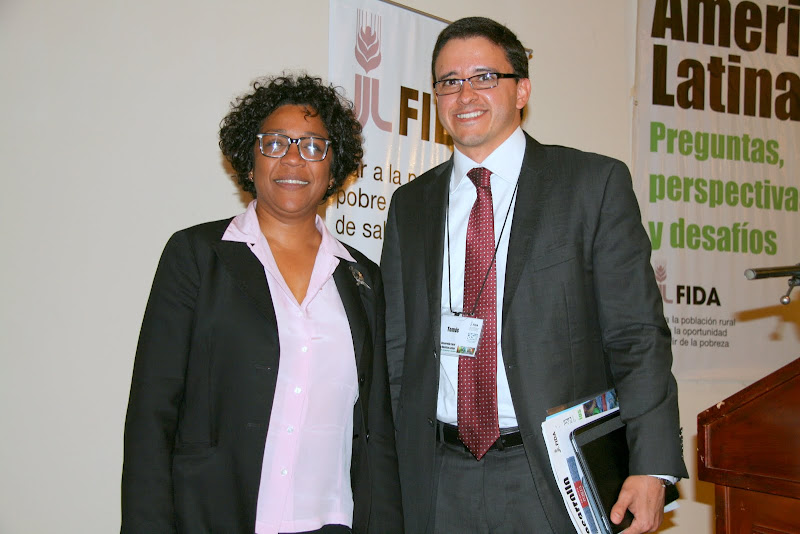
Desarrollo rural en América Latina: preguntas, perspectivas y desafíos

Expertos internacionales resaltan nuevas oportunidades para la reducción de la pobreza rural 
Con el objetivo de discutir herramientas innovadoras para cerrar las brechas de oportunidades que afectan a los 25 millones de campesinos pobres en América Latina, reconocidos expertos internacionales se reunieron la semana pasada en Antigua, Guatemala, en el seminario “Desarrollo rural en América Latina: preguntas, perspectivas y desafíos”.

El Fondo Internacional de Desarrollo Agrícola (FIDA), en coordinación con la Asociación de Investigación y Estudios Sociales (ASIES), llevaron a cabo el seminario para crear un espacio de reflexión y debate acerca de las tendencias y retos del desarrollo rural que enfrenta la región actualmente, y el papel que distintos actores pueden jugar en su abordaje.

Todos se aproximaran al desarrollo rural latinoamericano desde diferentes temas: gasto público y equidad, financiamiento rural e inclusión financiera, política social y productiva, y procesos de innovación en intervenciones rurales.

Videos de los discursos del evento

Presentaciones


Share it!

Thursday, October 13, 2011

Acceso a Mercados - Lecciones, videos e innovaciones


Taller de Acceso a Mercados: Mesoamérica y Panamá, Un Mundo de Oportunidades
En el Taller de Acceso a Mercados: Mesoamérica y Panamá, Un Mundo de Oportunidades - el 21, 22 y 23 de Septiembre de 2011 en el Hotel La Ensenada, Tela, Honduras - se tuvo la participación de participantes de diferentes Instituciones y países: 4 participantes de México, 25 de Guatemala, 9 de El Salvador, 21 de Honduras, 8 de Nicaragua, 3 de Panamá, 4 de Roma, 6 de Argentina y 6 de otros países.

Lecciones e innovaciones
  • Dialogar y conocer los actuales retos y perspectivas del acceso a mercados con pequeños productores en territorios en pobreza en el contexto de América Latina.
  • Reflexionar sobre la necesidad de establecer alianzas público–privadas para poder encaminar procesos sostenibles de vinculación y acceso a mercados de las organizaciones de productores rurales apoyados por los programas FIDA.
  • Mejorar las habilidades técnicas respecto a los nuevos tópicos del desarrollo rural, comercial: innovación para el desarrollo de la empresarialidad rural; alianzas para el desarrollo en territorios rurales; calidad e inocuidad y certificaciones; inteligencia de mercados e innovación; capital de trabajo para la comercialización; y seguridad alimentaria y nutrición en el marco del desarrollo empresarial rural y equidad de género.
Videos
Acceso a mercados en Guatemala

Sin mercados, no hay dinero. Y sin dinero, no hay oportunidades. Organizaciones como el Fondo Internacional de Desarrollo Agrícola (FIDA) crean oportunidades para que los pequeños productores tengan acceso a mercados grandes, un importante paso en la lucha contra la pobreza rural. Con la intención de replicar el éxito de sus proyectos en Guatemala – en los que pequeños campesinos ya venden sus productos en mercados grandes con clientes como Wal-Mart, con incrementos en sus ingresos hasta de 50 por ciento en algunos casos –, el FIDA presentó un “Taller de Acceso a Mercados" en Tela, Honduras. En esta entrevista, Juan Santos, Presidente de la asociación AGRISEM, comparte su experiencia de acceso a mercados en Guatemala.

Oportunidades Ecológicas en México

En el noroeste semiárido de México hay una elevada incidencia de la pobreza rural provocada y agravada por las condiciones ambientales y la base limitada de recursos naturales. La pobreza rural en esta zona se debe a la falta de acceso a la tierra, la extrema fragmentación de las explotaciones, el deterioro de los recursos naturales y el limitado acceso a recursos productivos. El Proyecto de Desarrollo Sustentable para las Comunidades Rurales e Indígenas del Noroeste Semiárido trabajará con las comunidades rurales e indígenas más pobres y marginadas de los cuatro estados seleccionados para: 1. mejorar la conservación de los recursos naturales 2. garantizar un mayor control de las comunidades sobre sus bienes, incluida la tierra, la agrobiodiversidad y el entorno natural 3. aumentar la capacidad productiva de la tierra mediante el uso de tecnologías mejoradas de producción y conservación 4. mejorar los niveles de renta y de empleo mediante la promoción de microempresas rurales y de turismo basado en la naturaleza y el cobro por los servicios ambientales prestados 5. aumentar la participación de las comunidades en los procesos de desarrollo territorial, con especial atención a la participación de las mujeres y de los más jóvenes. En esta entrevista el Director de PRODERNOS, Carlos Edgar González Godoy, nos destaca los logros y desafíos del proyecto.

Posibilidades en Panamá

Ramón Isos Giono. Director Ejecutivo del Proyecto PARTICIPA en Panamá destaca los logros y desafíos del proyecto y como mejorar el acceso a mercados para los pequeños productores.

Monday, June 27, 2011

Gender Equality and Rural Empowerment


Exchanging experiences in El Salvador and Guatemala

In an effort to create better opportunities for rural women in Latin America – and across the globe – the Food and Agricultural Organization (FAO) and the International Fund for Agricultural Development (IFAD) have combined forces to create a grant programme focused on sharing experiences in gender equality and rural empowerment. One key element of the programme was to bring rural men and women together with experts on gender equity, value chains and rural development to share experiences. With this in mind, the program hosted study tours in Guatemala and El Salvador that brought various actors together to find new ways to weave social inclusion into the very fabric of society. This is their story.

Friday, February 18, 2011

New Opportunities in Guatemala


In August 2010, IFAD President Kanayo F. Nwanze visited the small community of Laguna Iztacoba in Guatemala's Las Verapaces region. A dirt road of just 200 meters separated this community from the outside world... and from new opportunities. Now with funds from IFAD, the community has a new road... and a new outlook on life.

IFAD's relationship with the Guatemalan government goes back 30 years. Since 1986, the organization has provided US$131 million in loans for 9 projects at a total cost of US$272 million. During this weekend's Governing Council at IFAD's headquarters, Guatemalan Minister of Agriculture, Livestock and Food, Juan Alfonso de León García, will come to Rome to share his thoughts, reflections and dreams for rural poverty reduction in Guatemala and the world over... New opportunities are truly just a few steps away.

Friday, August 20, 2010

Trash to treasure


IFAD funding in Guatemala transforms neighborhood dump into a lush garden

In the Guatemalan community of Laguna Los Achiotes, a small grouping of houses just 20 minutes from the regional capital of Jalapa, the stench of rotting refuse is a thing of the past.

Thanks to an innovative project funded by the International Fund for Agricultural Development (IFAD), the community took a trash heap that was literally ten feet from several homes and transformed it into an organic garden, where they are now cultivating radishes, carrots, onions and other fresh vegetables for the community.

The people of Guatemala have lived on beans, chili and corn since the days of the Maya King 18 Rabbits, and these new crops are allowing for improved overall health for the 30 families sharing the new garden. And the numbers are adding up quickly, especially when you figure the average Guatemalan family in the countryside has anywhere from five to eight children.

“Most of the food we are eating today is coming from this garden,” said Ana Maria Morales, a community member who welcomed IFAD President Kanayo F. Nwanze on his recent visit to Laguna Los Achiotes with a veritable cornucopia of interesting new dishes that the women are preparing for their families. These inventive offerings included lip-smacking radish-skin pancakes and a bedazzling carrot compote that could have easily made it onto any menu in Paris and New York’s tony eateries.

“We used to just throw the radish skins away,” said Morales. “But we brought in a consultant that taught us these dishes, now we are eating better. And the children love the new food.”

Better yet, with community members using compost to fertilize their garden, virtually everything they are eating is organic. And a new drip irrigation system is ensuring year-long planting and highly efficient water consumption.

“Most importantly, the trash heap in the backyard is a thing of the past," said Josefina Stubbs, Director of IFAD’s Latin America and the Caribbean Division. “This is an area where food security is key. By working together with the World Food Program, who are providing staples such as wheat and rice that cannot be easily grown in this region, we are helping make healthier homes. And a healthy home means a healthy future.”


Photos by Santiago Albert/FIDA

Friday, August 6, 2010

Bye Bye King Corn

Guatemalan farmers look to new crops for increased incomes

The Maya people of Guatemala were made from corn - at least that’s how the story goes as recorded in the “Maya Bible,” the Popol Vuh. But while corn may provide just enough for a smallholder farmer to feed a family of seven (yep, families are big in this part of the world), it is not enough.

All this is starting to change, with the IFAD-funded programs in the highlands of Western Guatemala allowing these people made from corn to look beyond the cob and open up new markets for an amazing variety of crops, including onions, carrots, peas and more.

Pedro Tun, President of the IFAD-supported ADIES producers association, met with IFAD’s President Kanayo F. Nwanze in the remote village of Magdalena La Abundancia on August 6 to share the successes of the new production models for the region.

“We used to plant corn, but now we are mostly planting onions,” said Don Pedro. “With corn, we were only able to harvest our crops once a year. Now with onions, and our new irrigation system, we are able to harvest three times a year.”

The numbers tell the story in black and white. One hectare of corn can bring in around US$624 per year, while a hectare of onions yields about $1900 yearly (no tears there!).

But what good is it having a quality product if you don’t have a market? By working with private-sector alliances through organizations such as the Guatemalan Exporters Association (Agexport) the smallholder farmers of the region were able to open new markets and sell their onions to large chains like Wal-Mart.

For Don Pedro and many small-scale producers like him these new revenue streams are not just reducing seasonal migration to work in the sugarcane harvest, it’s also making for a better life.

“We have suffered much in our life as campesinos,” said Don Pedro. “But now, thanks to these new projects our children are able to go to school, we have new jobs, and the people here are healthier.”

Throughout his career in agricultural development, President Nwanze has been a staunch supporter of looking to farming as a business, and the successes of smallholder farmers like Don Pedro in accessing major markets and increasing their incomes indicates that this pro-poor, pro-market model is working.

“Every farmer in every village wants to make money, wants to send his children to school, wants to eat three meals a day,” said Nwanze. “By providing them with better access to markets, tools, and training, they are starting to achieve these goals.”


Photos by Santiago Albert

Popular Posts