Showing posts with label gender. Show all posts

Thursday, May 24, 2012

Hillary Clinton: Liberate the economic potential of rural women to fight hunger and poverty

US Secretary of State Hillary Clinton has been speaking out about gender equality in the international arena since at least 1995, when she delivered a forceful message on women’s rights as human rights at the United Nations Fourth World Conference on Women. So it was no surprise that the rights of rural women figured prominently in her remarks last week at the Symposium on Global Agriculture and Food Security.

Webcast image of Hillary Clinton speaking at 18 May
symposium in Washington, DC.
Organized by the Chicago Council on Global Affairs and held in Washington, DC, the symposium preceded this year’s G8 summit of world leaders. It provided a forum for high-level discussions of sustainable agricultural development and the setting for President Barack Obama’s announcement of a G8 initiative – the New Alliance for Food Security and Nutrition – which aims to reduce hunger and lift 50 million rural people out of poverty in the next decade. 

Secretary Clinton’s speech at the event covered a range of issues on investing in global agriculture to solve the problems of malnutrition and extreme poverty. Perhaps its most passionate section dealt with the largely untapped potential of rural women to help feed the world, a topic that is also central to IFAD’s recently adopted gender policy. Excerpts from the Clinton speech follow.


I’m sure it’s no surprise to anyone that I am convinced women are critical to our success in every field of endeavour. And this is not a matter of sentiment or personal interest on my part. This is also actually a fact-based, evidence-based statement. It has been said that the modern face of hunger is often a woman’s face, because in many parts of the world, women still eat last and eat least.

The face of a farmer is often a woman’s face as well. According to the UN Food and Agriculture Organization, women comprise nearly half of the agricultural workforce across Africa. So if we want to support farmers, we also have to support women farmers. And that is not something that happens automatically. It has to be part of a deliberate, determined strategy that takes gender equality into account across everything we are doing.

And the results speak for themselves. The FAO estimates that if women farmers had the same access to productive resources as men – seeds, credit, insurance, land title, and so on – they could increase yields on their farms by 20 to 30 per cent. And that, in turn, could raise total agricultural output so much it could reduce the number of hungry people worldwide by up to 150 million.

Now the obstacles that stand in the way of women’s equal access to resources in agriculture or anything else are, unfortunately, formidable. They include laws, deeply held traditions, lack of information, plain old inertia, and we have to overcome each and every one of them. We can’t just hope that women get the support they need as a side effect of our work. We have to push for it. And it’s not optional. It’s not marginal. It’s not a luxury. It’s not expendable. It happens to be essential, or we will never reach our goals….

When we liberate the economic potential of women, we elevate the economic performance of communities, nations and the world.

Friday, May 18, 2012

Other lives: women build better roads


One of the exciting things about training that cuts across divisions is that you get to learn stuff from colleagues with very different experiences of IFAD’s work. The gender training that’s been running this week was an excellent opportunity for this because the sessions I attended involved a lot of group work and discussion, as well as giving guidance and insights on the challenging business of gender mainstreaming.
Women and men work together on a
 building in a village market in Bangladesh
That’s how I learnt that poor women in isolated areas in rural Bangladesh build better roads than outside contractors. And I admit that I was pretty surprised. I was ready to think that this was yet another example of women being exploited and doing most of the work for the least of the money.
But Monica Romano, who knows the project and others like it, explained to us that road-building and other community infrastructure works are an effective way of enabling very poor women to earn sorely-needed income. Many of them head households without the support of a man. Food and cash are in very short supply and opportunities to earn money are practically non-existent.
The Haor Infrastructure and Livelihood Improvement Project will be building about 350 km of roads and developing 78 village markets. About 80% of the labourers are set to be women.
Workers are employed through Labour Contracting Societies, which give priority to poor women and men. In the Haor project, about 960 such societies are expected to have about 29,000 members. The project will generate about 2.25 million days of labour.
Monica explained that employing a majority of local women to construct the roads also makes good sense. Experience in other projects has shown that the roads they build are more resistant and better constructed than those built by outsiders with no personal investment in connecting the community to the outside world.
This may also be because lack of roads limits women’s lives more than it does men’s. They find it more difficult to travel by boat when the flood waters are high, or to walk along muddy tracks. If the women are able to save some of their earnings, they will also be encouraged to invest in micro enterprises and to use the roads they’ve built to take their goods to market.
It would be great to hear from others who attended the gender training about what they took away. I hope it was the beginning of an ongoing conversation throughout the house about how to make sure that a full half of the 80 million people we aim to reach during IFAD9 are women. Oh yes.

Monday, May 14, 2012

Reaching food security means reaching out to smallholders


By Kanayo F. Nwanze, IFAD President

Agriculture is at the centre of a nexus of pressing issues - poverty, hunger, climate change, environmental degradation, conflict - and the smallholder farmer is at the centre of agricultural development. As we work towards a consensus on a new agricultural agenda, we must not lose sight of this fact. Coming in swift
succession, the meetings of the G8, G20 and the Rio +20 conference offer a unique opportunity to capitalise on the growing recognition that agricultural development is the key to a sustainable future. Small farmers not only need to be a focus of any new agreements; they need to have a role in framing them.


Agriculture is essential both to food security and to poverty reduction. Consider that growth generated by agriculture is at least twice as effective in reducing poverty as growth in other sectors. And with at least 70
percent of the world’s poorest people living in the rural areas of developing countries, whether we succeed or fail in our efforts to feed the world and rid it of poverty will largely depend on reaching the people who work the world’s 500 million small farms, many of whom are women.

No new agricultural agenda can ignore the importance of empowering women. In developing countries, 43% of the farmers are women, yet their performance is hampered by deeply unequal access to services and resources - such as credit, extension and improved seeds and fertiliser. And more importantly, they often do not have title rights to the land they farm. It has been estimated that if women had the same access to resources as men, they could increase yields on their farms by 20–30%. Closing this gender gap would lift 150 million people out of hunger.


To transform our lives we need modern equipment, water, electricity, telephone… and why not internet?


A new vision
It has long been apparent that there needs to be a second Green Revolution for the 21st century, with a more modulated approach. Today’s world is very different from the one in which the original Green Revolution was launched. Confronting climate change, an environment that is in many places seriously
degraded, and a population that is expected to top 9 billion people by 2050, what we need now is not ‘more of the same’. In moving ahead, we have to make sure we are not looking backward.

An approach relying heavily on inputs and energy will not succeed in the long run. We need to think differently if we are to achieve both environmental sustainability and sustainability over time. We need a
sustainable agricultural intensification agenda that can deliver not only greater productivity but also greater sustainability, resilience to shocks, decent incomes and jobs - particularly for rural youth - and greater nutritional value.

Smallholder agriculture is central to the success of this agenda on all fronts. In addition to increasing agricultural investment, we need to improve such investment. That means bringing together public and private investors in pursuit of the same goals, and making sure that the centrality of smallholders as the main
providers of on-farm private investment is recognised and supported first and foremost.


We will also need to ensure that interventions reach deep into rural areas. The benefits of research, such as improved seeds and drought-tolerant varieties, as well as market information and technologies, will need to be available on the most modest farm in the most remote location.

Farmers are not just recipients of assistance; they are our most important partners, whose involvement and
perspective is critical. During a recent visit to Cameroon, one young farmer, Susanne Nke, told me that “The rural women of our villages must really reach full autonomy. The arduous nature of their work must be reduced. We want to move from the hoe to the tractor.

If we want to engage the youth of today in agricultural development - which is critical to food security tomorrow - we need to listen to them. We should take note of how Susanne cogently articulates the links between equality and social justice, technological innovation, free exchange of information, and
social transformation. And clearly, agricultural development means building strong communities as well as livelihoods.

Connecting smallholder farmers to markets
Private sector partnerships are now widely seen as crucial to agricultural growth and the reduction of rural poverty. We should remember that smallholder farmers are already part of the private sector. Every farm,
no matter how small, is a business. And smallholder farmers are themselves the biggest investors in agriculture in developing countries.

However, these farmers face a number of hurdles in improving their efficiency, productivity and livelihoods. Many of these centre around access - access to markets, to technology, to credit, to the benefits of
innovation and research, to land, to water, and to information. Gender inequalities make access all the more challenging for women farmers, though they make up a large percentage of smallholder farmers and
are typically the most direct providers of food security at the household level.

When rural small farmers are connected to markets, they can sell more and better quality food at higher prices, eat a more diversified diet, and improve household food security and nutrition. With increased income they can pay for essential medicines, send their children to school and improve their lives. Belonging to an organised farmers’ group allows smallholder farmers to bulk produce, reduce costs through economies
of scale and, perhaps most importantly, to strengthen their bargaining power in the value chain, often dominated by powerful private-sector actors. Gender equality is important here as well, in the composition of farmers’ organisations and women farmers’ own ability to organise effectively.

Recognising small farmers and their organizations as primary stakeholders in development means more than paying lip service to them in global meetings. Truly acting upon this recognition requires genuine collaboration and inclusive processes, which cannot be an afterthought but need to start from the very design of programmes and continue through to evaluation.

In Guatemala, an IFAD supported project has helped a producers’ association in El Quiché buy irrigation equipment, build a new storage facility and work with the private sector to bring their produce to new markets. By engaging with private sector partners, they have seen a three-fold increase in productivity, and today these farmers sell to some of the biggest retailers in the world, including retailers in the United States.

There is no single solution that will allow small farmers to respond to the various challenges they face. But our experience has shown that targeted interventions that address the particular spectrum of issues faced by rural communities and that give smallholders a stake in the process are the most practical and cost-effective way to further agricultural development and improve the lives of rural people. The power of smallholders in ensuring food security and eradicating poverty is a reality that world leaders in Camp David, Mexico City and Rio cannot afford to ignore.

Originally published by Intrinsic Communications


Thursday, March 29, 2012

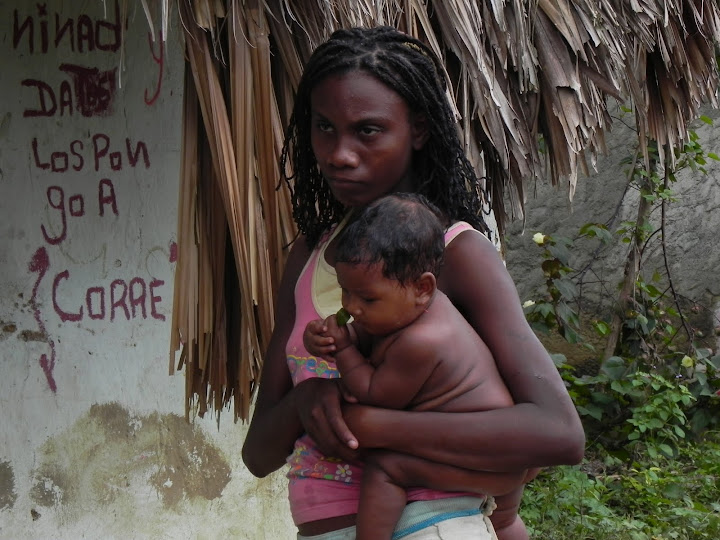
Un inolvidable taller con mujeres afrocolombianas

Photo courtesy Paula Rodriguez.
Por Dinyer González 
Fueron cuatro días en los que 24 mujeres provenientes de remotos sitios del Pacífico colombiano se dieron cita en el CIAT para compartir sus experiencias, sus sueños y sus temores en torno al uso ancestral de las plantas aromáticas y medicinales, y recibir de los expertos en mercados herramientas que les permitirán mejorar sus negocios.

El taller “Aprendiendo juntos: compartiendo nuestros modelos de negocios” fue organizado por el Programa Análisis de Políticas (DAPA), y las participantes forman parte de tres organizaciones de Guapi, Buenaventura y Quibdó que trabajan con la Fundación ACUA (Activos Culturales Afro), con el apoyo del Fondo Internacional para el Desarrollo Agrícola (FIDA).

No se conocían entre sí y sus negocios son diferentes –parteras, productoras de jabones, cremas, ungüentos- pero las unía el mismo interés: el conocimiento en torno a las plantas medicinales, aromáticas y condimentarías.

De Guapi, en el departamento del Cauca, vino la Fundación Chiyangua, cuyo trabajo está orientado al cultivo de plantas condimentarías y medicinales en azoteas y patios y su posterior comercialización; de Quibdó, capital del Chocó, vino la Asociación Tesoro de la Selva, dedicada a la producción de jabones, cremas y ungüentos a partir de plantas medicinales; y finalmente, de Buenaventura, en el Valle del Cauca, llegó la Asociación de Parteras Unidas del Pacífico (Asoparupa), en cuyo oficio heredado utilizan plantas medicinales.

Estas tres organizaciones colombianas forman parte de las 20 que en América Latina reciben el apoyo de la Fundación ACUA, para preservar sus activos culturales, con recursos del FIDA. Si bien dichos recursos han sido administrados por el CIAT desde hace algunos años, solo hasta el 2010 se diseñó un proyecto que permitió al Centro vincular su trabajo de investigación con la labor de estas mujeres, por lo cual eligieron las asociaciones relacionadas con la agricultura.

Para el CIAT ha resultado muy motivador el trabajo con ellas, dado el dinamismo, la sabiduría y el interés en compartir y aprender. Por eso, el taller fue una enriquecedora experiencia para todos. Se trabajó con una metodología participativa en la que, una vez dados los modelos y las las herramientas, ellas mismas reflexionaban en torno a las fortalezas y debilidades en los negocios y diseñaron las hojas de ruta que quieren seguir.

Términos que al principio les sonaron extraño, se volvieron familiares: segmentos de clientes, propuesta de valor, canales de ventas, relaciones con los clientes, fuentes de ingresos, recursos, actividades, socios claves, estructura de costos.

“La importancia del taller radica en la oportunidad que tienen las organizaciones de profundizar el conocimiento de su actividad como tal y poder recibir retroalimentación de organizaciones que están desarrollando procesos semejantes o complementarios a ellos y que les puedan aportar experiencias que les sirven para su progreso”, afirma John Jairo Hurtado, coordinador del proyecto.

Además de actividades teórico-prácticas, las visitantes tuvieron la oportunidad de interactuar con otro grupo de mujeres con mayor experiencia en los negocios, pero que tuvieron que sortear muchas dificultades. Se trata de la Asociación Femenina Agropecuaria, con sede en la vereda Yumbillo, en las goteras de Cali, capital del Valle del Cauca.

La visita fue emocionante. Eso se pudo evidenciar en los ojos de estas mujeres afrocolombianas, quienes se sentían maravilladas al escuchar la experiencia de sus colegas y saber que el negocio no es fácil, pero tampoco imposible si se saben aprovechar las oportunidades y si se tiene convicción con lo que se hace.

Esa visita fue enriquecedora para las mujeres del Pacífico, y se sintieron más motivadas para continuar con sus proyectos. “Lo más importante no es solo recibir recursos económicos sino también la educación necesaria para poder adquirir las técnicas y habilidades requeridas para nuestros negocios”, afirmó Jenny Rentería, líder de Tesoro de la Selva.

Por su parte, Rosmilda Quiñones, presidenta de Asoparupa, admitió que no tienen dinero, tampoco todos los conocimientos técnicos para el cultivo de las plantas, “pero sí tenemos el conocimiento de nuestros ancestros, además de unas ganas inalcanzables de dar a conocer nuestros productos y servicios”.

Con conclusiones como ésta, quedaron en evidencia las motivaciones y anhelos de estas mujeres, de seguir trabajando en sus pequeños negocios, reconociendo los puntos claves en los que deben buscar el apoyo necesario para prosperar sus microempresas.

Al término del taller, todas las mujeres, sin excepción, se sentían más seguras, más confiadas y mejor orientadas hacia el camino que deben seguir y que las llevará al éxito de sus negocios, aún cuando además de empresarias deban seguir cumpliendo con sus roles de madres, esposas y encargarse del hogar.

“Me voy feliz, ¿y sabe por qué?”, expresó con una luminosa sonrisa Teófila Betancourt, líder de la Fundación Chiyangua, cuando el taller había concluido. “Porque aquí nos dimos cuenta de que nosotras no estamos solas en esto. Hay un proceso enorme que está en marcha y ya estamos metidos en él”.

Map it!


Share it!

Friday, March 9, 2012

Rome UN agencies celebrate rural women and girls as agents of change

Yvette Azane Ngwemetoh, from north-
west Cameroon, speaks at IFAD on
International Women's Day.
At least two things are certain about the millions of women who work as smallholder farmers worldwide. First, they are among the hardest-working people on the planet, and second, they are woefully under-appreciated and under-compensated for their daily, uphill struggles.

For most of those women, and the daughters who work alongside them, yesterday was probably just another day of rising early and tending their fields or herds. But their achievements and challenges were in the spotlight at IFAD headquarters, where the three Rome-based UN food and agriculture agencies – IFAD, FAO and WFP – jointly celebrated International Women’s Day.

The event illustrated the complex dynamics of gender, food security and poverty. As various speakers pointed out, women and girls do more than 40 per cent of all farming and virtually all household work in rural areas. Yet they don’t share equally with men in the resources needed for productive agriculture. Research suggests that women’s crop yields would increase by 20 to 30 per cent if they had access to such resources. In turn, the number of hungry people in the world would decline by 100 million to 150 million.

Participants in yesterday’s event focused on how rural girls and young women figure into this global equation. The question at hand was how they can fulfil their potential as agents of change. In broad strokes, the answer was starkly simple: Give rural girls and women access to the right tools, and they will change the face of agriculture.

IFAD President Kanayo F. Nwanze started off the discussion. Dr. Nwanze called gender equality and rural development “inseparable,” adding that “women hold the key to food and nutrition security” by virtue of their untapped capacity for higher yields. FAO Director General José Graziano da Silva followed, announcing the launch of his agency’s new gender-equality policy. He said the policy cuts across all FAO programmes and “underscores the organization’s commitment to addressing gender and women’s issues to eradicate hunger and poverty.”

IFAD President Kanayo F. Nwanze (right) and FAO
Director-General Josè Graziano da Silva listen to
WFP Deputy Executive Director Sheila Sisulu.
The dialogue continued as a succession of influential women took the floor.

WFP Deputy Executive Director Sheila Sisulu weighed in with an appeal for the Rome agencies to take their lead from the grass roots. “The first thing we need to do,” she said, “is listen to rural women.” Sisulu noted that even in industrialized countries, women are the main processors and preparers of food for their families. Women’s voices, she said, are central to any discussion of food and agriculture policy.

South Africa’s Minister of Basic Education, Angie Motshekga, called for redoubled efforts to educate rural girls, who lag behind boys in school enrolment, especially after the early grades. Motshekga cited the “tremendous multiplier effect” of girls’ education, which generates far-reaching economic and social benefits. Once rural girls gain equal access to the classroom, “the world will never be the same,” she said.

Ertharin Cousin, US Ambassador to the UN agencies in Rome, echoed Motshekga’s call for parity. “A plant doesn’t know if it was planted by a woman or a man,” observed Cousin, who will become WFP’s Executive Director next month. But because rural women and women’s organizations start at a point of material disadvantage, she said, they need technical and financial support to enhance their productivity and to compete in the marketplace.

A lawyer by training, Cousin said history would judge the international community’s liability for continued gender inequality on the basis of three basic queries: “What did you know, when did you know it and what did you do about it?” She argued that the obstacles faced by girls and women in rural areas – such as poor access to land and credit, and a disproportionate burden of household labour – have been well known for years.

From left: Ertharin Cousin, US Ambassador to the UN
agencies in Rome; Angie Motshekga, South Africa’s
Minister of Basic Education; and youth representative
Yvette Azane Ngwemetoh.
“The question is, what are we doing about it?” she asked.

Of course, history is not the only judge. Young rural women themselves are obviously well positioned to assess the pace of progress on gender equality. Yvette Azane Ngwemetoh spoke yesterday on their behalf.

Originally from north-west Cameroon, the young woman just recently arrived in Italy to join her husband. She grew up in the countryside and worked on the family farm with her mother. Unlike many rural girls, she managed to complete her secondary education. She was unable attend university for financial reasons, however, and migrated to an urban centre, where she lived and worked for three years.

Ngwemetoh was soft-spoken but firm in her conviction that farming can and should be a viable livelihood for young women. Given access to machinery and modern technology, as well as adequate rural health and education facilities, she said she would welcome a career as an agricultural entrepreneur.

“The land has a lot to offer,” said Ngwemetoh. “You just have to improve on the land.”

Watch the recorded webcast: 
Part 1: Speakers
Part 2: Panel discussion
Part 3: Experiences from the field

Friday, March 2, 2012

What's mine is yours: household dynamics and women's wages


What’s mine is yours: household dynamics and women’s wages
International Women’s Day 2012


“As many as a third of married women in Malawi and a fifth of married women in India are not involved in spending decisions, even about their own income.” [1]

I read that sentence twice to be sure I hadn’t misunderstood it, and then carried on:

“Even in an upper-middle-income country like Turkey, more than a quarter of married women in the lowest income quantile lack control over their earned income.”

©IFAD/Asad Zaidi
Women’s “lack of control” over the money that they themselves bring home shows the deep-seated nature of gender inequality. If we don’t fight that inequality, then enabling women to increase their incomes may only put more money in the pockets of their husbands. 

Similarly, helping them to increase their productivity may put more food on the market – but it may not change the women farmers’ quality of life.

That’s why IFAD’s work to empower women is so crucial to everything that we do. Without that empowerment, inequality will continue to prevent the benefits of economic growth and social development reaching poor rural women.

That in turn hampers development – leaving deep pockets of deprivation and desperation that are handed on from generation to generation.

Even more shocking and revealing are statistics on what women think about domestic violence:

“On average, 29 percent of women in countries with data concurred that wife beating was justified for arguing with the husband, 25 percent for refusing to have sex, and 21 percent for burning food.”[2]

Those are just averages. The country-specific figures are truly shocking – with over 80 per cent of women in one east African nation saying that wife-beating is justified.

Let’s walk the gender talk
There’s a lot of apparent consensus today at the international level that levelling the playing field for women makes economic sense. IFAD President Nwanze is a vocal champion of women’s rights. And Italian Prime Minister Mario Monti went off-script at our recent Governing Council meeting to stress the importance of women’s role and their rights.

Yet empowerment is difficult to do, and it’s difficult to measure. For that reason, one of our commitments to our Members under IFAD9 is to improve the indicators that measure impact on gender equality and women’s empowerment, so that we can better analyse what works and what doesn’t for poor rural women. At the same time, we are committed to promoting expanded economic opportunities for women.

When she visited IFAD last year, UN Women Director Michele Bachelet touched on the importance of gender champions and quotas. International Women’s Day is a good occasion for us to remember her words.

An organization that works to empower poor rural women must have powerful women within it. And it must have powerful men and women who are prepared to stand up and champion women’s rights.

Let’s celebrate International Women’s Day at IFAD with a renewed commitment to fight gender inequality on our doorstep and in the countries where we work.


[1]World Bank: World Development Report 2012: Gender Equality and Development, p. 20.
[2]WDR 2012: p. 83.

Thursday, February 23, 2012

Meeting women farm leaders: What’s the vision for the future?

By Sundeep Vaid

Italian Prime Minister Mario Monti, Rwandan President Paul Kagame and IFAD President Kanayo F. Nwanze delivered inspiring speeches reaffirming their commitment to smallholder farmers, especially women and youth, at the 35th session of IFAD’s Governing Council today. After the morning session, coming to the Farmers’ Forum side event on “Women’s Leadership” was like pulling up our sleeves and getting down to the nitty-gritty of development work.

Women farm leaders from different parts of the world sat down in working groups, based on language, to discuss their vision for the future gender and youth dimensions of family farming. Some of the points to ponder were:

Once such a vision for the future takes shape, what is the role of the Farmers’ Organizations and IFAD in getting family farms to such a point in the future?         

What will be the challenges to this vision?·         

What can IFAD do to overcome these challenges and support the scaling-up of best practices?

Clare Bishop-Sambrook, Senior Technical Advisor, Gender and Poverty Targeting in IFAD, explained how IFAD and FAO support women in community-development projects. She expressed the hope that recommendations coming out of this session would provide input and guidance to shape our work – and influence how farmers’ organizations see the role of IFAD.

The groups came back with quite graphic visions of the future, as you can see from their drawings, shown here.

Gabriela Zarate, Youth Coordinator of COPROFAM, said that even though men helped on the farm, the major weight of the work is with women farmers. Her organization’s vision for the future is that men, women and youth participate equally in farm work, household activities and community initiatives such as formation of farmers’ organizations.

All three working groups came back with similar visions for the future where: 
  • All members of the family – men, women and youth – equally share ideas, work and the fruits of their labour
  • Family farms not only engage in subsistence agriculture but grow cash crops to augment family income 
  • Each family has a stand in the village market to sell their produce or have some access to markets through adequate roads and other rural infrastructure.
The challenges and areas that the women farmers identified for IFAD support are:
  • Capacity building for women and youth as defined by themselves at the organizational level
  • Sharing experiences using the best knowledge-sharing tools
  • Promoting policy dialogue to reinforce the decision-making role and capacity of women and youth at all levels.
The session revealed that in any part of the world, the challenges faced by women farmers and youth are strikingly similar. The women did not shy away from expressing what they expected IFAD to do to turn their vision into reality.

Wednesday, October 26, 2011

Betting on llamas


In Bolivia’s cold and harsh altiplano, llamas, alpacas and vicuñas are big business. Through the IFAD-funded Camelid Valorization Programme (better known to locals as Proyecto VALE), ranchers are increasing their incomes, protecting the environment and transforming their lives thanks to improved management practices of these loveable little creatures.

Videos
Learn more with videos from project participants (en español).

Viceministro de Desarrollo Rural de Bolivia Víctor Hugo Vásquez - Proyecto VALE
En esta entrevista el Viceministro de Desarrollo Rural de Bolivia, Víctor Hugo Vásquez, destaca los logros y desafíos del Proyecto de Apoyo a la Valorización de la Economía Campesina de Camélidos (VALE). Este proyecto está destinado a mejorar las condiciones productivas de los microempresarios pobres del sector de los camélidos en el Altiplano andino. Su principal objetivo es mejorar el acceso de estos productores —en particular, mujeres y jóvenes— a recursos productivos esenciales como el crédito, la asistencia técnica y el conocimiento, que les permitan incrementar sus rendimientos y mejorar sus ingresos. Además, el proyecto busca influir en las políticas públicas nacionales a fin de que incorporen la economía de camélidos en las estrategias de reducción de la pobreza rural.

Testimonios Directos – Ide Fatima de Ayllu Mimani (Proyecto VALE Bolivia)
Ide Fatima de Ayllu Mimani es usuaria del Proyecto de Apoyo a la Valorización de la Economía Campesina de Camélidos (VALE). En este testimonio directo, ella explica su emprendimiento de llamas.

Testimonios Directos - Gervasio Mimani (Proyecto VALE Bolivia)
Gervasio Mimani es usuario del Proyecto de Apoyo a la Valorización de la Economía Campesina de Camélidos (VALE). En este testimonio directo explica su emprendimiento de llamas y sus esperanzas para el futuro.

Testimonios Directos – Calzados Arriba (Proyecto VALE Bolivia)
En este testimonio, un usuario del Proyecto de Apoyo a la Valorización de la Economía Campesina de Camélidos (VALE), nos explica como los calzados se han convertido en mecanismo para salir de la pobreza.

Testimonios Directos - Patricia Ramírez Nuñez, 23 (Proyecto VALE Bolivia)
Patricia Ramírez Nuñez es usuaria del Proyecto de Apoyo a la Valorización de la Economía Campesina de Camélidos (VALE). En este testimonio directo, ella explica su emprendimiento de turismo y destaca los cambios en términos de equidad de género que han visto en los últimos años en Bolivia.

Testimonios Directos - Marcos Sebastian Ramírez Nuñez (Turismo Sostenible en Bolivia)
Marcos Sebastian Ramírez Nuñez es usuario del Proyecto de Apoyo a la Valorización de la Economía Campesina de Camélidos (VALE). En este testimonio directo, el universitario explica su emprendimiento de turismo.

All photos and videos ©IFAD/Greg Benchwick

Monday, October 24, 2011

Lila Downs – Reverence, Hope, Change


Mexico’s favourite singer-songwriter dishes on development, gender, indigenous issues, peace and music

Lila Downs is a Grammy-award winner, Academy Award nominee, singer, songwriter and activist. Her songs tap the heart of indigenous Mexican traditions, also looking to world beats and pop to create an effervescence message of reverence, hope and change.

In this videocast, we interview Lila Downs on indigenous issues, violence, music and culture in Latin America. Her frank and incisive answers provide a unique glimpse into contemporary trends in rural development, gender equality and indigenous rights. Learn more about Lila at www.liladowns.com.

Photos and music courtesy Lila Downs.
Photo credits:
Lila Downs Turquoise - ©Fernando Aceves
Lila Lagrima de Maiz - ©Luna Maran
Lila Pensando - ©Elena Pardo
Metate - ©Ricardo Trabulsi

All other photos ©IFAD/Greg Benchwick.

Wednesday, October 19, 2011

KLM5 Takes Off at DA-BSWM Grounds

GAME ON! Gathered in the grounds through the bujong call, KLM5 opens with a bang with representatives from DA, DAR, DTI, UN Women, and IFAD.

The 5th Knowledge and Learning Market (KLM5) officially opened on October 19, 2011, in the Department of Agriculture-Bureau of Soils and Water Management (DA-BSWM) grounds, Quezon City. KLM5 is a two-day activity

DA Undersecretary Joel Rudinas and DAR Undersecretary Rosalina Bistoyong led the ribbon-cutting ceremony with IFAD-Philippines Country Programme Officer Yolando Arban. Also present in the ceremony are DAR-Region 10 Director Felix Aguhob, DAR-Region 13 Director Faisal Banduay, UN Women M&E Officer Loren Umali, RuMEPP Director Jerry Clavesillas, DAR-FAPSO Officer Susan Perez, and DAR Director Susan Leones.

Booths showcasing products and various information materials were opened to participants. Exhibitors are composed of government agencies, NGOs, academic institutions, and IFAD-funded projects such as the RaFPEP, CHARMP2, RUPES, CURE, NMCIREMP, and RuMePP.

Participants of the event expressed excitement over the event and to the products that exhibitors offer. Aside from the booths, entries for the photo and t-shirt design contests are displayed. A photo booth is also available for the participants to take quirky shots wearing different costumes. (Written by Sharleene Kay Alayan, RaFPEP/Photo courtesy of Patrick Depolio, CHARMP2)

Monday, July 18, 2011

What do numbers tell us?


Training and skills development play a key role in many sectors but when it comes to the difference that capacity-building, agricultural education, vocational training and skills development can make in offering a route out of poverty to rural poor people the debate becomes more serious. Why? “Today, about 34 per cent of the total rural population of developing countries is classified as extremely poor…” and agricultural education is 1 of the 6 policy and institutional measures “ that governments can take to provide an enabling framework for sustainable agricultural intensification “ …… agricultural education is “fundamental to enable women, men, young people and children to develop the skills they need to take advantage of new economic opportunities (source IFAD RPR 2011)” . In this context, it is extremely important for IFAD to assess the role and scope of capacity building, training and skills development in IFAD portfolio. The 2 days international consultation "Skills development for poverty alleviation: sharing IFAD experiences in technical and vocational skills development”that took place in IFAD on 22 and 23 June was an opportunity to:


  • understand the potential of training in IFAD supported projects
  • discuss the results achieved in the framework of the Initiative to Mainstream Initiative (IMI - a DFID supported initiative to promote innovations
  • identify successful and innovative training approaches in IFAD supported projects (six field studies conducted in on-going IFAD projects in Bangladesh, Colombia, Ghana, Madagascar, Rwanda and Sudan were presented), and
  • pave the way to strengthen the impact of training on poor rural communities in order to give the rural poor the individual and collective capabilities to overcome poverty.


In terms of numbers, results are impressive! Since 2005, more than 4.3 million people have been trained (40% on agricultural technologies and production and 23% on enterprise development and employment) through IFAD programmes. But numbers, as rightly pointed out by panellists at the international consultation, need to be interrogated to give a sense of the impact of the 4.3 million trainings delivered on the lives of those people in terms of empowerment. Unfortunately data is not collected systematically and consistently; participants agreed that more efforts should be made to improve the quality of the data collected in order to answer crucial questions such as: Who are the people trained; are they men, youths or women? and most importantly are they the rural poor we need to reach? What is the use of these trainings? Did the trainings make any difference to the quality of life of the trainees?

Definitively, this is the experience of the women trained in the context of Gash Sustainable Livelihoods Regeneration Project (GSLRP) in Sudan . For them “the training on nutrition, food processing and home economics was the first opportunity to socialize and acquire new skills, said Aisha Sheik GSLRP Programme Officers in Sudan.

Kudos to GSLRP project for:


  • campaigning for women’s participation in training
  • influencing men and having men support the participation of women in training (it wasn’t easy…it took 2 years but they did it!!)
  • overcoming barriers like the lack of venues where women could be trained
  • optimizing the techniques acquired by those who benefitted from the project training on brick making and having them build the training venues with green bricks
  • sharing with us during the conference the thoughts and the feedback of the beneficiaries of the training. Their words:
"Before the training, we were just sitting in the house, meetings have broadened our thinking."

"We learned how to speak Arabic and how to pray and cite the Koran"

"Before the training, our meals were sorghum porridge or Kasha, now we cook vegetables and meat; prepare special meals for children and pregnant women."

“Before we did not care when the vaccination team came for our children, now we all go out and know how important it is”
  • and for awarding certificates at the end of the training. Trainees value certificate!!!

Certificates are building blocks for further training, for social recognition and self- esteem of the trainees and Sudan is not the only example: the Rural Enterprises Projects in Ghana did the same! . But training programmes are not always successful, the field study in Bangladesh shows that skills development and acquisition of new technologies does not happen only through formal training!! This was the interesting finding of the Bangladesh field study.

The experience of the Micro-Finance and Technical Support Project (MFTSP), shows that 16 trained women operators out of 32 trained operators have never operated Mini-Hatcheries. An other 16 MH operators successfully operate MH but did not receive formal training: they “learned by doing” thanks to hands-on training delivered by Livestock Technical Assistants! According to the experience in Bangladesh , formal training can be less effective than a practical approach, as the time required to attend the formal training may be a serious constraint for many women: 30 days away from their daily duties is a significant amount of time and the women that could benefit from the training could not afford it! . So definitively duration of trainings should consider the needs of the target group but this is not the only element that contributes to designing effective training.


To be effective, training sessions must take into account a number of factors among which: the cultural strengths and weaknesses of the trainees, the ability of the trainers, the suitability of the training, the market demand and the national challenges .For examples, Madagascar and Colombia have different challenges, while Madagascar has 70% of its population in rural areas, Colombia is extremely urbanized. Moreover Madagascar has a population growing rate in terms of youth while the population in Colombia is stabilized. So, the challenge consists in mainstreaming projects into the national plans and managing project sustainability, but how do we measure the impact of IFAD project assisted trainings in the context of enabling a national framework for sustainable agriculture intensification?

Are IFAD project assisted training initiatives sustainable? will the government support them once the project is completed? Participants confronted their experiences and challenged the theories of their colleagues. Academics highlighted the need for linking projects to a wider context and challenged IFAD projects. But IFAD projects are not in a vacuum; they are discussed and approved by the Government. Dialogue among different stakeholders is key to working out balanced national strategies, and IFAD experience in Madagascar shows how, by working together, different stakeholders namely the Ministry for Agriculture, Ministry of Education and Research with IFAD advising on implementing a not too theoretical approach, can lead to balanced and concrete strategies.


The format of trainings varies and has to adapt to the national peculiarities. Apprenticeship on sewing, carpentry, welding, reparations, basketry, hairdressing and shoemaking worked perfectly in Rwanda for the Enterprise Promotion Project (PPMER II) . 51% of the apprentices managed to run their own business and 33% did get a job ! Home-based apprenticeship offers a number of advantages among which: ability to reach a critical mass of vulnerable youth , ability to transfer skills in a limited time, making rural life more attractive, mitigation of the risk of migration from rural areas and high impact with limited resources. No doubt rural poverty can be overcome if the rural poor are empowered and given the capacity to generate their incomes. Transfer of capacity and skills can happen in different shapes and formats, through apprenticeship, hands-on training , learning by doing formal trainings and skills development definitively can contribute to empowering the rural poor. However, more needs to be done to:


  • be more effective during the design and implementation phase
  • boost project impact
  • link private and public policies
  • link the training to the market to create concrete job opportunities
  • share experiences and have strong networks
  • keep good records and statistics to assess results
  • define the skills to be a good skills developer
  • link training, policy and research- too little attention is paid to research , but research is a way to produce knowledge
These were the challenges and the opportunities that inspired the discussion. The consultation was quite intensive, it was an opportunity to understand where we are, what needs to be done and to put on the table concrete proposal to reach the rural poor, to give them the tools to get out of poverty. How can we do better? Some concrete suggestions:
  • map skill requirements during the design phase of the project
  • change mind-set and develop an entrepreneurial mentality
  • mini-surveys to get evidence of good results, KAP survey presented in the Bangladesh field study could be a useful tool. Not familiar with KAP?

K for Knowledge……, did the student understand what was explained?
A for attitude… was it useful?
P for practice……..did the student adopt it?? if not go back to attitude!!!!
  • produce learning notes on training
  • simplify the message….if we want to reach our beneficiaries let’s simplify the language of publications and articles they may be interested in!!
  • and use more powerful tools....... what about the radio???

Monday, June 27, 2011

Gender Equality and Rural Empowerment


Exchanging experiences in El Salvador and Guatemala

In an effort to create better opportunities for rural women in Latin America – and across the globe – the Food and Agricultural Organization (FAO) and the International Fund for Agricultural Development (IFAD) have combined forces to create a grant programme focused on sharing experiences in gender equality and rural empowerment. One key element of the programme was to bring rural men and women together with experts on gender equity, value chains and rural development to share experiences. With this in mind, the program hosted study tours in Guatemala and El Salvador that brought various actors together to find new ways to weave social inclusion into the very fabric of society. This is their story.

Sunday, April 10, 2011

What does it mean to be an empowered woman in a man's world?

Last week while visiting the IFAD-funded Central Kenya Dry Area Smallholder Community Services Development Project and Mount Kenya East Pilot Project for Natural Resources Management, I had the privilege to meet inspiring and successful women such as Jane Njaguara, Lizz Wangari Bundi and the Wangu Environmental Conservation Women’s group.

As development workers we are always trying to get hold of data and statistics to show the impact of our work. I guess one of the most important statistics is how rural development projects have transformed the lives of poor rural people and their communities, and how these interventions have managed to bring economic viability to the rural space by providing profitable on and off-farm employment, minimizing migration from rural to urban areas and providing attractive employment opportunities for young people, so that they stay in rural areas and join the active work force.

Jane, Lizz and Wangu women’s group stories demonstrate how when women are empowered the entire society thrives.

Just one buck away from a better life

Visiting IFAD-funded Central Kenya Dry Area Smallholder Community Services Development Project (CKDAP), I met Jane Njaguara, a 32 year old strong willed woman who is one of the 13 members of the Busara dairy goat group in Kirinyaga District.

In 2003, this group received its first buck and that was the beginning of a successful economic and social transformation for its members.

A proud Njaguara, giving a tour to IFAD President, Dr Kanayo F. Nwanze, said: “Thanks to that one buck that we received 8 years ago, today I am running a successful business. I have managed to expand my goat dairy farm. I have diversified my activity and now have poultry, cows, I have a thriving milk business.”

Today, the Busara dairy group has 72 upgraded goats and in just five years they’ve managed to make KSH 223,000. “Our vision is to have 200 goats by 2015 and to operate a milk shop,” says Njaguara.

Over the course of its implementation, CKDAP continuously provided technical assistance to the Busara dairy group. Njaguara was one of the farmers who benefitted from training session by the Dairy Goats Association of Kenya. Thanks to the training received, she is now providing extension services to Busara community.

“The training allowed us to venture into selling milk. Now we are producing 3 to 5 litres of milk on a daily basis. As a result the families have a better diet and we have a thriving business, selling the milk to neighbouring villages for KSH 60 a litre,” explained Njaguara. “You know, goat milk is rich in protein and does not cause any allergies, so there is a high demand for it.”

“My dairy farm has turned out to be a profitable business. Thanks to the revenues from the farm I was able to expand and diversify my business. Today, I have chicken, geese, turkey and cows. My dream is to go to school and get a degree in veterinary sciences,” says a beaming Njaguara.

A couple of months ago, Njaguara lost her husband prematurely. But thanks to the income from the dairy goat farm she is able to maintain her standard of life. Her two children go to school, the family lives in the improved dwelling with cement floor, plastered and painted walls and the most wonderful thing is that she has managed to buy additional land to further expand the business.

“Jane is a perfect example of how every dollar spent in a woman generates 11 dollars,” observed Dr Nwanze.

“I was so excited when Jane referred to what she does as a business. Her story embodies the idea and concept of farming as business. Jane’s business is making money and giving employment to others. She has diversified her business, as a result is able to send her two children to school, has invested in more land and what is absolutely heartwarming and contrary to many parts of the world, the land is in her name, in the name of Jane Njaguara.”

After touring Njaguara dairy farm and in thanking the community Nwanze said: “What struck me is the commitment of the women and men, the beneficiaries and the community as a whole. I am so impressed on how you’ve made this project your OWN and how through your engagement and work you’ve managed to transform the your community.”

Tapping into the gold mind of tissue culture banana (TC banana)

In Africa approximately 70 million people rely on bananas for food or income. However, they are faced with a considerable challenge, namely a decline in production due to environmental degradation, diseases and pest infestation.

TC banana technology was introduced in Kenya about 14 years ago. Over the last eight years, Africa Harvest has raised awareness and built farmer’s capacity so that they can get the most out of this technology. Tissue culture technology in Africa has the potential to increase banana production from 20 to 45 tons per hectare. This means that a typical Kenya farmer family cultivating bananas could potentially increase their income from $1 day to as much as $3 a day.

The beneficiaries of IFAD-funded Smallholder horticulture marketing programme and Mount Kenya East pilot project, having partnered with Africa Harvest have benefitted from TC banana technology.

TC banana uses clean, disease-free, and insect-free planting materials. Statistics show that over the past six years, more than 500,000 farmers in Kenya have benefited from tissue culture banana technology transfer.

Lizz Wangari Bundi, an inspiring young woman farmer lives in Mururi also located in Kirinyaga district. Bundi is one of the many Kenyan farmers who has benefitted from the tissue culture banana technology.

She joined the ranks of TC banana farmers in 2008. Before that she was a tomato and French bean farmer. “Tomatoes and French bean were both labour and capital intensive and I was subject to enormous post-harvest loss because of the perishable nature of these produce,” explains Bundi.

“In 2008 I joined the Murinidi fresh growers self-help group, where I learnt more about TC banana.”

“I must admit initially I was torn between leaving the known for the unknown, but I decided to gamble and got involved with TC banana. For one thing, banana has a good nutritional value, so for sure my family’s diet would improve,” said Bundi.

Bundi’s asset was her three-acre farm. And the prospect of providing a better life for her three children was too alluring so she decided to venture with TC banana.

Thanks to the training and support provided along the entire value chain, Bundi was able to sell the entire produce of her initial 80 plantlet. She then expanded her orchard and today she has 240 plantlets. As a result she has managed to doubled her income.

“Thanks to the steady income, I am able to send the children to school. I have expanded my business and have a dairy farm which complements my banana production,” explained Bundi. “And you know what, I use the manure for the banana orchard, this way I not only make money from the dairy farm, but do not need to buy manure for the bananas!”

Three years ago, Lizz Bundi was a smallholder farmer living on less than a $1 day. Today, she runs a family agriculture business, employs other smallholder farmers and has an average monthly income of approximately KSH 7,000 (approximately $90). She owes this to her entrepreneurial spirit of taking a risk and venturing into TC banana. Bundi has managed to ensure food security, education and a steady income for her family. She is an empowered woman and a well respected member of her community.

“I am planning to expand the dairy farm and go into poultry. My next big projects are to put an irrigation system in place and put electricity at home,” says Bundi with a smile.

Lizz Bundi’s story is an example of how through improved agricultural production and strategic partnerships, we can reach many more smallholder farmers and help more poor rural people to become food security.

Talk about transformation: Firewood collectors become environmental conservationists

Moving from Central Kenya drylands to Mount Kenya, we met the hundred plus women of the Wangu self-help group who back in 2003 earned their living by selling firewood they gathered from Magacha forest. Soon they realized that this was not a viable way of life and approached the authorities requesting that they be granted a portion of forest land to raise seedlings.

The Wangu self-group ladies shared their story with IFAD President, Dr Nwanze: “In February 2004, we started our tree nursery and raised 10,000 seedlings.”

Pragmatic and self-organized as only women are, they agreed that they would come to the site at least once a week to plant the trees. And all of them paid KSH5 to buy a polythene bag and other nursery inputs.

In 2005, their production ranged around 25,000 seedlings and today they boost an annual production of 150,000 seedlings. The once fuel wood collectors, today are forest and environmental conservationists and stewards. Thanks to their tireless efforts the forest ecosystem is thriving, they have instilled the culture of tree planting and as a result have rehabilitated and maintained 213ha of degraded forest land.

They have diversified their activities and are engaged in beekeeping, fish farming, rabbit rearing, dairy farms and have set up village saving loans associations. Their fish ponds are stocked with fingerlings, they all each have five rabbits and those who have set up dairy farms are now selling milk.

Thanks to their various income generating activities, they are food secure, are able to send their children to primary and secondary school and college, have improved their dwellings and live in semi-permanent constructions and are contributing to the community’s welfare by investing to improve communal infrastructure such as schools and churches.

And they are a source of inspiration and mentors for other women groups such as the Mazingira and Mutitu women group who aspire to follow on their footsteps.


More power to women

Later in the week, meeting with Hon Dr Sally Kosgey, Minister of Agriculture, Nwanze shared the stories of these remarkable women and observed: “Investing in women and young girls is the pathway to stability and growth. This is why it is important to empower women, because by doing so, we make sure that the entire community thrives.”

“It was so reassuring to see the results of our work. I saw value for money, value of our investments and saw how together we have managed to transform the lives of our brothers and sisters,” explained Nwanze.

“The achievements and thriving businesses of these incredible women are a source of satisfaction and pride and show how the decisions we make in Rome are bearing their fruits.”

Commending the Government of Kenya for increasing its investment in agriculture from 2.9 to 4.5%, in his conversation with Hon Kosgey, Nwanze said: “Kenya is a power house in East and Southern Africa, I hope and trust that you will soon increase your investment in agriculture to reach the target of 10%.”

Hon Kosgey in thanking IFAD for its work in Kenya, said: “IFAD-funded projects and programmes are the most successful agricultural programmes in Kenya and it is institutions like IFAD that keep us in a state of hope.”

We on our side, pay tribute to Jane Njaguara, Lizz Bundi and the self-help Wangu women’s group as they are the personification of how women are agents of change, how in any community it is often if not always women who take on the leadership role, how when rural women are empowered, the entire society is empowered and how women are better managers of resources.

Ladies, kudos to all of you. May you move from one success to another and in the process inspire many more women.

Tuesday, March 22, 2011

LEARNING ROUTE ON GENDER AND MICROFINANCE- Uganda

Solidarity and Trust: Key elements for improve rural livelihhod


by Maria Fernanda Arraes


For the last 9 days we have travelled to different regions of Uganda, looking for new ideas and successful experiences in rural microfinance services and products that pay attention to gender differences. Now we have arrived in Iganda district in the Nile valley.

Our last field visit to this adventure journey had the objective to learn fromthe "Kugumikiraza" and "Together we stand" groups, who are using he Village Savings and Loans method to improve their liveliood. The group welcomed us with song, theater and a poem that explained in detail their experiences, starting with the visit of the first technical staff that arrived to sensitize them about this idea.


When someone coming from Kampala told the community for the first time to "put their money together in a box", the first impression of the community was of course to suspect their savings would be stolen...today they laugh when they remember this time.


Village Savings and Loan Association (VSLA) is a good practice that focuses on very poor people and supports them to manage their household cash flow. Based in a communiy, VSLA can be complemened with other services from microfinance institutions, which normally focus on provinding credit for clients who already have a business activity.


After a number of meetings and trainings, the communities form their own associations. In general these groups invovle 15-30 persons, men and women, chosen by themselves. They define their objectives, adhere to standard VSLA rules, elect their officials and design their saving system. Members put their money into a fund from which they can borrow after three cycles and pay back with 10% interest, so that the fund can grow. The regular savings contributions to the group are deposite for a whole cycle and then distribted partially or totally for the individual members, who will use these saving for their own needs. Most of the groups can function independently without support from the technical staff after 12 months.

Poor women have to create their own economic activities; they need to save money to feed their families; plan for social evens such weddings, pay schools fees and uniforms; health services, etc. It was a good lesson to see how the community changes and how well they have understood the importance of saving money.

The VSLA give them the possibility to socialize an meet regularly, to be trained, to benefit from the solidarity of the community, save mone and invest. Now they appreciate the savings, even more than the loans. In both groups that we visited in Iganga we observed that the women improved their livelihood through asset accumulation, better nutrition and improved health after having participated in this initiative.


These cases showed us that beyond economic empowerment, women also go through a process of social empowerment. They became more confident, motivated and engage. As one women said: "before joining VSLA, I would not be able to stand up in front of you and reply to your questions". The relationship with their husband changed and women started to participate and become involved in decisions at the family an community level.


The communities groups still have challenges: it is time now to think how to improve their products and how to access new markets. More than the opportunity to develop income activites, this experience represents an important cultural change, different family relationship and community dynamics.


After these moving visits, we returned back to Kampala to discuss all these cases and think how we can adapt and apply the lessons in our activities related to microfinance and rural development in our countries....See you in the next post, when i will share with you some of the lessons learned and innovative ideas !!

Popular Posts