Showing posts with label Farmers' Forum. Show all posts

Wednesday, February 29, 2012

Inside IFAD’s 2012 Governing Council: ‘Feeding the world, protecting the planet’

A small army of social reporters covered IFAD’s 2012 Governing Council of UN member states last week, attracting unprecedented online attention to the meeting at the agency’s Rome headquarters. This robust virtual presence supplemented regular media coverage of the high-profile gathering, which featured heads of state and other top officials and policy makers, as well as one of the world’s leading philanthropists.

The GC convenes annually to guide IFAD’s strategic investments in smallholder agricultural development and poverty reduction. Its theme this year – ‘Feeding the world, protecting the planet’ – emphasized the need to make rural livelihoods more viable and environmentally sustainable in an era of population growth and climate change.

Concurrent with the GC this year, IFAD’s biennial Farmers’ Forum also filled the agency’s conference rooms and corridors with representatives of small-scale producers’ organizations around the globe.

Throughout the meetings, the social reporters blogged, tweeted, and posted photos and videos on IFAD’s various social media platforms. In total, the GC and Farmers’ Forum produced some 5,900 tweets (under the hashtags #ifadgc and #fafo12), which appeared in Twitter feeds with millions of followers worldwide. The main speakers and panels, plus many side events, were also webcast live.

To review all of the GC and Farmers’ Forum posts, check the ‘blog archive’ links in the lower right column of this web page. Links to a small sampling of individual blog posts follow.

IFAD President looks ahead.  In the run-up to the GC, the President of IFAD, Kanayo F. Nwanze, shared his high expectations for the 2012 meeting in a brief video interview.

‘Youth in Agriculture.’ At a Farmers’ Forum pre-meeting held on 18 February, about 30 delegates from rural youth organizations developed action plans to help make agriculture a viable option for young entrepreneurs in developing nations.

‘The future is in our hands.’ The Farmers’ Forum kicked off on 20 February with a grassroots focus on the challenges faced by smallholder farmers and fishers around the world.

Smallholders and Rio+20. On the second day of the Farmers’ Forum, a working group on the upcoming Rio+20 conference reflected smallholders’ perspectives on climate change and agriculture, and their determination to be heard by world leaders.

Governing Council opens. As the GC began on 22 February, there was a palpable sense of anticipation about the presence of two heads of state, Rwanda’s President Paul Kagame and Italian Prime Minister Mario Monti, who delivered keynote speeches that day.

Meeting women farm leaders. After the opening speeches at the GC reaffirmed the central role of women and youth in smallholder agriculture, a Farmers’ Forum side event on women’s leadership got down to the nitty-gritty of development work and gender equality.

‘What will Rio herald for agriculture?’ At this compelling GC centre-stage event, Dr. Lindiwe Majele Sibanda, CEO of the Food, Agriculture and Natural Resources Policy Analysis Network, called for decision makers to put farmers first and allow them to produce food sustainably.

The role of remittances. The immense development potential of rural investments by communities in the diaspora catalysed an animated discussion at this GC side event, organized by IFAD’s Financing Facility for Remittances.

Gates at centre stage. On day two of the GC, following a keynote address by Italian Minister for International Cooperation Andrea Riccardi, philanthropist Bill Gates offered his views on a different future for smallholder agriculture. Another take on the Gates event is here , and a blog post about the expanding partnership between IFAD and the Bill & Melinda Gates Foundation is here.

By the time the GC and Farmers’ Forum wrapped up, participants had been informed, inspired and challenged by these discussions and many more. And IFAD, through its social reporting network, had captured that excitement and shared it with interested and influential people worldwide.

Tuesday, February 28, 2012

Cooperatives - A purpose beyond the profit

It’s the last hours of the last day of the 4th global meeting of the Farmers’ Forum, and you would think that the energy of the participants would be running low. I am happy to tell you that this was not the case of the side event on the International Year of Cooperatives (IYC). The meeting room was full of chatter and energy, and simultaneous translations were being done in every corner. We were there to discuss cooperative enterprises, and their role in transforming smallholder agriculture into profitable business. Most importantly we were there to listen to and learn from the experiences of three representatives from cooperatives in Armenia, Cambodia and Kenya:
  • Mr. Vardan Hambardzumyan, President of Federation of Agricultural Associations (FAA), Armenia
  • Mr. Pan Sopheap, Executive Director of Farmer and Nature Net (FNN), Cambodia
  • Mr. Philip Kiriro, President Eastern Africa Farmers Federation (EAFF), Kenya
Why cooperatives, why now?
The United Nations (UN) has declared 2012, as the International year of Cooperatives (IYC). Nora Ourabah Haddad from the Food and Agriculture Organization of the United Nations (FAO) opened the conversation and told us that the IYC has been one of the most popular UN years with a support from over 90 countries. The Rome based UN-agencies have joined forces to promote agricultural cooperatives throughout the IYC and beyond. Nora started her presentation by underlining the definition of a cooperative:

“A cooperative is an autonomous association of women and men, united voluntarily to meet their common economic, social and cultural needs and aspirations through a jointly owned and democratically controlled enterprise.” (International labour organization recommendation 193)

It is important to stress the definition, since the terminology might not be familiar to everyone, and cooperatives may have different meanings in different contexts. An agricultural cooperative is an important platform for rural development because of its financial and social dimensions. The panellists were asked to elaborate on two important aspects of cooperatives: What makes cooperatives viable? And how do you build ownership of the cooperative among its members?

What makes cooperatives viable?
Mr Hambardzumyan said that services offered by cooperatives to their members is one of the main factors of making cooperatives viable. The services need to be targeted and benefiting the members. He said: “The cooperative is a tool in our hand to solve our problems”. Financial turnover is another factor that is of key importance to make a cooperative viable.

Mr Sopheap continued on the same note and said that empowering members to help themselves is one important aspect. He then went on to say that making a profit is also essential, and to allocate a collective fund so that the cooperative can sustain itself. Additionally Mr Kiriro emphasized the importance of having the right policy framework and support to make cooperatives become strategic business partners. Leadership at political level is another relevant and important factor.

In other words, empowerment, policies and profit are key elements in making the cooperatives self-sufficient and viable.

How do you build ownership of a cooperative?
This leads us to the next question that was posed to the panellists, how do you make the members feel real ownership of the cooperative? Building ownership of a cooperative is important. If a cooperative is to live up to its definition it needs to: Be supported by its members and embrace voluntary membership paradigm. It also needs to have grassroots support and to be democratically governed.

Mr Sopheap suggested three key elements to make sure cooperatives and their members are in sync: First of all, introduce the cooperative’s principles to members, make sure everyone knows and understands them. Second, build the members’ trust. The members need to trust that they will benefit from the cooperative. Last but not the least, create an institutional collective fund.

The need for training and resources
The need for capacity building was something that came up several times in the discussion. Training is needed for members of cooperatives and for stakeholders. A representative from the International Labour Organization (ILO) presented the My.coop training package. This package is freely available online and has many learning programmes. My.coop is designed for managers and members of cooperatives, as well as organisations and individuals that train agricultural cooperatives. Its objective is to enable people to address challenges specific to cooperatives in market oriented agricultural development. Try it out!

What came out loud and clear from listening to the experience of the participants was the power and potential of cooperatives in rural development. Cooperatives can help people help themselves and give a voice to poor rural people. During the event new connections were made, and experiences and challenges shared. A conversation with multiple stakeholders started that hopefully will carry on throughout the IYC and beyond.

Read more about how IFAD work with rural institutions and cooperatives:

Tuesday, February 21, 2012

Agriculture: Can we make it more sustainable…and create a sea of change amongst farmers?


by Willem Bettink

This morning I joined a thematic session of the Farmers' Forum at IFAD. It discussed the merits of sustainable agriculture and looked for practises that can/should be scaled- up. Farmer organizations have no problem in embracing sustainable agriculture, but as one participant said "for a farmer to take- up/follow these practices, what matters are the benefits –an increase in income.  They are far less convinced to do so if they benefit climate change."

Segments of the discussion focussed on good practices that promote sharing of know how and transfer of practices and technologies. Many examples were given of peer-to-peer mechanism such as farmer field schools; all agree that this is the way to go. A farmer-to farmer approach implemented successfully by WFO in Zambia is now being spread to other African countries. Notwithstanding these good approaches it id felt that much more can and needs be done: IFAD should increase its support for capacity building of technicians and famers through its investment programmes in the countries where it operates.

From training and technology the discussion moved on to look into the benefits of organic agriculture. Examples were shared by IFOAM about the impact organic agriculture can have on productivity – up to 100% improvement in yields by integrating sustainable practices into their farming. Can we scale these practices up and spread them across countries?

Farmer organizations expressed the need to be more involved early on in consultation processes between IFAD and governments. With all the good practices that are available there is often not a good enabling policy framework that promotes and incentivises sustainable agriculture amongst small farmers.
I came away of this session with a mixed feeling; there are sustainable agricultural practices that have proven to work and benefit famer s; we do not hear (know…) of success of transformational levels in agriculture in any particular country. Thus “What is it that we are not doing right to achieve more strategic and sea changing results?”….hopefully the panels over the coming days can help me out ….

#fafo12 – Asia and Pacific regional working group: “When you have common objectives, you can shake hands”


 It was great to be in the room yesterday afternoon, when representatives of farmers’ organizations from Asia and the Pacific held their regional working group session with IFAD colleagues as part of the fourth global Farmers’ Forum.
During the three-hour session, participants had the opportunity to:


  •   Assess results of the Mid-Term Cooperation Programme (MTCP) with the farmers’ organizations – also known as FOs – in the region
  •  Talk about IFAD-FO partnerships at the national and regional levels
  • Exchange views on how to strengthen IFAD-FO partnerships  
  • Put on the table the challenges of the past biennium (2010 -2011)
  • Pave the way for the coming years

The results of the first phase of the MTCP were very encouraging. "Consultation with FOs in the design of new IFAD projects, and in the formulation of new Country Strategic Opportunities Programmes, is now the norm!”, said Sana F K Jatta, IFAD Task Manager for the Farmers’ Forum process in the Asia Pacific Division.

Maybe that’s because IFAD and FOs have a common objective, which is poverty reduction. As Nguyen Manh Hung, Director of International Cooperation in the Viet Nam Farmers’ Union,  said: “When you have common objectives, you can shake hands.”

However, FO representatives from other Asian countries did not all report the same success that Viet Nam and Nepal experienced. For example, Herminia de Jesus Pinto, from East Timor, said that FOs in Pacific countries were not involved in the MTCP; Herman Kumara Wijethunge from World Forum of Fisher Peoples (WFFP) advocated for the involvement of fisherfolk in programme planning; and representatives from India stressed that more Indian FOs should be part of the MTCP. It was a very open and lively discussion.

My take? Much was achieved during the first biennium of the MTCP, but more needs to be done in the coming years in terms of knowledge sharing, involvement of FOs in IFAD country programmes, and strengthening of national and regional FO networks. But to strengthen FOs’ role, these organizations have to be more proactive in areas where there are IFAD projects.

FOs should also work a bit more on gender balance. In the room where the regional working group met, there were  30 people, including myself. Only 10 were women!

Interested in knowing more? Follow the fourth global Farmers’ Forum meeting  bit.ly/ArtmQW #fafo12 #ifadgc to learn about future goals.

Monday, February 20, 2012

FAFO12 – Farmers’ Organisations are the backbone for a more efficient and productive agriculture in Western and Central Africa


Representatives from networks of farmers’ organisations (ROPPA, PROPAC) have pointed out the need for a systematic approach to ensure better capacity building particularly in terms of technical assistance, strengthening of young farmers, and better communication among farmers’ organisations during the Parallel regional working group sessions for the Western and Central Africa region.

Interesting presentations from Guinea and the Central African Republic have shown that IFAD involves farmers’ organisations in their country strategic opportunities programmes (COSOP), programme design, implementation and evaluation as part of the country programme management teams. However, improvements are still necessary particularly with regard to the monitoring and evaluation of programme interventions, communication among farmers’ organisation and project management across the countries as well as technical assistance.

It has been emphasised during the discussion that farmers’ organisation need to be involved in the determination of agricultural policies at local, national and regional level.

Regional cooperation remains a challenge and requires improvement. A better coordination and structuring of farmers’ organisations is needed to increase the efficiency and better opportunities of smallholder farmers across countries and regions.

Farmers’ Forum opens: “The future is in our hands”

The fourth global meeting of the Farmers’ Forum kicked off today at IFAD headquarters in Rome with a grassroots focus on the challenges faced by smallholder farmers and fishers around the world. The two-day event is part of a continuing dialogue between rural producers’ organizations, IFAD and governments.

About 95 delegates from farmers’ and fishers’ networks, and an equal number of observers, are attending the Farmers’ Forum. Many have travelled thousands of miles to participate.

As a new member of IFAD’s staff, I’m experiencing the forum for the first time. Still, having previously spent more than a decade working with UNICEF, the UN children’s agency, I felt right at home at a Farmers’ Forum pre-meeting held here on Saturday. At that all-day special session, about 30 delegates from rural youth organizations put their heads together to develop an action plan on making agriculture a viable option for young people in developing nations.

It was a promising and forward-looking prelude to the rest of the forum, which is about making rural livelihoods generally more viable and environmentally sustainable – and reducing poverty in the bargain.

A matter of survival
Speakers at this morning’s packed opening session came from diverse backgrounds and regions. Yet their over-arching message to the leaders of governments and multilateral agencies was singular. To feed a growing global population while simultaneously adapting to climate change, they said, you have to consider – and act upon – the perspectives of small-scale food producers.

“It’s not a battle for fishers alone. It’s not just a battle for farmers,” said Ujjaini Halim of the World Forum of Fish Harvesters and Fishworkers. Instead, the task at hand is a matter of basic survival, she said, adding: “The future is in our hands.”

Halim is one of the members of the Farmers’ Forum Steering Committee, all of whom represent networks of small producers. In their statements, many of the committee members credited IFAD with advancing the idea that smallholder farmers are central to food security and poverty reduction. Several noted, however, that the devil is in the details of translating that idea into concrete policies and programmes.

The road ahead
Djibo Bagna of the West African producers’ network ROPPA listed a series of specific policy questions that must be answered as a prerequisite for rural transformation. For example, how will smallholders gain access to credit and markets? And how can we empower rural women and youth, and build the capacities of producers’ organizations?

“The road ahead is still very long,” said Bagna.

Other speakers asserted that small-scale producers should be more directly involved in the design and implementation of rural development plans at all levels. For instance, the UN Year of Family Farming – scheduled for 2014 – will be meaningful only if it involves smallholders in policy advocacy, said Estrella Penunia Banzuela of the Asian Farmers’ Association.

In addition, Steering Committee members urged IFAD and its partners to support pro-smallholder policy initiatives. For his part, Herman Kumara Wijethunge, of the World Forum of Fisher Peoples, called for concerted action on FAO’s recently drafted Voluntary Guidelines on Securing Sustainable Small-Scale Fisheries.

Learning and collaboration
IFAD President Kanayo Nwanze also spoke at the opening session of the Farmers’ Forum, offering his own take on key issues of sustainable agriculture and environmental stewardship.

President Nwanze had visited the youth session on Saturday, where I saw him in a public setting for the first time. I was struck by his warm connection with the participants. He referred to that session today, reaffirming his commitment to “strengthening IFAD’s support of young women and men so that they can choose and build their futures in rural areas.”

Citing the droughts in the Horn of Africa and the Sahel, and other recent weather shocks, President Nwanze added that “farmers are particularly vulnerable to extreme weather and shifts in climate patterns.” In the run-up to the Rio+20 climate conference in June, he said, IFAD and its grassroots partners – including young people – “must strengthen our collaborations.”

Speaking of collaboration, President Nwanze explained that 90 per cent of IFAD’s projects have benefitted from the input of producers’ organizations since the last meeting of the Farmers’ Forum two years ago. “But we are well aware that there is still more to do in terms of inclusiveness and consistency in these partnerships,” he said.

The Farmers’ Forum is nothing if not inclusive. It seems an ideal opportunity to strengthen partnerships. For me, it’s also a unique chance to learn about the hands-on issues that make up IFAD’s everyday operations. I look forward to learning more.

Tuesday, February 16, 2010

The third global meeting of Farmers' Forum thanks IFAD for establishing the Forum

On Tuesday afternoon, 70 farmers' leaders from around the world, representing millions of smallholders and rural producers from all over the world concluded their work at the third global meeting of the Farmers' Forum.

In their synthesis of deliberations they reiteriated the fact that since the last Farmers’ Forum, the world has experienced multiple crises, exacerbated by the global recession and climate change and as a result more people are poor and hungry.

They acknowledged the significance of family agriculture in the world and pledged to campaign for a UN Declaration for International Year of Family Farming.

The farmers indicated that they want agriculture to be controlled by them, the VERY people who cultivate the land and are feeding the world.

In sharing the summary of their deliberations with IFAD's 33rd Governing Council, they indicated there is no effective response to the challenges of food security for all, eradication of extreme poverty and mitigation of climate change without more and better investment in farms and rural communities and more supportive policies for rural development.

They commended IFAD for forging a strong partnership with Farmers’ Organizations and embedding them in Country Programmes. They told IFAD's membership that they highly appreciated the real progress in the consultation and partnership between IFAD, governments and farmer organizations.

They made the following recommendations to IFAD:

  • Extend the partnership to all countries where IFAD is operating, taking into account the diversity of the organizations of poor rural people.
  • Systematically include at least one national apex organization in the IFAD Country Programme Management Team in order to contribute to the steering of the IFAD country programme (COSOP formulation, project and programme design and implementation, policy dialogue and other initiatives).
  • Create a flexible, demand-led facility within IFAD’s budget for facilitating the participation of farmers’ organizations in the COSOP and the project cycle.
  • Develop operational guidelines to support the systematic engagement of farmers’ organizations at country level; in particular in the monitoring and implementation of IFAD programmes.
  • Ensure that the already strong practice of consultation with farmers’ organizations is systematized; in this regard, IFAD and regional/international farmers’ organizations could maintain a roster of organizations that should be systematically invited when IFAD is about to embark on project design.
  • Take stock of important lessons from programmes with farmers’ organizations, with a view to replication and upscaling, and to promote south-south exchanges and knowledge among the farmers. (In this regard, we recommend exploring the possibility replicating the programme ‘Learning Routes’, which was successfully implemented in Latin America.)

Last but not least, both farmer leaders and IFAD President stressed the importance of investing in young farmers. Farmer leaders recommended that IFAD:

  • Map young farmer and rural youth organizations and their networks (national and regional).
  • Hold a Farmers’ Forum event similar to the one held for women this year, and ensure more representation of young people in subsequent Farmers’ Forums.
  • Designate within IFAD a focal point for youth.
  • Hold a global workshop on youth involvement in Sustainable Agriculture and Rural Development during this year (UN Year of Youth ).
  • Mainstream youth in all IFAD policies and programmes, with a gender balance and an emphasis on developing capacity-building and enhancement programmes for rural youth to engage in sustainable food production and agriculture and rural employment.
  • Launch pilot projects supporting rural youth.
  • Organize youth exchanges for experience-sharing on best practices and learning.

Monday, February 15, 2010

Summary of women farmer leaders workshop

We delegates to the Global Farmers’ Forum 2010 – 61 participants from 27 countries and four continents – IFAD staff and observers, gathered during the Preparatory Workshop to the Farmers’ Forum on Promoting Women’s Leadership in Farmer’ Organizations held on February 12-13, declare the following:
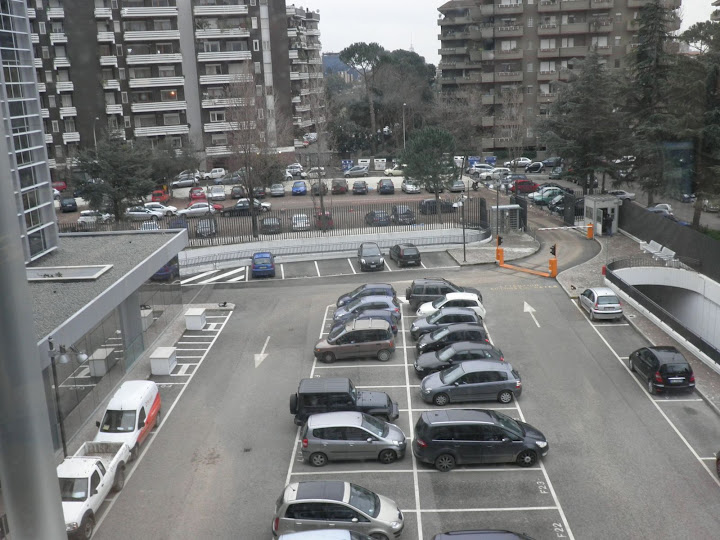
We, women farmers, fishers and pastoralists, call attention once again to the glaring disproportion between women’s roles in all aspects of agriculture across the developing world and the limited recognition, rights, resources and services provided to us. We also raise an alarm over the effect that climate change and the financial crisis are having on us women as they result in increased poverty and food scarcity. Because of poverty and lack of services in rural areas, our sons and daughters do not wish to be farmers and continue to migrate to urban areas. This raises a critical question: How can the profitability and sustainability of farming be secured so as to ensure a future for the next generation of women and men farmers?

Effective and representative producer organizations can provide a powerful instrument to make rural women’s voices heard, so that we can have a greater influence over decisions that affect our lives and livelihoods. But as of yet, our voices have been heard too rarely in our organizations.

The economic empowerment of women and their increased knowledge and skills are essential preconditions to improve our status and livelihoods, and for us to be able to assume effective roles in producer organizations. We therefore urge IFAD and other donors to bring new and significant resources to support the economic empowerment of women farmers. We need these resources to strengthen our knowledge, skills and leadership in order to produce and process food more effectively and sustainably, for our families and also for the markets. We urge IFAD and other donors to direct resources to women’s structures in farmers’ organizations and to require quotas that are respected.

We also specifically call upon IFAD to:
  • continue and increase efforts to enable women to increase their access to and control over productive assets including land and water
  • support the development and provision of financial services suitable to agriculture, and to enable women’s incomes to grow;
  • in addition to mainstreaming gender equality concerns throughout projects and programmes, wherever feasible earmark funds for women in IFAD-funded programmes as an affirmative action measure – for example under community development funds, and in training;
  • use grant funding for women’s capacity building – including child care facilities where needed – when it is not possible to finance such activities through a loan;
  • where IFAD-funded programmes support access to land and other kinds of property, seek to negotiate for joint titling, supported with legal advisory services to enable women to defend their rights;
  • in the context of a much-needed focus on rural youth give attention to the specific situation and needs of young women.

In the context of IFAD’s engagement with farmers’ organizations we recommend that IFAD:
  • open spaces for women farmer leaders to participate in country and global policy processes, and also in IFAD country strategy consultations;
  • in the design of the projects and programmes that work with farmers’ organizations, establish quotas for women (where possible, not less than 30 per cent, with a view to reaching 50 per cent over time), provide incentives for producer organizations to achieve the targets, and monitor their implementation;
  • invest more grant resources in increasing capacity of farmers’ organizations to address gender issues and empower women, and to strengthen women’s leadership – where possible channelling funds directly to women’s structures within organizations;
  • involve women leaders of farmers’ organizations in the supervision and monitoring of development programmes.

Finally, we note with satisfaction that the 30 per cent quota of women participants recommended at the last meeting of the Farmers’ Forum has been exceeded this year. We urge that the current proportion of 40 per cent be maintained in subsequent meetings, with a view to further increasing over time.

Farming is a business: A unanimous call from farmers from all over the world attending the third global meeting of Farmers' Forum

The third global meeting of the Farmers' Forum is now underway. This morning IFAD President welcomed 70 farmers' leaders from around the world, representing millions of smallholders and rural producers from all over the world.

In his statement the President made a strong case for investing more in agriculture and smallholder farmers. The President said: "if we know that 85% of all farmland worldwide is less than 2 ha in size (in the developing world it is as low as ¼ ha); if we know that 500,000 million smallholders produce 80% of the food we consume in the developing world; that they live in rural areas and make up the majority of the rural poor; and if we know that over 60% of the rural population is made of youths with over 50% being young women and girls. If we know all this, I ask you, ladies and gentlemen, who will feed the world in 2020, in 2030 or in 2050 by which time we would have added another 3 billion people, 50%, to our population?" He continued to say: "We must invest in the rural youth of today, the farmers of tomorrow".

The President talking about Africa said: "I am also absolutely convinced that Africa can feed itself, just as Viet Nam and China have done. Africa has the human and natural resources it needs to achieve agricultural growth and food self-sufficiency. What is needed is committed local leadership.... And this is what I have been calling to African leaders. "

"And I will repeat my call: No nation, no people achieved economic development unless it comes from within and agriculture is the foundation for it; after all, development is an intrinsic and endogenous process."

The President concluded by mentioning that "there are still a number of countries were IFAD’s cooperation with farmers organizations is limited. He indicated that we need to reach out further and deeper and develop these connections."

"We must work together to strengthen the linkages of your organizations with the grassroots levels and invest in the village-level advocacy to have an impact at the ground level and to improve the inclusive basis of our partnerships", said Nwanze.

"We need to develop the advocacy role of the farmers’ organizations in the national policy debate". The President concluded his statement by stating that "we need to engage rural youth in agricultuture; help them organise themselves into young farmers associations, provide opportunities for capacity building and training; institutional linkages and market informations. They are the food producers of tomorrow. "

Following the President's statement, the members of the steering committe (IFAP, LVC, WFFP, WFF, AFA, COPROFAM, ROPPA) made short statements echoing:


  • the need to focus on women and youth in developing agricultural policies
  • the need to focus on issues such as land entitlement and ownership
  • the fact that commercialization of smallscale agriculture is the way forward

During the course of the day, the participants interacted with IFAD staff and selected partners and attended regional working group sessions to share the progress achieved to date and discuss future goals for partnerships with farmer organizations at national and regional levels.

Stay tuned on this channel! The social reporting team will be bringing live soundbites and stories from this workshop and from the Third Global Farmers' Forum. Follow us on Twitter (@ifadnews) and on this social reporting blog (http://ifad-un.blogspot.com/).

Saturday, February 13, 2010

Women farmer leaders meet in Rome to discuss their challenges and opportunities


The workshop on promoting womens' leadership in farmers' organizations kicked off the Third Global Farmers' Forum. This workshop is very unique, so unique that even the weather decided to do something unique. On Friday, it snowed in Rome!!!

The workshop brings together some 40 women and men farmer leaders. In most developing countries, women perform a large part of the agricultural work and produce the bulk of the world’s food crops. The productivity of women farmers is constrained by the same factors that affect small agricultural producers in general, which are in turn compounded by gender-specific factors. These include:
  • lack of time and limited mobility due to multiple domestic and productive responsibilities;
  • women’s more limited access to assets and services (including extension);
  • illiteracy;
  • low participation and limited decision-making in producers’ organizations; and
  • socio-cultural factors affecting their mobility and participation in public decision-making.

On the other hand, women have a unique base of experience and knowledge that can be used to increase the productivity of smallholder agriculture in the broadest sense. Without a significant investment in improving the livelihoods, assets and decision-making power of rural women, the Millennium Development Goals of reduced poverty and food insecurity are unlikely to be achieved.

The workshop will discuss the importance of maintaining the focus on mixed farmers’ organizations, while recognizingthat women must have their own space within these confines. During the workshop, the participants will discuss challenges and opportunities for women farmer leaders such as:

  • constraints of lack of self-esteem and low levels of education
  • capacity-building as an important means to promote gender equality for rural women;
  • the need to concentrate on increasing women’s negotiation skills, self-esteem and leadership capacities, and put in place supportive measures such as child care facilities during training sessions
  • involving men in gender-related activities and enlisting men as champions of women’s
    increased leadership roles are important approaches to gain their support
  • gender-sensitization training, aimed at challenging gender stereotypes and norms and the
    perpetuation of traditional gender roles should be provided to women and men
  • sharing knowledge, exchanging experiences and networking among women are critical for
    women’s empowerment

Estrella Penunia, gave a passionate keynote address, in which she said: "Women farmers will not remain victims, we're key solution providers, nothing about us without us". She made a plea to move away from gender stereotypes and reminded the participants and audience that women should be at the forefront of the agriculture. She said: "If we earn more, we can spend more on food, education, health." Estrella then continued to say "Women perform magic to put food on the table".

In her keynote address, Estrella shared with the gathering that "in many developing countries women cannot owe land, yet we are the one who cultivate the land and take care of land."

She continuted to say that "50-90% of work in farms is done by women and women ensure food security when crops fail."

Estrella Penunia and other women leaders such as Elisabeth Atangana, Kati Partanen and all the women farmer leaders showed passion in their interventions. Elisabeth remarked: "If women don't have economic power, they can't do very much. Women need access to financial resources, and access to land".

As Estrella said: "Women work with personal touch, we need to help more women farmer leaders to further unleash their potential".

Makanjuola Olaseinde Arigbede took the floor and made a passionate case for empowering women. He said: "there is gender discrimination: If women choose farming, their possibility of marriage diminishes". "Men should recognize women as an effective farmer and a partner", he said.

Stay tuned on this channel! The social reporting team will be bringing live soundbites and stories from this workshop and from the Third Global Farmers' Forum. Follow us on Twitter (@ifadnews) and on this social reporting blog (http://ifad-un.blogspot.com).

Thursday, February 11, 2010

IFAD's Governing Council, an occasion for many debuts

For the first time in IFAD's history we are holding our annual Governing Council at our headquarters. Like any debut, the making of the GC is an exciting and unique experience. For the first time, all of us, and not only those closely involved in the preparations are experiencing the making of the Governing Council. Many colleagues have commented that "now that we are seeing it all happening under our nose, we feel part of it".
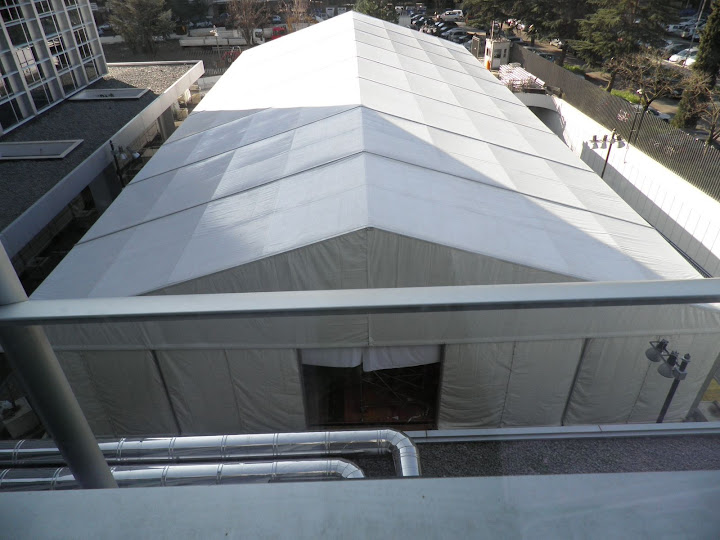
On Monday morning, when we came to the office we saw a tent erected in our outside parking space. This was the first visible sign of the GC preparations. Everyone was amazed how in just less than 48 hours the workers had managed to put up the tent. The tent will be the heart of the event serving as the plenary hall.
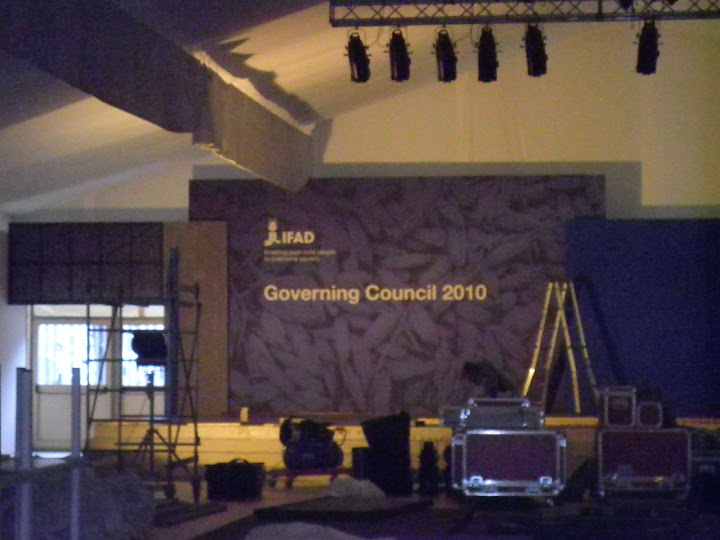
For safety reasons, administrative services declared the whole area off-limits. But your social reporting team was granted special access to visit the construction site on regular intervals to share with you the making of the GC.

Over the last couple of days, we've seen the tent come life and I must admit both the outside and inside the tent looks absolutely fabulous. My colleague who provided the creative inspiration and my administrative services colleagues were telling me that they been receiving so many compliments.
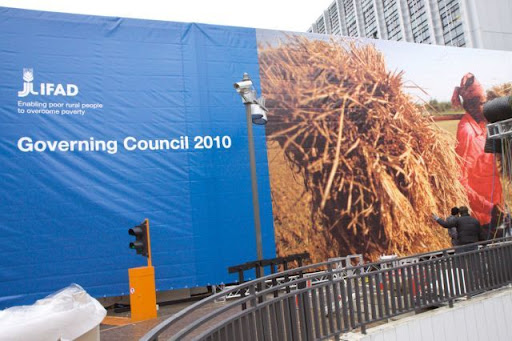
This whole undertaking is another testimony of the commitment, inventiveness and passion of IFAD staff. Everyone is doing their bit to make this debut a smashing success.

In another debut, this year the IFAD social reporting team will use social media to report live from the Third Global Meeting of Farmers' Forum and the Thirty-third session of the Governing Council. We'll be using Twitter and this social reporting blog to share the highlights of the Farmers' Forum and the Governing Council. Make sure you follow us on Twitter @ifadnews and you can use the blog and Twitter to pose your questions and comments.

Looking forward to "hearing from you".


Watch the making of the GC tent

Sunday, February 7, 2010

Farmers' Forum embraces social networking: Follow us on Twitter (@ifadnews) and on IFAD social reporting blog

The third global meeting of the Farmers' Forum will place on 15 and 16 February 2010 in conjunction with the Thirty-third session of IFAD's Governing Council. The Forum will bring together more 70 farmers' leaders from around the world, representing millions of smallholders and rural producers from all over the world who will interact with IFAD staff and selected partners. The Forum will be opened by the President of IFAD, Kanayo Nwanze.

The forum will use social reporting, which is an emerging philosophy which mixes journalism, facilitation and social media. It goes beyond posting agendas, papers, presentations and speeches on corporate websites. It is based on collaboration and live reporting from events by involving those "not in the room" to follow and contribute to the event. Social reporting uses a variety of techniques and tools such as story-telling, interviews, videos, photography, blogs, twitter, podcasts, posting documents to slideshare to tell the story.

The social reporter team will report live from the various sessions, allowing colleagues who cannot attend to participate virtually. You can start posing your questions using Twitter (send your questions to @ifadnews) or post a comment on this introductory blogpost.

What is the Farmers' Forum?
The Farmers’ Forum process was born in 2005. It is an on-going, bottom-up process of consultation and dialogue between small farmers’ and rural producers’ organizations (FOs), IFAD and governments, focused on rural development and poverty reduction. The Forum is rooted in concrete partnership and collaboration at the countryand regional levels. The Forum meets every two years for a global consultation, in conjunction with the Governing Council of IFAD.

The 2010 edition will be focusing more on operational matters. To that end, two sessions will be organised by IFAD operational divisions:
  • the first one Monday afternoon on operational collaboration between IFAD and farmers’ organisations at country and regional levels;
  • the second one Tuesday morning on the themes of (a) food security in a context of growing competition on access to land, (b) roles of farmers’ organisations in empowering small farmers in value chains, and (c) differentiated policies and investment programmes in support of smallholder agriculture.

Popular Posts