Showing posts with label Ghana. Show all posts

Thursday, December 15, 2011

Monitoring and Evaluating the IFAD Country Programme in Ghana

by Adriane Del Torto
 
Monitorting and Evaluation (M&E) is often considered one of the weakest links in development programmes. This is also true for IFAD. The IFAD Country Programme in Ghana took this as a challenge to overcome and started to invest in M&E about two years ago. After putting an emphasis on this theme for some time now, it was finally decided that the stakeholders involved in M&E should get together to share successes and address the gaps that still exist in M&E. From 12 to 14 December, a Ghana Country Programme Learning and Exchange Workshop on M&E took place at the Alisa Hotel in Accra.


The workshop , organised by the IFAD Country Office in close collaboration with the West Africa Rural Foundation (WARF) brought together representatives from all IFAD projects, the Roots and Tuber Improvement and Marketing Project (RTIMP), Northern Rural Growth Programme (NRGP), Rural Enterprises Programme( REP II), Rural Agriculture Finance Programme( RAFIP), Northern Region Poverty Reduction Project (NORPREP), WARF, the Government of Ghana - the Ministry of Food and Agriculture (MOFA), Ministry of Finance and Economic Planning (MOFIP) and the National Development and Planning Commission (NDPC) and partners IFPRI/SAKKSS, IPA, University of Ghana, Busylab , Esoko Mobile Technology, in  an innovative and interactive workshop.

The overall objective of this workshop is to identify how to use M&E to its fullest capacities. This means using the information generated by M&;E on implementation progress as a management tool rather than an institutional requirement. The workshop helped identify outcomes, output and impact of projects while emphasising on the qualitative side of M&E which is often excluded.

The basis of the discussion were the newfound focus on M&E for the Ghana Country Programme, the recommendations from the last country programme supervision mission (which took place mid November to mid December 2011) , the current national and project M&E structures, capitalisation efforts and finally research in M&E undertaken by our implementation partners.

After each project identified the key issues raised by the supervision mission, the partners making their presentations, the workshop allowed each project to review the M&E indicators making sure they are SMART (Specific, Measurable, Achievable, Relevant, Time bound) and ensure that these indicators are the right one to measure the outcomes and impacts desired by the project. It also allowed for the identification of research needs that will improve the M&E and impact reporting


The workshop highlighted the good results in M&E in the Ghana portfolio until now, and also how much these efforts contribute daily to the improvement of the systems and the improvements still needed. Most importantly, projects have shared and exchanged on how to improve their indicators and how to address the difficulties they are facing. Some recurrent themes are the following:

- need to improve data collection at the field level by involving beneficiaries and possibly digitalising
- need to strengthen grassroots institutions
- need for data control at all levels
- need for better data management and analysis
- need for commitment of all actors
- need to fill information gaps through studies
- need to identify, undersand and maintain linkages
- need for better gender mainstreaming
- need to identify further partnerships through good planning

Each project came up with an action plan during the workshop that will be mainstreamed into the AWPB to ensure its implementation.

Most importantly, a topic that came up on many occasions is the importance of good communication and the importance of making the time to exchange on the positive outcomes achieved. In order to ensure good communication there are several Fora in Ghana to ensure exchanges between stakeholders on themes of on microfinance, rural finance and value chains. Furthermore, WARF and FIDAFRIQUE are imporant partners in Ghana but also for IFAD projects in West and Central Africa: they help will ensure that the information to be shared is well articulated and diffused on the regional platform.


Outstanding challenges and considerations for the future are how to make adequate time to engage in proper M&E activities and to ensure that the lessons learned from good M&E fit into policy dialogue.


Monday, December 12, 2011

IFAD projects in Ghana: Improving livelihoods


Women fixing the squeezer to drain water
from the grated cassava at the Milenovisi Gari Processing factory

by Philomena  Dovi Kuzoe

Eastern Region, Ghana- A team from the Independent Office of Evaluation of IFAD in Rome was in Ghana for a four day working visit to attend the Country Programme Evaluation round table and the start-up workshop for the new Country Strategic Opportunities Programmes.  The team, together with the CPM and Officials from the Ministry of Food and Agriculture made a field visit to IFAD’s project sites in the Eastern region of Ghana This is to enable them have first-hand information on projects.. In all, the team visited four project sites. First, the team met with the Fanteakwa District Chief Executive, the Coordinating Director of Micro and Small Scale Enterprises and other project staff and clients. They discussed the implementation and activities of the Rural Enterprises Project as well as the district assembly’s effort to maintain and sustain the project.  The District Offices operate the Business Advisory Centers initiated by the Rural Enterprises Project and these centers have become a model for national MSE policy in the country.

From Fanteakwa, the team moved to a local soap-making factory at Otuater.   A small group made up of only 17 women and one man, the group has become the leading soap supplier in the district and beyond. At the factory the women were seen busily cutting, branding and packaging their soap.   The Rural Enterprise Project, REP spotted this group during an exhibition and trade fair.  According to the group, being in touch with REP has transformed their operations; they now make good sales, have created market linkages and also learnt new technologies and skills.  They also support their husbands and are able to send their children to school. The District Chief Executive Officer promised the women a car to enable  them transport their products to the market especially on market-days when the soap is in high demand.

The IOE team and officials of the South Akim Rural Bank
The team moved from this point to Nankese, a cocoa farming community where the 2009 best rural bank, the South Akyim Rural Bank is headquartered. The bank was ranked the 20th on the Ghana Club 100 list in 2010.  It enrolled as a participating Financial Institution of REP II in 2006 to deliver financial services to target micro and small enterprises in the district. According to the officials of the bank the establishment of the Business Advisory Centers, (BAC) has been very beneficial and the bank has collaborated effectively with the center to support project clients to establish their businesses. However it was noted that despite the bank’s large clientele, only three people applied for a matching grant which is provided by REP.  Rural banks in the country lend to the rural clients but usually not for agricultural activities and 73 per cent of staff of these banks perceived agricultural lending to be riskier than other lending types.   But at the South Akyim Rural Bank, 70 per cent of its clients are agro-processors making it agriculture-friendly.


The last point of call was the Milenovisi gari processing factory at Korkormu. The facility at the centre has been upgraded to a Good Practices Center. The group is also a good example of the value chain concept with 106 actors including farmers, traders, transporters and fabricators. We couldn’t have concluded the trip without visiting a gari processing factory.

Gari is one form of processed cassava and is eaten all over the country making it a marketable commodity. It is vital to reducing post-harvest food losses and increases food availability in Ghana. Gari, if stored properly can last for a year without going bad. Through REP//RTIMP the gari processing center has recorded tremendous success.

It was an exciting field trip seeing how much small scale business are improving the lives of the rural poor and contributing to the development of the country through project implementation. As we journeyed back to Accra, I was wondering whether these laudable projects could be sustained and maintained in view of the weak marketing opportunities.


Thursday, October 27, 2011

Africa's small farmers - a change of thinking

by Mohamed Beavogui


As an African but also a development practitioner, I've seen a lot of good ideas and best intentions left broken and long forgotten in farmers' fields.

In so many cases, the reason is simple. One idea, one piece of technology on its own seldom addresses the multiplicity of problems facing the average smallholder farmer struggling to make a living on a small patch of land in a remote corner of his or her country. Yet too often, that's exactly what people look for - an easy fix or a single solution.

In my experience, both in the field and now as the Director of the Western and Central Africa Division at IFAD, what makes a real difference is something more fundamental - it's how we look at Africa's smallholder farmers.

Do we see them as victims - poverty stricken women and men trapped in cycles of subsistence farming - or as potential entrepreneurs struggling to run small businesses in places were basic tools such as finance, technology, training and access to markets are unavailable? It's my belief that we need a paradigm shift in the way we think - one that takes us away from old ideas of African agriculture which rely on basic farming practices and on government and donor handouts and, instead, focuses on creating a vibrant rural economy built on establishing the right business environment for small farmers.

A woman I know in Ghana is a perfect example of what I'm talking about. Her name is Faustina Sayki. She runs a successful cassava processing centre in a small rural town. She employs 34 women and produces about 30 tonnes of cassava flour, known as gari, a week. Her customers are in the US, UK, Nigeria and Mali. She also extracts starch from cassava and sells it to local textile and pharmaceutical factories. Many describe her as a national success story.

So how did a poor cassava farmer in a remote community build a successful cassava-processing factory? A business environment was created that gave her a chance, that's how.

Through the IFAD-supported Roots and Tubers Project Improvement and Marketing Programme she received support she needed to respond directly to market opportunities. For example, she received training that helped her strengthen her entrepreneurial skills and business savvy; and she had access to expert research and adapted technologies that helped her improve her factory's efficiency and produce a higher quality and quantity of gari.

With a sound business plan and a savings history, she was able to access private equity from a rural bank. Together, these things enabled Faustina to enter the market with a well-priced, reliable, high-quality product that is now in demand. Her story suggests what's possible once we put away old notions and start looking at small farming in Africa as a business opportunity.

Originally posted on World Challenge blog

Monday, July 18, 2011

What do numbers tell us?


Training and skills development play a key role in many sectors but when it comes to the difference that capacity-building, agricultural education, vocational training and skills development can make in offering a route out of poverty to rural poor people the debate becomes more serious. Why? “Today, about 34 per cent of the total rural population of developing countries is classified as extremely poor…” and agricultural education is 1 of the 6 policy and institutional measures “ that governments can take to provide an enabling framework for sustainable agricultural intensification “ …… agricultural education is “fundamental to enable women, men, young people and children to develop the skills they need to take advantage of new economic opportunities (source IFAD RPR 2011)” . In this context, it is extremely important for IFAD to assess the role and scope of capacity building, training and skills development in IFAD portfolio. The 2 days international consultation "Skills development for poverty alleviation: sharing IFAD experiences in technical and vocational skills development”that took place in IFAD on 22 and 23 June was an opportunity to:


  • understand the potential of training in IFAD supported projects
  • discuss the results achieved in the framework of the Initiative to Mainstream Initiative (IMI - a DFID supported initiative to promote innovations
  • identify successful and innovative training approaches in IFAD supported projects (six field studies conducted in on-going IFAD projects in Bangladesh, Colombia, Ghana, Madagascar, Rwanda and Sudan were presented), and
  • pave the way to strengthen the impact of training on poor rural communities in order to give the rural poor the individual and collective capabilities to overcome poverty.


In terms of numbers, results are impressive! Since 2005, more than 4.3 million people have been trained (40% on agricultural technologies and production and 23% on enterprise development and employment) through IFAD programmes. But numbers, as rightly pointed out by panellists at the international consultation, need to be interrogated to give a sense of the impact of the 4.3 million trainings delivered on the lives of those people in terms of empowerment. Unfortunately data is not collected systematically and consistently; participants agreed that more efforts should be made to improve the quality of the data collected in order to answer crucial questions such as: Who are the people trained; are they men, youths or women? and most importantly are they the rural poor we need to reach? What is the use of these trainings? Did the trainings make any difference to the quality of life of the trainees?

Definitively, this is the experience of the women trained in the context of Gash Sustainable Livelihoods Regeneration Project (GSLRP) in Sudan . For them “the training on nutrition, food processing and home economics was the first opportunity to socialize and acquire new skills, said Aisha Sheik GSLRP Programme Officers in Sudan.

Kudos to GSLRP project for:


  • campaigning for women’s participation in training
  • influencing men and having men support the participation of women in training (it wasn’t easy…it took 2 years but they did it!!)
  • overcoming barriers like the lack of venues where women could be trained
  • optimizing the techniques acquired by those who benefitted from the project training on brick making and having them build the training venues with green bricks
  • sharing with us during the conference the thoughts and the feedback of the beneficiaries of the training. Their words:
"Before the training, we were just sitting in the house, meetings have broadened our thinking."

"We learned how to speak Arabic and how to pray and cite the Koran"

"Before the training, our meals were sorghum porridge or Kasha, now we cook vegetables and meat; prepare special meals for children and pregnant women."

“Before we did not care when the vaccination team came for our children, now we all go out and know how important it is”
  • and for awarding certificates at the end of the training. Trainees value certificate!!!

Certificates are building blocks for further training, for social recognition and self- esteem of the trainees and Sudan is not the only example: the Rural Enterprises Projects in Ghana did the same! . But training programmes are not always successful, the field study in Bangladesh shows that skills development and acquisition of new technologies does not happen only through formal training!! This was the interesting finding of the Bangladesh field study.

The experience of the Micro-Finance and Technical Support Project (MFTSP), shows that 16 trained women operators out of 32 trained operators have never operated Mini-Hatcheries. An other 16 MH operators successfully operate MH but did not receive formal training: they “learned by doing” thanks to hands-on training delivered by Livestock Technical Assistants! According to the experience in Bangladesh , formal training can be less effective than a practical approach, as the time required to attend the formal training may be a serious constraint for many women: 30 days away from their daily duties is a significant amount of time and the women that could benefit from the training could not afford it! . So definitively duration of trainings should consider the needs of the target group but this is not the only element that contributes to designing effective training.


To be effective, training sessions must take into account a number of factors among which: the cultural strengths and weaknesses of the trainees, the ability of the trainers, the suitability of the training, the market demand and the national challenges .For examples, Madagascar and Colombia have different challenges, while Madagascar has 70% of its population in rural areas, Colombia is extremely urbanized. Moreover Madagascar has a population growing rate in terms of youth while the population in Colombia is stabilized. So, the challenge consists in mainstreaming projects into the national plans and managing project sustainability, but how do we measure the impact of IFAD project assisted trainings in the context of enabling a national framework for sustainable agriculture intensification?

Are IFAD project assisted training initiatives sustainable? will the government support them once the project is completed? Participants confronted their experiences and challenged the theories of their colleagues. Academics highlighted the need for linking projects to a wider context and challenged IFAD projects. But IFAD projects are not in a vacuum; they are discussed and approved by the Government. Dialogue among different stakeholders is key to working out balanced national strategies, and IFAD experience in Madagascar shows how, by working together, different stakeholders namely the Ministry for Agriculture, Ministry of Education and Research with IFAD advising on implementing a not too theoretical approach, can lead to balanced and concrete strategies.


The format of trainings varies and has to adapt to the national peculiarities. Apprenticeship on sewing, carpentry, welding, reparations, basketry, hairdressing and shoemaking worked perfectly in Rwanda for the Enterprise Promotion Project (PPMER II) . 51% of the apprentices managed to run their own business and 33% did get a job ! Home-based apprenticeship offers a number of advantages among which: ability to reach a critical mass of vulnerable youth , ability to transfer skills in a limited time, making rural life more attractive, mitigation of the risk of migration from rural areas and high impact with limited resources. No doubt rural poverty can be overcome if the rural poor are empowered and given the capacity to generate their incomes. Transfer of capacity and skills can happen in different shapes and formats, through apprenticeship, hands-on training , learning by doing formal trainings and skills development definitively can contribute to empowering the rural poor. However, more needs to be done to:


  • be more effective during the design and implementation phase
  • boost project impact
  • link private and public policies
  • link the training to the market to create concrete job opportunities
  • share experiences and have strong networks
  • keep good records and statistics to assess results
  • define the skills to be a good skills developer
  • link training, policy and research- too little attention is paid to research , but research is a way to produce knowledge
These were the challenges and the opportunities that inspired the discussion. The consultation was quite intensive, it was an opportunity to understand where we are, what needs to be done and to put on the table concrete proposal to reach the rural poor, to give them the tools to get out of poverty. How can we do better? Some concrete suggestions:
  • map skill requirements during the design phase of the project
  • change mind-set and develop an entrepreneurial mentality
  • mini-surveys to get evidence of good results, KAP survey presented in the Bangladesh field study could be a useful tool. Not familiar with KAP?

K for Knowledge……, did the student understand what was explained?
A for attitude… was it useful?
P for practice……..did the student adopt it?? if not go back to attitude!!!!
  • produce learning notes on training
  • simplify the message….if we want to reach our beneficiaries let’s simplify the language of publications and articles they may be interested in!!
  • and use more powerful tools....... what about the radio???

Wednesday, June 8, 2011

The silent crisis

by Cheryl Morden

Hunger is sometimes called the silent crisis. Silent crises are the ones that are overlooked, crowded off the front pages by late-breaking news. Years of experience tell us that when hungry people are silent, they go unnoticed by the rest of the world. Apparently, to become a real and present crisis, those of us with full bellies need to be shaken awake.

In 2007-08, the world was roused to the plight of hungry people by street riots protesting skyrocketing food prices in some forty countries. And there is reason to believe that rising food prices have also been a factor in the uprisings that have spread across the Middle East. The food riots of 2007-08 prompted the world to focus attention on agriculture in a way that it had not done for twenty-five years or more. So, when hungry people and their supporters stop being silent, things happen.

As the U.S. budget stalemate persists, concerned U.S. leaders and advocates are breaking the silence of hungry people by themselves going hungry. They are trying to ensure that cutting programs that support poor and hungry people around the world is not the easy and uncontested way to balance the budget.

Who are these poor and hungry people? The cruel irony is that small-scale farmers account for half the world’s undernourished people and the majority of those living in absolute poverty and in marginal ecosystems. And at the same time, in a world that needs to increase food production by 70 percent by 2050 while dramatically reducing greenhouse gas emissions, these small-scale farmers represent a vast, undertapped potential.

When the President of the International Fund for Agricultural Development (IFAD), Kanayo Nwanze, took office in 2009, the first message he sounded to the world was a plain and unvarnished one: “Poverty and hunger are inhuman and cannot be tolerated.” While holding to that truth, he has since added another: “Every farm, no matter how small, is a business.” This focus on the business dimensions of agriculture and food production recognizes the critical importance of dynamic agricultural markets for sustainably overcoming rural poverty and hunger.

IFAD’s business is investing in projects that enable small-scale farmers to ensure adequate food for their families and increase their income. Targeted investments in gravity-piped water facilities and wells in dryland communities in Ghana, for example, mean that women like Elizabeth Wanjiru, who lives in the Kiambu District, can now fetch in two minutes the clean water that used to take six hours each day to fetch. With more time and training in improved farming practices, Elizabeth has moved from subsistence production to a profitable and more environmentally sustainable enterprise.

This kind of investment in self-reliance resonates deeply with American culture and ethics. Since its founding more than thirty years ago, IFAD has reached some 300 million poor producers like Elizabeth Wanjiru. And, with the encouragement of member states and contributors like the US, IFAD has been achieving steadily greater impact with each dollar it invests.

It’s time we better understood how intimately our future is linked with that of poor rural people the world over. Investments today in enterprising, small-scale farmers will pay dividends for generations.

Originally posted on HungerFast.org

Wednesday, January 26, 2011

Smallholders Play Fundamental Role as Business Partners in Feeding the World

By Kanayo F. Nwanze (this blogpost was originally posted on the World Economic Forum blog)

What do the heads of multibillion-dollar companies and those working in development have in common with millions of small farmers? They all know that agriculture can transform economies and lives, allowing people to move out of poverty.

Nearly one billion people go hungry every day. Most live in the rural areas of developing countries. With food prices once again soaring, clearly more needs to be done so that all people have enough to eat. But if we focus only on feeding people today, we will be doing nothing to prevent hunger in the future. 

We must create the conditions for poor rural people to move permanently out of subsistence and into the marketplace.  GDP growth generated by agriculture is at least twice as effective in reducing poverty as growth in other sectors. And experience repeatedly shows – in China, Ghana, Viet Nam and elsewhere – that smallholders can lead agricultural growth.   

The New Vision for Agriculture, to be unveiled this week in Davos, recognizes the fundamental role of smallholders as business partners in feeding the world, protecting our planet and creating prosperity.
 
Ensuring global food security will require the collective will to create an enabling environment for smallholders,  while addressing the weaknesses in global food and agricultural markets. Only then will we be able to create a business-oriented agriculture sector in developing countries and, in so doing, sow the seeds for a more nutritionally secure world. I am looking forward to the discussions in Davos and hope that this year’s meeting will spur leaders not just to listen and debate, but to take action.

For the most up-to-date, comprehensive assessment of rural poverty, see IFAD’s Rural Poverty Report 2011.

Tuesday, November 9, 2010

Ghana has another Yaa Asantewaa: A powerful lady cassava producers and community leader sets up shop in rural Ghana

The best part of my job is meeting, talking with and interviewing some of the remarkable people who have benefitted from an IFAD-funded project and programme.

Yesterday, at the 2010 West and Central Africa Implementation workshop,  I attended the Rural Entrepreneurship session where I met an extraordinary lady by the name of Faustina Agyeiwaa Sakyi. This morning, thanks to Moses’  facilitation, I interviewed Agyeiwaa – an extraordinary Ghanaian community and woman leader.

Agyeiwaa, 42 years old, lives in Techiman municipality in the Brong Ahafo Region of Ghana.  She is married with three children of 12, 9 and 3 years old.

“When I was eight years old, I remember seeing my mother spending her days processing cassava by hand”, says Agyeiwaa.  “We were so poor that everyone had to help or else we would not be able to make ends meet”.

When Agyeiwaa finished primary school she benefitted from vocational training. But she had to stop going to school and start working.  For two years she became a seamstress.

“I am a cassava processor at heart. It is in my blood. So being a seamstress was not really my vocation”, explains Agyeiwaa.

When she got married she decided it was time to fulfil her dream of becoming a leading cassava processor. After consulting with her husband, Agyeiwaa, a head-strong and strong-willed lady, decided to set up her rural business.

In 1998, she managed to mobilize 250 Ghana Cedi and bought a cassava processing machine. A leader that she is, Agyeiwaa, took it upon herself to visit the ladies in her village. She went door to door offering the ladies who had little or no income an employment opportunity.  She managed to mobilize 36 ladies who joined her newly born business.

In 2003, she requested a rural bank for a loan of 3,800 GhCedi and received 3,400. Agyeiwaa used this money to help the 36 ladies to plant and process cassava.

“I was lucky enough, because the ladies already owned land, so I did not need to worry about renting or buying land”, says Agyeiwaa.

“I gave 1 GhCedi to those with 2 acres of land and 0.5 Cedi to those with less than 2 acres.” 

The women used this money to hire labourers to do the heavy work on the land. The remaining money was used to buy the necessary inputs for planting, harvesting and processing the cassava. Agyeiwaa visited the ladies on a monthly basis to buy their produce and collect money due to her. 

This great entrepreneur adopted a “win-win” business model. She created a situation whereby the women had both a secure source of employment and income and she, herself, had a secure source of processed cassava. 

Agyeiwaa proves to be not only a charismatic leader, but also an excellent book-keeper. She kept track of who had given what, and having a business flair, she knew what was produced and how much each women owed her. This way she made sure that everyone was treated equally and no one paid more than what they had to.


“I take pride of what I’ve managed to do. You know, some of the women who worked with me, now have gone independent and together we have formed an association with 12 members!”, says Sakyi with a big smile on her face.

This remarkable entrepreneur who firmly believed in her vision, in 1998 bought her factory’s land from the village head for 80 GhCedi and paid 40 GhCedi to the village chief to start her business. Today she processes, packages and stores  her cassava products in her  factory and her factory  is recognized as a “good practice centre”. 

“I produce gari – which is processed cassava. The processing stages are peeling, washing, grating, fermenting, pressing, roasting, sieving and finally storing what we’ve produced”, explains Agyeiwaa.

“I have 12 people peeling who are paid 1.5 Cedi per day, 1 person in charge of washing who earns 2 GhCedi a day and 1 person who does the grating. I pay 16 GhCedi for 5.2 tonnes”.

“Afterwards, we proceed with the storage routine. The gari is stored in transparent polyethen bags. This type of bag acts like a preserving agent. This way the cassava keeps its taste and freshness. The bags are then put in a juke bag”.

Every week, Agyeiwaa produces 20.8 tonnes of different types of cassava.  “I produce both normal and a more sour version of processed cassava, which is achieved by a more prolonged fermentation period.”

“I package the processed cassave in bags of 150 kilos which I sell them for 90GhCedi. My factory makes on average 40 bags a week. If the quality is not too good, then I earn 20 GhCedi. What is great is that I often manage to sell everything I produce, when I do not, these remain in storage”, concludes Agyeiwaa. 

Agyeiwaa spirit of “rural entrepreneurship” has made her  a successful businesswoman. Her business is flourishing. As a child, she did not have money to go to school and back then, she promised herself that she would not allow her own children go through the same hardship. “I want my children to go to university and lead a much better life”, says Agyeiwaa – the mother!

Thanks to her cassava processing business, today her three children go to private schools, she owns her home, she has a pick-up truck and every year she makes approximately 187,200 GhCedi.

When the IFAD-funded Root and Tuber Improvement and Marketing Programme started its work in 2005, one of the first things the programme did, was to scout for local talents. And they identified Faustina Agyeiwaa Sakyi. The programme was so impressed by Agyeiwaa’s achievement that they started inviting her to meetings, workshops and events, so that she could share her story and experience. Today she is one of the two ladies who sit on the steering committee of the programme.

Recognizing her remarkable achievements and the high quality of her products, Agyeiwaa ‘sfactory was awarded as a “Good Practice Centre”.

“Since I’ve received this reputable award, my name is on the list of certified sellers”, says Agyeiwaa proudly. “This means, I do not have to go market, rather customers to me. At the same time, I am selling my products higher than the market price, because I produce better quality!”

In 2008, Techiman municipality  awarded Agyeiwaa as the Best Cassava Famer. The municipality has now nominated her for the 2010 best processor award.

“These awards are very important, because I not only get some money, new equipment, but most importantly I get a seal which are like Royal Warrants that the Queen awards!!!”  

“I am very proud of the what I’ve achieved, it is very satisfying to see that I’ve managed to provide a viable and sustained employment opportunity to the women of my village and to see them become independent and join our association!”

I ask this amazing lady, if she were to close her eyes and project herself in 5 years, where would she like to be. Without any hesitation, she said: “I want to be the big and best cassava processor in Ghana”.  I am sure this will happen SOONER rather than later.

The world has many more Faustina Agyeiwaa Sakyi. We just need to find them, provide them that “little push” so that they can get going and as you can see, the sky will be the limit!

Dear Faustina GOOD LUCK. I am sure you’ll soon be awarded as Ghana’s best cassava processor.

Second day of West and Central Africa regional implementation workshop: A pledge to have more performing projects in 2011!

On the second day of the West and Central Africa workshop participants were already sharing and exchanging their experience and knowledge at breakfast! After all that is the best moment of the day to share “fresh” ideas and the ‘thoughts’ you’ve slept on - and be ready to hear the reports of the four different working groups who the previous day had discussed the following topics.
The 4 working groups did an excellent job in identifying the fundamental pillars of successful value chain projects. They did an equally great job in identifying how the above four topics could and should be seamlessly integrated in the design and implementation of value chain projects.

The presentations sparked an animated and informed discussion during the plenary session. It was great to see the strong will of participants and their desire to succeed and work together so that next year the list of s
uccessful projects would become longer and longer.

Wondering why they got almost a standing ovation? Because they were the best top six 2010 performing projects in the West and Central Africa portfolio.

With 2011 just a couple of months away, the plenary discussed the challenges of how to improve project implementation so that next year the list of poor performing projects comes smaller or better even completely disappears and the list of top performers becomes even longer, thus offering more participants to share their successful stories and experiences.

This led to the afternoon sessions, where the participants discussed: the following topics:

  • Monitoring and evaluation
  • Withdrawal applications and procurement procedures
  • Decentralization of IFAD
  • Upscaling

Stay tuned, we’ll blog the outcomes of these discussions in the next couple of days. Tomorrow we’ll be going to the field and will be visiting a government funded projects.

Monday, September 6, 2010

African Green Revolution Forum (#AGRF) underscores the need to invest in agriculture


The African Green Revolution Forum (AGRF), held in Africa for the first time, brought together 800 delegates from around the world in the Ghanaian capital, Accra.

Former UN Secretary General Kofi Annan opened the event. The three day Forum included a combination of plenary sessions and smaller private meetings providing opportunities to make new, firm commitments to deliver a better food production system  and a better world for Africans.

The President of IFAD in his discussions with world leaders and delegates focused on need to see agriculture as a whole value chain not just farming and that atttractive opportunities for youth are often in villages, processing. Kofi Annan emphasized stable and predictable policies to attract investors.

Henock Kifle, IFAD's Chief Development Strategist,  highlighted the importance of good macroeconomic management in creating today's favorable investment climate in africa for all sectors but need to invest much more in infrastructure.

Mohamed Beavogui, Director of West and Central Africa, in discussing how to get more banks lending longer term to Africa described IFAD's support for innovative partnerships that connect smallholders to markets and banks and help to share risks in countries such as Ghana, Nigeria and Kenya .

Overall, strong consensus amongst political leaders, farmer orgaanizations, African companies and development institutions on need to focus on agriculture as a business, to look at full value chain, to invest in organization of smallholders, rural infrastructure and need to innovate access to finance.

A series of concrete outcomes of the AGRF, include:
  • empowerment of women throughout the agricultural chain by accelerating access to improved technology, finance and markets
  • backing for the Impact Investment Fund for African Agriculture to scale up access to finance by farmers and agri-businesses
  • investment for science, technology and research for food nutrition security
  •  accelerated access to improved seed by promoting the entire value chain, including support for plant breeding, seed companies and seed distribution systems
  • improved fertilizer supply systems and more efficient fertilizer value chains
  • more inclusive business models linking agri-business, commercial farms and smallholder farmers
  • better water management
  • mixed crop livestock systems


By Farhana Haque Rahman and Steven Schonberger

Wednesday, September 1, 2010

IFAD and Ghana strengthen partnership


The Ghanaian Minister of Finance and Economic Planning, Kwabena Duffuor, along with the Minister for Food and Agriculture, Kwesi Ahwoi, announced a US$ 400,000 pledge to IFAD's Ninth Replenishment. The announcement was made by the Government representatives just prior to the formal signing of the Host Country Agreement to facilitate IFAD's country presence - the first in West and Central Africa region.

The IFAD President thanked the Ministers and commended the transformation that has taken place in the country. Ghana is the first African country to achieve the MDG of halving the proportion of people living in poverty by 2015. Ghana is also one of the few countries in the region to have honoured the Maputo Declaration. Commenting on IFAD's 30 year partnership with Ghana, Nwanze emphazised that IFAD will push its development work to a new phase. The Government welcomed IFAD's  efforts to upscale the successful Rural Enterprises Project, currently operating in 65 districts, to cover the entire country.

Both, Duffuor and Ahoi, expressed their satisfaction on the supplementary grant of Euro 1 million from the EU food facility for the Roots and Tubers Marketing and Improvement Programme. Additional resouces to supplement IFAD's investment in the country are expected from the GEF and bilateral partners.

Nwanze and Ahwoi addressed a press conference attended by over 25 media representatives, following the signing of the Agreement. In response to journalists' questions, Nwanze emphazised the importance of wealth creation in the rural areas, to give opportunities to young people and recognize the key contribution of rural women to the country's economy. He urged the government to support the agricultural sector with resources from their expected oil revenues.

At a meeting later during the day, key development partners welcomed IFAD's new vision and expressed their interest to partner with the Fund in planning new investment opportunities.

by Farhana Haque Rahman and Ulaç Demirag

Tuesday, August 31, 2010

IFAD President, Kanayo Nwanze meets smallholder farmers in Ghana


Accra – 31.08.10

On the second day of his visit to Ghana, the President of IFAD, Kanayo F. Nwanze visited rural communities to assess the impact of projects and programmes supported by IFAD.

During his visit to the West Akim District in the Eastern Region of Ghana, Nwanze first stopped at a cassava processing center, supported by the Roots and Tuber Improvement and Marketing Programme (RTIMP).

The center is currently linked to over 100 farmers who are organized in groups from 5 communities. Its products include gari, high quality cassava flour, and gari mix (gari fortified with soya beans). The center supplies a total volume of about 50 mt per month on demand to off-takers in the West African sub-region.

Nana Ayeh Sampson, the farmers’ spokesperson, informed the President of IFAD about his activities and highlighted the “improved living conditions” he and his family now enjoy as a result of the programme.

Nwanze visited a cassava ‘planting material multiplier’s field where the owner of a cassava plantation, Christopher Obeng thanked IFAD for the opportunity to “learn more about the potential of the improved varieties and their characteristics”. Since 2006, 40,000 small farmers in 85 districts have received improved planting material.

Later, Nwanze also visited the West Akim Rural Technology Facility at Asamankese, supported by the Rural Enterprises Project (REP). The facility consists of a technical metal working workshop to enhance technology for rural micro and small-scale enterprises. The facility also serves as a training center to enable beneficiaries of the programme to undertake the making of machinery and equipment, as well as repairs, at the local level. The center has provided assistance to over 200 master-craftspersons and apprentices.

Speaking at a ‘durbar’ meeting held in honour of the President of IFAD, the paramount chief of Asamankasi traditional area, thanked Nwanze for announcing the opening of the IFAD country office for Ghana and for undertaking to scaling up the Rural Enterprises Project to cover all the districts of the country.

Earlier in the morning, Ghana Television aired an interview with the President. Nwanze applauded the Government of Ghana for increased efforts to eradicate poverty and urged the rural youth to see agriculture as a viable business and a vehicle for rapid economic empowerment and development. He emphasized that agriculture is not only about production but also about processing, marketing and other related services. He commended Ghana for piloting a comprehensive value chain approach that integrates all the different components from the farm gate to the end consumers.

by Ulac Demirag; Farhana Haque Rahman

Monday, August 30, 2010

Roads not handouts for farmers

by Kanayo F. Nwanze, IFAD President

Smallholder farmers need roads and financial services not handouts.

If words and good intentions could feed people, there would be no hungry children in the world. But as those working in development know all too well, malnutrition, hunger and poverty are bound tightly together in a Gordian knot that requires collective action to cut.

The June G8 and G20 meetings in Canada focused on children's and women's health. World leaders must take care not to fall into the trap of seeing these things as a single resolvable issue. You cannot guarantee good health without a nutritious diet, you cannot ensure a nutritious diet without freedom from poverty, and you cannot free most of the world’s poorest people from poverty without taking a systemic approach to improving the lot of small farmers. Most of the world’s 1.4 billion extremely poor people live in the rural areas of developing countries and depend on agriculture for their livelihoods.

Helping developing countries to address food security and to become major food producers is the key focus of a public-private partnership meeting in Accra, Ghana, on 2-4 September. The African Green Revolution Forum is trying to build a consensus to grapple with agricultural deficiencies in Africa.

Feed children, feed their minds

The land farmed by poor people in developing countries is rarely bountiful. Less than 2ha of productive land is the norm for farms in Asia and most of Africa. In rural areas, many poor people do not produce enough food to feed themselves and their families. Instead, they are net buyers of food. With incomes of less than $1.25 a day, they cannot afford to buy much.

It is one of life’s ironies that three-quarters of Africa’s malnourished children live on small farms. In Asia and Latin America, farm children also often go hungry. Children who suffer from malnutrition early in life are forever deprived of their full physical, mental and social development potential.

Think small

But what if households could boost their productivity, gain access to new markets and ensure the kind of financial returns that would have demonstrable impact on development?

To break the link between malnutrition, hunger and poverty, rich and poor countries must support the poorest smallholders, creating the conditions for the transition from subsistence to commercial farming.

Numerous studies show that GDP growth generated by agriculture is at least twice as effective in reducing poverty as growth in other sectors. Experience repeatedly shows – in China, Thailand, Vietnam, India, Ghana, Burkina Faso and elsewhere – that smallholders can lead agricultural growth.

Small farms are often more productive, per hectare, than large farms, when agro-ecological conditions and access to technology are similar. Small farmers have a strong incentive to get the most from their land and their own labour. Indeed, there is ample research to show that there are few economies of scale in the production end of farming. Family farms have very low management costs and are labour intensive, while large farms are either heavily mechanised – offering few employment opportunities – or have high costs for managing the workforce.

Creating a green revolution also means not treating poor rural people paternalistically by doling out handouts. Smallholders need financial services to pay for seeds, tools and fertiliser. They need the protection of insurance. They need secure access to land, water, roads and transportation to get their products to market. They also need agricultural research and technology to improve their resilience to rapid economic and environmental changes. These are all things that governments and the donor community, with the support of the private sector, can put into place for small farmers.

Don’t stop now

A public policy environment that appeals to investors, combined with new commitment from the private sector, will lay the ground for a better agricultural sector for Africans and a route away from poverty.

Creating the conditions for rural poor people to develop profitable businesses, by reducing the cost of finance and by fostering their entrepreneurial spirit, will help to establish a vibrant rural sector across the value chain.

A dynamic rural sector will generate demand for locally produced goods and services. This will spur sustainable non-farm employment in services, agro-processing and small-scale manufacturing. With better access to higher quality food in childhood, young people will be able to contribute more to their societies. And with a greater range of rural employment options, rural youth will have an incentive to become the farmers of tomorrow instead of looking for work in the cities.

In recognition of agriculture’s power to improve developing economies and the need to grow enough food to feed the 9.1bn people who will be living on the planet 40 years from now, G8 leaders pledged around $20bn towards food programmes and sustainable agricultural development at the L’Aquila summit last year.

At a time when budgets are tight, countries may mistakenly think it prudent to cut back on investments in sectors such as agriculture and development. This would lead to greater world food insecurity and slower economic growth.

Progress at the African Green Revolution Forum in Ghana could set a good example for other regions. If the leaders of nations in Africa, Asia and Latin America take the necessary steps to create vibrant rural economies and the international community assists those countries that are making real efforts to help develop, they will be able to cut the ties that bind malnutrition, hunger and poverty.

Wednesday, December 2, 2009

IFAD Western and Central Africa workshop adopts knowledge sharing methods

Day two of the Western and Central Africa regional implementation workshop started with three parallel chat shows focusing on the following three themes:
  • Agricultural value chain development
  • Rural and agricultural finance and rural enterprises
  • Support to capacity building

During the chat show participants shared their insights, experience and knowledge about the various challenges and opportunities of the above themes. For many, this was the first time they had participated in a chat show and most of them thorougly enjoyed it.

At the end of chat show the hosts (Carlo Bravi and Chrisitiane, Perin Saint-Ange and Coumba Fall, Mohamed Manssouri and Stefania Dina) quickly formulated three questions based on the insight that emerged from the chat show. These questions were then addressed during the World Cafe.

Your reporter had the daunting task of acting as cafe host for all three parallel world cafes. I must admit this was quite challenging also because I had to set up the cafe tables for Carlo's group. Encouraged by the enthusiasm of the participants, I started with Carlo and Christiane's group outlining the process. 5 minutes later I went to Perin and Comba's group and did the same. I then rushed upstairs to Mohamed and Stefania's group.

Stefania and Mohamed were great cafe hosts and had explained the process to the participants. Drenched, I headed back to the secretariat for a sip of water.
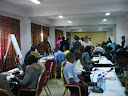
The cafe host is also the time keeper. So 20 minutes into the first round of questions, I did my rounds to ask colleagues to move table and get on with their second question. I must admit that everyone collaborated and they moved orderly to the next table, trying their utmost to keep 5 to table.

Mohamed and Stefania had done their maths right and had managed to have 5 francophone and 5 anglophone tables!!! The participants in all three cafes were completely engaged. I heard comments such as: "This cafe thing is really good". Martin Raine said: "You know, I was a skeptic, but this structured chaos is really great!". Steven reflecting on the process said "I wish we had started by asking the participants to talk about their successes, because when we did that at the last round, the energy level changed." And Steven is right, the question is one the important ingredients of a world cafe, it can make it or break it.
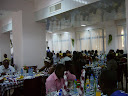
I am currently immersed in a series appreciative leadership courses, so his comment resonated completely with my changed mindset. He was right on: we always need to start looking at strengths and build on these, rather than falling in the trap of looking at weakness.

After lunch, participants regrouped in their original table to do the summary of their discussions. These were then used for the speed geeking. An hour later, a total of 30 table hosts descended to the open area, carrying flipcharts or their flipchart papers. They created their stands waiting eagerly to present their table's work to other participants.
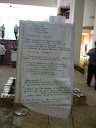
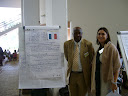
I think the speed geeking could have gone a bit better, if before the participants made their way downstairs, we would have reminded them what was expected from the table hosts and from the other participants. This said, the outputs were remarkable. I walked to three stands and must say I was quite impressed.
Kudos to the Western and Central Africa for having fully embracing using knowledge sharing methods at their events. This is now the second time. Early this year, they used the same knowledge sharing methods at their community-driven development workshop.

For your reporter, it was an absolutely rewarding day. I hope colleagues back home get a flavour of the richness of this day. Hope I've done justice to the great work that went on today.

Now, we are all getting ready for a well deserverd dinner somewhere near the beach. We'll talk tomorrow. If you feel inspired, please comment on these blogposts.

A domani.


Tuesday, December 1, 2009

Ghana Minister of Food and Agriculture pledges to double rice production in Ghana


Day one of the Western and Central Africa workshop is coming to a close. This morning we had the honor and privilege of having the Honorable minister of agriculture at the opening session of the workshop.

The minister reminded the gathering that the workshop coincides with the celebration of Farmers' Day which is an important day for Ghana, a day that the country honours farmers for their untiring and relentless efforts of feeding the nation.

"The food crisis experienced recently was a loud awakening to the world, particularly for those of us in developing countries as we now need to redouble our efforts and better plan for our nation's food security", said the minister.

In his speech, the minister reminded the audience that by 2050 world population would reach 9.1 billion, and that nearly half of the additional 2.3 billion people in the next 40 years will reside in developing countries.

The minister then proceeded to say: "Feeding these extra people is a challenge we need to recognize and plan for. The 'business as usual' approach will be catastrophic."

"The time is ripe for us to rethink our agricultural development efforts, recognizing that agriculture is no longer just a production tool for industry but a tool for satisfying objectives of growth, poverty reduction, food security and sustainable rural development in a complex setting influenced by globalization and climate change."

The minister shared Ghana's strategy for reviving and strengthening the agriculture sector. "I are planning to revolutionize agriculture. I have promised to double rice production in two years", pledged the minister.

He concluded by sharing the key principles behind Ghana's Food and Agriculture Development Policy:
  • value chain approach
  • focus on selected commodities for greater impact
  • diversification for income generation and stability
  • enhanced productivity
  • transforming smallholders through improved organization of farmer-based organizations
  • public-private partnership
  • improved coordination and harmonization in the agriculture sector

After the official opening, the minister and Mr Beavogui hosted a joint press briefing which lasted 40 minutes and attended by 40 journalists.

The afternoon sessions were dedicated to country team meetings, where the participants reviewed the Douala action plan and reported on progress, opportunities and challenges.

We'll end the day with promises to be a fun evening of Ghanaian hospitality. I see the musicians setting up in the atrium. Make sure you tune in to learn about the Ghanaian hospitality.

Monday, November 30, 2009

The show is on the road: Day one of the regional implementation workshop for Western and Central Africa

There is quite a bit of frenzy in the atrium of the ORCHID Hospitality Management Services (Ghana College of Physicians and Surgeons), Accra, Ghana where IFAD in conjunction with the Ministry of Food and Agriculture of Ghana, is holding a regional project implementation workshop for Western and Central Africa. These events present a wonderful opportunity for people to reconnect. You can see many smiling faces, people hugging and kissing and catching up with each other.

Adriana, Letizia, Christiane and others are helping with the registration. The last couple of days were quite hectic. Stefania and Martin, the two pillars of this workshop have diligently been organizing the minute details of the workshop. Yesterday we had a series of meeting to make sure that all the logistics was working like a swiss watch.

We spent all of yesterday setting up. Everyone, and I mean everyone, contributed to making sure we had everything. The gentlemen, Steven, Leo, Loko and others helped with assemblying the kits. David set up the exhibit and the publication desk. Stefania, Martin and I went were responsible for the signage and to make sure the breakout rooms were set up.

I am really excited, as tomorrow we'll be using a wide range of knowledge sharing methods. We'll start with three parallel chat shows, then we'll move to three parallel world cafes and we'll finish the day with a speed geeking session where colleagues will present their findings and learnings!

Kudos to all the colleagues in Western and Central Africa for embracing knowledge sharing methods. For sure, this workshop will be different and more engaging that previous editions!

This morning we'll have the honour and privilege of having His Excellency the Minister of Agriculture for the official opening. We'll then have a series presentation by the Director of Western and Central Africa and IFAD colleagues on the IFAD-funded project portfolio and the progress since the last implementation workshop.
So, let me sign-off at this point. More to come during the day. Internet access permitting we'll also be tweeting. So make sure you also check out the tweets both from @ifadnews and @rsamii.

Popular Posts